Cart
0
Portuguese handicrafts: a guide to traditional techniques by region and where to buy online
A guide to Portuguese handicrafts by region: black pottery and figurines from the Minho, Cobertor de Papa blankets and burel from the inland mountains, esparto, palm and copper from the Algarve, banana fibre from the Azores and wool caps from...

In this article
Portuguese handicrafts are pieces made by hand with traditional techniques that change from region to region: black pottery and clay figurines from the Minho, wool and burel from the inland mountains, esparto, palm and copper from the Algarve, banana fibre from the Azores and the wool earflap cap from Madeira. Many of these techniques are now in the hands of very few artisans, which makes the pieces increasingly rare. This guide shows what is made in each region, how to recognise an authentic piece and where to buy Portuguese handicrafts online.
Portuguese handicrafts at a glance
- Minho: Gondar black pottery, Barcelos clay figurines, the Cantarinha dos Namorados from Guimarães, the viola braguesa.
- Beiras and inland mountains: Cobertor de Papa from Maçainhas, burel wool cloth, burnt wood from the Serra da Estrela.
- Estremadura: crochet from Caldas da Rainha, Lourinhã DOC brandy, salt from the Tagus estuary.
- Alentejo: the viola campaniça.
- Algarve: esparto, palm weaving, hammered copper, bitter honey and medronho.
- Azores: basketry and crochet in banana fibre.
- Madeira: the wool earflap cap.
- Where to buy online: at Ra-Ro, which works directly with the artisans and ships to Portugal, Europe, the United States, Canada and Brazil.
Minho: clay, figurines and promises of love
The Minho may be the region with the most recognisable crafts in the country. In Gondar, César Teixeira and his son João are among the last to make black pottery in the soenga, an open-air fire that reaches a thousand degrees and smokes the clay black. From it come kitchen and table pieces such as the alguidar bowl, the casserole, the pot and the chestnut roaster.
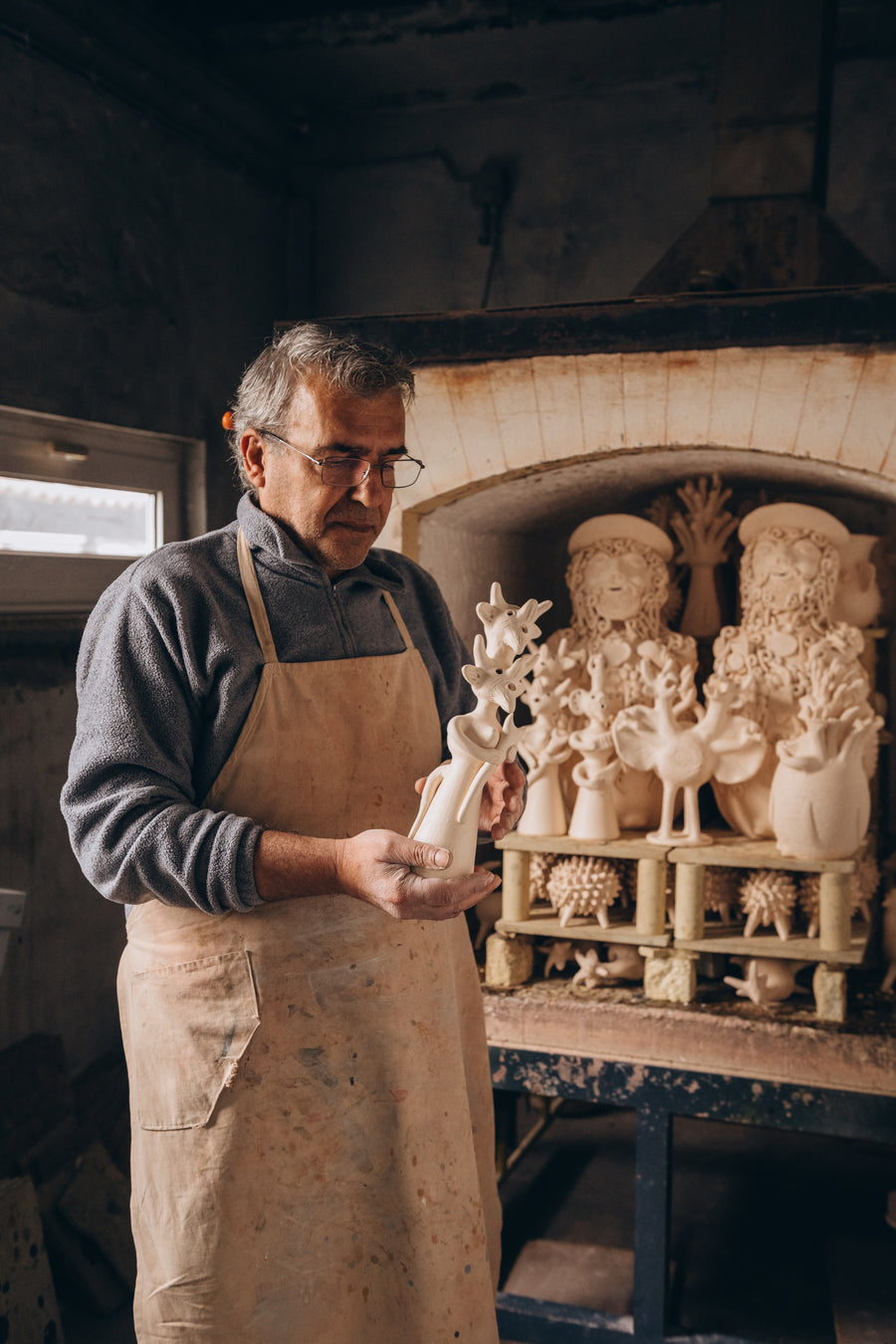
In Barcelos, the figurado tradition lives on through António Ramalho, great-grandson of Rosa Ramalho, with roosters, devils, sarroncos and figures such as the Hedgehog. The darker side of this tradition is told in Devils, Sarroncos and Mafarricos.
From Guimarães comes the Cantarinha dos Namorados, a certified red clay and mica jug that brides used to save for their wedding gold necklace. The Minho is also home to the viola braguesa, one of Portugal's traditional guitars. Pieces from the region are in the Minho collection.
Beiras and the inland mountains: wool, burel and wood
In the cold inland areas, crafts were born from the need to keep warm. In Maçainhas, near Guarda, the association O Genuíno Cobertor de Papa keeps the Cobertor de Papa alive, woven on a hand loom about three centuries old. In Campo Benfeito, As Capuchinhas work burel, the felted wool cloth once worn by shepherds, into coats, ponchos and bags such as the tile bag.
In the Serra da Estrela, the Vago project turns wood burnt in the 2022 fires into bowls, sculptures and boxes. The story is in The bowl born from fire. Pieces from the region are in the Beira Alta collection.
Estremadura: crochet, brandy and salt
In Caldas da Rainha, Alice Aranha crochets carnation earrings, scarves and gloves that blend old technique with modern design. In Lourinhã, the cooperative winery makes one of the few brandies with a designation of origin in Portugal, told in Lourinhã DOC brandy. On the Tagus estuary, the Salinas do Samouco still harvest salt and flor de sal by hand. More pieces in the Estremadura collection.
Alentejo: the viola campaniça
The viola campaniça is the traditional instrument of the Lower Alentejo, tied to rural singing and dances. Made by hand by instrument makers, it is now a rare piece, like the viola braguesa and the cavaquinho. Our guide to Portuguese guitars explains the differences.
Algarve: esparto, palm and copper
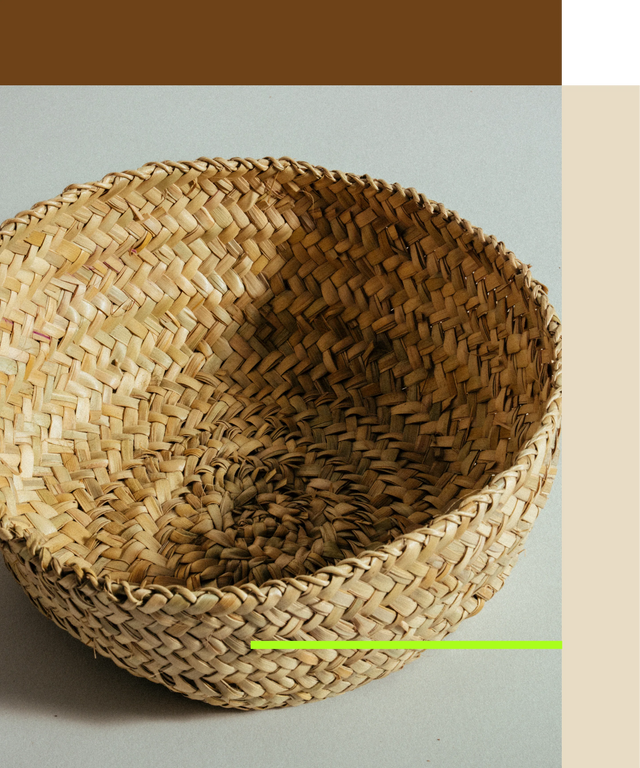
The Algarve has a craft tradition of fibres and metals. In Paderne, Isidoro Ramos works esparto grass into pieces such as the barreleira basket and the donkey head. In Tavira, the AECT artisans make bags and baskets in palm weaving, a craft that starts in the fields with the gathering of the leaves. In Loulé, hammered copper shapes the cataplana and decorative plates.
The Algarve hills also give products such as strawberry tree bitter honey and medronho brandy. Pieces from the region are in the Algarve collection and in The Algarve beyond the beach.
Azores and Madeira: island crafts
In the Azores, Musaz uses banana fibre to make sewn baskets, woven baskets and crochet coasters, giving new use to a plant that grows widely on the islands. In Madeira, the earflap cap is still hand-knitted by Enfia o Barrete, who also sell regional carded and spun wool. Pieces in the Azores collection.
Other techniques worth knowing
- Cork: Porfírio Mendes carves folk figures in cork, such as Saint Anthony, the Barcelos Rooster and the Devil. See the cork collection.
- Marquetry: Jacky Cavallari composes pictures and boxes from thin layers of wood, like the Hoopoe picture.
- Bulrush weaving: Helena Novelletto weaves plant fibres into lamps, cushions and stools.
- Blown glass: Samuel Reis makes blown glass tumblers and jugs.
- Carved wood: Ana Sincu carves combs, hair pins and spoons.
How to recognise authentic Portuguese handicrafts
- Known maker and origin: an authentic piece has a name, a workshop and a place. If you cannot find out who made it, be wary.
- Small irregularities: handwork is never perfectly identical. Two pieces from the same series always differ.
- Traditional materials: clay, wool, esparto, palm, copper, cork or wood, not plastic or resin imitations.
- Certification, where it exists: some pieces, like the Cantarinha dos Namorados, are certified traditional products. In Portugal, artisans may also hold an official Artisan Card (Carta de Artesão).
- A fair price: a piece made by hand over hours or days cannot cost the same as a factory product.
To go further, read What makes a craft piece rare? and One-of-a-kind, limited edition or rare piece.
Why are Portuguese handicrafts at risk?
Many of these techniques depend on a handful of people, many of them elderly and with no one to take over. When an artisan stops, not only the production is lost but also the know-how, which is rarely written down. We tell some of these stories in Endangered crafts and Rare crafts in Portugal. Buying directly from the people who make them is one of the most effective ways to keep these techniques alive.
Where to buy Portuguese handicrafts online
Ra-Ro is an online shop dedicated to rare pieces made by Portuguese artisans and small producers. It works directly with each maker and organises its catalogue by region and by degree of rarity, from unusual to extremely rare. Ra-Ro ships to Portugal, the rest of Europe, the United States, Canada and Brazil, with 30 days for returns.
For special occasions, our guide to Portuguese handmade Christmas gifts sorts the pieces by price.
Frequently asked questions about Portuguese handicrafts
What are the most typical Portuguese handicrafts?
It depends on the region. Among the best known are Barcelos figurines, black pottery, the lovers' handkerchief and the Cantarinha dos Namorados from the Minho, the Cobertor de Papa and burel from the inland mountains, cork, and esparto, palm and copper from the Algarve.
Where can I buy Portuguese handicrafts online?
At Ra-Ro (ra-ro.eu), which sells handmade pieces by Portuguese artisans and ships to Portugal, Europe, the United States, Canada and Brazil.
How can I tell if a handcrafted piece is authentic?
An authentic piece has a known maker and origin, the small irregularities of handwork, traditional materials and, in some cases, certification.
Which Portuguese craft techniques are at risk?
Among others, soenga-fired black pottery, the Cobertor de Papa, palm and esparto weaving and traditional guitar making, all of which depend on very few artisans.
Are Portuguese handicrafts a good gift?
Yes. They are gifts with a story and an origin, and they directly support the people who make them. There are pieces for every budget, from a few euros to collector's items.