Cart
0
Magusto: what it is, its origins and St Martin's Day traditions in Portugal
The magusto is the Portuguese roast chestnut festival, held around a bonfire on St Martin's Day, 11 November. Discover its origins, the legend of St Martin, the água-pé and jeropiga traditions and what to put on the table.

In this article
 By Tiago Reis, co-founder of Ra-Ro · View profile
About a 5 minute read

The magusto is the Portuguese roast chestnut festival. It takes place in autumn, mainly on St Martin's Day, 11 November, around a bonfire, with chestnuts, new wine, água-pé or jeropiga. In 2026 St Martin's Day falls on a Wednesday, so many magustos will take place on the weekends of 7 and 8 or 14 and 15 November.
Magusto at a glance
- What it is: a gathering around a bonfire to roast and eat chestnuts.
- When: on St Martin's Day, 11 November, and in the surrounding weeks. In some places it is also held around All Saints' Day.
- What people eat: roast chestnuts and, at many tables, cured sausages, dried figs and walnuts.
- What people drink: new wine, água-pé and jeropiga.
- The legend: the soldier Martin cut his cloak in half to give it to a poor man, and the sun came back. This is the "St Martin's Summer".
What is the magusto?
The magusto is one of Portugal's oldest folk festivals. The idea is simple: gather firewood, light a bonfire and roast chestnuts to share with family, neighbours or school friends. Today it happens in villages, in city squares, in back gardens and even on balconies, with a clay roaster instead of a bonfire.
For centuries the chestnut was a staple food in inland Portugal, before the potato became common. Celebrating the chestnut harvest was, in effect, celebrating food for the winter.
Where does the magusto come from?
The magusto combines two traditions: the autumn harvest festival, tied to chestnuts and new wine, and the religious feast of St Martin. The ethnographer José Leite de Vasconcelos argued that the magusto was also linked to the cult of the dead, recalling the old custom of leaving food for relatives who had passed away. This helps explain why, in several regions, the magusto takes place close to All Saints' Day.
What is the legend of St Martin?
The legend says that Martin, a Roman soldier, was riding on a cold and rainy day when he met a poor man with almost no clothes. Having nothing else to give, he cut his cloak in half with his sword and gave him one half. At that moment the rain stopped and the sun came out.
That is why the warm, sunny spell that often arrives in November is called St Martin's Summer. And that is why the Portuguese proverb says: "On St Martin's Day, go to the cellar and taste the wine".
What are the magusto traditions?
- The bonfire: chestnuts roast straight on the embers or in a roaster with holes.
- Scoring the chestnut: before going on the fire, each chestnut gets a cut so it does not burst.
- Blackened faces: in many villages the game is to smear each other's faces with soot from the chestnuts.
- Tasting the new wine: St Martin's Day is when the wine from the last harvest is opened.
- Água-pé and jeropiga: água-pé is made by adding water to grape pomace, and jeropiga is a sweet drink of grape must and brandy.
How to hold a magusto at home
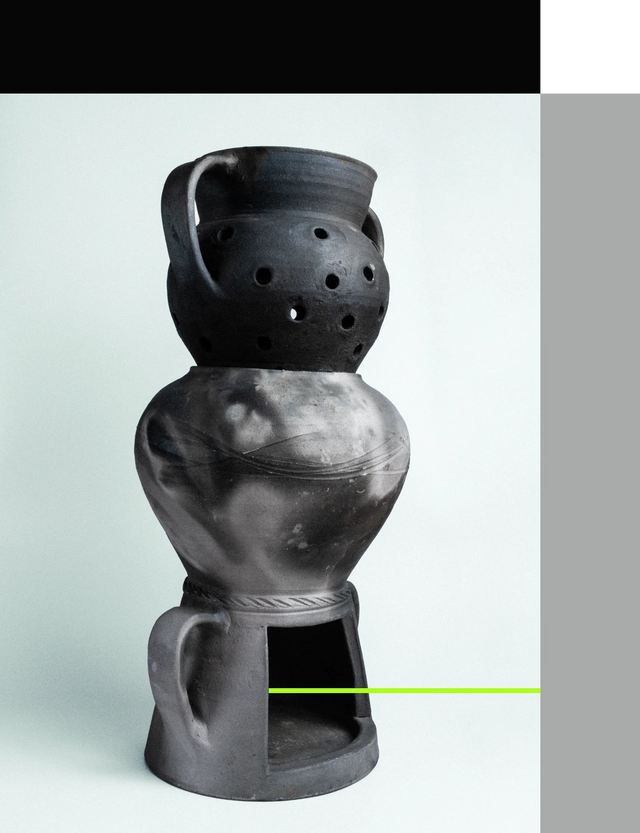
You do not need a bonfire in the village square. A clay chestnut roaster on the hob or in the fireplace does the same job and gives chestnuts that toasted street flavour. We explain it step by step in Magusto at home: roasting chestnuts in a clay roaster.
The black clay Chestnut Roaster by César Teixeira, made in Gondar in the soenga fire, costs €101.30. Its story is told in Autumn in Gondar. To serve the chestnuts, the black clay alguidar bowl costs €36.20.
What to put on the magusto table
- Vinho dos Mortos from Boticas (€24.40): a wine named after being buried to hide it from Napoleon's troops. A good story to tell by the fire.
- Onion chouriço from Ponte de Lima (€6.40): to grill on the same embers.
- Traditional mead (€21.80): a sweet, honey-based alternative to jeropiga.
- Cobertor de Papa (€198.10): for when the night turns cold and the magusto carries on outside.
For more handmade pieces from all over the country, see our guide to Portuguese handicrafts by region.
Frequently asked questions about the magusto
When is the magusto?
The magusto is held on St Martin's Day, 11 November, and the days around it. In some regions it is also held close to All Saints' Day, 1 November.
What do people eat at a magusto?
Chestnuts roasted on a bonfire or in a roaster, often with cured sausages, dried figs and walnuts.
What do people drink at a magusto?
New wine, água-pé and jeropiga are the traditional drinks.
What is the legend of St Martin?
The soldier Martin cut his cloak in half to give it to a poor man on a cold, rainy day. The weather cleared immediately, which is where St Martin's Summer comes from.
What is St Martin's Summer?
The sunny, mild days that often appear around 11 November, linked to the legend of the saint.