Cart
0
Vinho abafado: what it is, how it's made and how to drink it
The grapes are left to ferment and, at the right moment, the fermentation is stopped with aguardente: what vinho abafado is, how it differs from jeropiga and Port, and how to drink it.

In this article
 By Luís Serra, co-founder of Ra-Ro · View profile
About a 4 minute read

The name says almost everything. To 'abafar' is to remove the air, to interrupt. And that's exactly what is done to this wine: the grapes are allowed to start fermenting and, at the right moment, the fermentation is halted with brandy. The result is a sweet wine, stronger than a table wine, which appears on many Portuguese tables when the cold arrives.
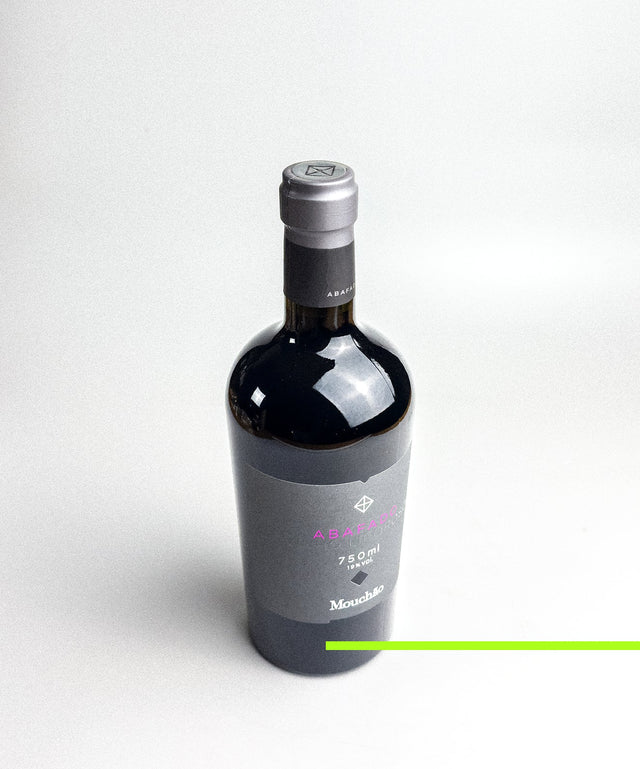
Abafado wine is a fortified wine made by adding grape brandy to the must during fermentation. The brandy stops the fermentation before all the sugar turns into alcohol, so the wine remains sweet and with a higher alcohol content, usually around 19% vol. It is drunk as an aperitif, with dessert or with coffee. At Ra-Ro, we have the Mouchão Vinho Abafado Licoroso, made at Herdade do Mouchão, in Sousel, since the winery was built in 1901.
How is abafado wine made?
The principle is the same as other fortified wines: during fermentation, the yeasts transform the grape sugar into alcohol. If brandy is added halfway through, the alcohol content suddenly rises and the yeasts stop. The sugar that hasn't yet fermented remains in the wine, and that's where the sweetness comes from.
At Mouchão, the Alicante Bouschet grapes are hand-picked and foot-trodden in stone lagares. They are left to macerate slowly until fermentation begins. Then a limited portion of the juice is removed and grape brandy is added, at the point where the wine has the desired sugar level. Mouchão's abafado has 19% vol., a round and smooth sweetness and a strong presence of red fruit.
What is the difference between abafado, jeropiga and Port wine?
All three involve brandy, but at different times and with different results. Jeropiga is made by adding brandy to the must almost before it ferments, so it is very sweet and tastes more like grapes. In abafado, fermentation is allowed to start and only then is it interrupted. Port wine follows the same principle, but it is a denomination of origin from the Douro, with its own production and ageing rules.
| Drink | When the brandy is added | Result |
|---|---|---|
| Jeropiga | In the must, almost without fermentation | Very sweet, fresh grape flavour |
| Abafado wine | Midway through fermentation | Sweet, with more wine structure |
| Port wine | Midway through fermentation, in the Douro | Sweet, with ageing styles defined by the denomination |
We talk about jeropiga and água-pé, the drinks of São Martinho, in Água-pé, jeropiga and new wine.
How is abafado wine drunk?
The producer of Mouchão says that abafado is best drunk young, especially from December of the harvest year. It is part of the tradition of the Northeast Alentejo and is served chilled, but not ice-cold. It works well in three ways.
As an aperitif, in a small glass, with sheep's cheese, for example the PDO Sheep's Cheese from Monte do Ganhão. With dessert, with egg sweets, nuts or with Ameixas d'Elvas in syrup. And at the end of the meal, accompanying coffee, which is how we have been drinking it at Ra-Ro.
If you are looking for something more complex, with years in a barrel, the Mouchão Sobremesa Tonel Envelhecido is the next step: it is also a wine with fermentation interrupted by brandy, but it ages for years in old barrels and gains notes of dark fruit, spices and chocolate. We tell the story of the estate in Herdade do Mouchão.
Abafado at Christmas: why?
Because it is a wine for the cold. Sweet, comforting, to be sipped slowly at the end of a long meal. At the Portuguese consoada, between the rabanadas and the bolo-rei, there is always room for a glass. And it is a simple gift to give: a bottle that is opened on the day itself. We have gathered this and other ideas for the December table on the Natal Raro page. Drink responsibly; the sale of alcoholic beverages is prohibited to those under 18 years of age.
Frequently Asked Questions
What is abafado wine?
It is a fortified wine in which fermentation is interrupted with grape brandy. It remains sweet, because some of the grape sugar does not ferment, and with a higher alcohol content, around 19% vol.
What is the difference between abafado wine and jeropiga?
In jeropiga, the brandy is added to the must almost before it ferments. In abafado, fermentation is allowed to start and only then is it interrupted, resulting in a wine with more structure.
How is abafado wine served?
Chilled, but not ice-cold, in a small glass. As an aperitif with cheese, with dessert or with coffee.
Is abafado wine from the Alentejo?
It is made in various regions of Portugal. In the Northeast Alentejo, it is an old tradition, and Herdade do Mouchão has been producing it since 1901.
Where to buy Alentejo abafado wine?
At Ra-Ro, which sells the Mouchão Vinho Abafado Licoroso, with 19% vol., selected by Mercado Alentejano.


 Rare Combinations
 November Selection