Cart
0
Baskets at home: 8 ways to decorate with Portuguese baskets
Eight simple ways to use Portuguese baskets at home, from throws in the living room to bread on the table. Plus the fibres behind Portuguese basketry and how to make a basket last.

In this article
 By Luís Serra, co-founder of Ra-Ro · View profile
About a 5 minute read

Decorating with baskets is one of the simplest ways to make a home feel warm: a basket stores things, hides clutter and adds natural texture to any room. Handmade Portuguese baskets, woven from banana fibre, palm, esparto, wicker or bulrush, can hold throws in the living room, fruit in the kitchen, bread on the table, towels in the bathroom or keys in the hallway. Just pick the right size and keep them away from damp and direct sun.
Basket decor in short
- What they are for: storing, hiding, serving and decorating, often all at once.
- Where to use them: living room, kitchen, table, bathroom, hallway and walls.
- Portuguese fibres: banana fibre from the Azores, palm from the Algarve, esparto, wicker and bulrush.
- Care: dust them, avoid constant damp and direct sun.
- At Ra-Ro: banana fibre baskets by MUSAZ, Tavira palm and esparto by Isidoro Ramos, also in bundles.
8 ways to use Portuguese baskets at home
1. Store throws in the living room
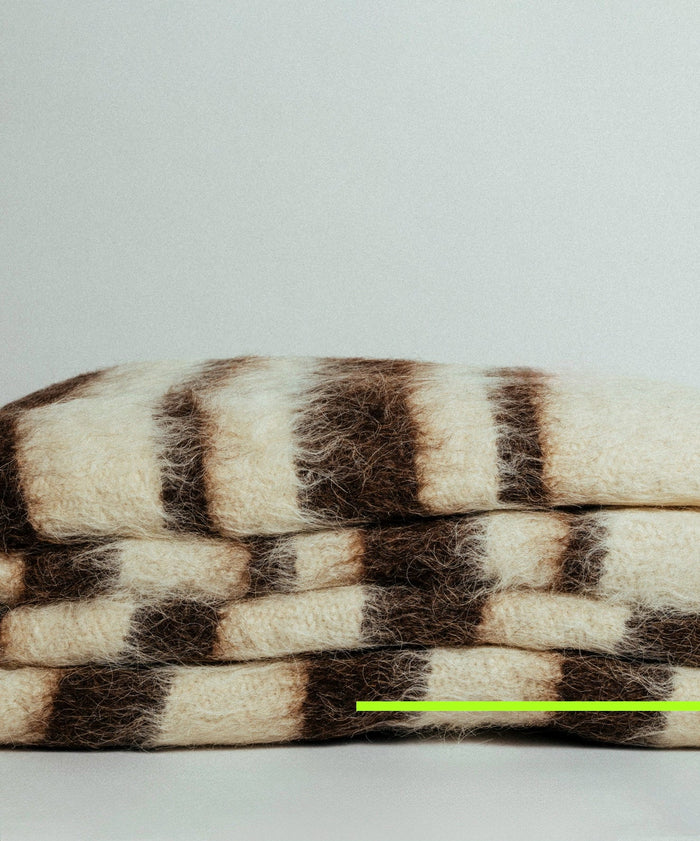
A large basket next to the sofa keeps throws within reach and the room tidy. The Woven Basket with square pattern (€87.30), in banana fibre, is the right size for a folded throw. To take it further, pair it with one of our Portuguese wool blankets.
2. A basket for plants (with a saucer underneath)
A basket makes a lovely plant cover. Keep the plant in its original plastic or clay pot, put a saucer underneath and only then place it inside the basket. That way water never touches the fibre. Water the plant outside the basket if you can.
3. A fruit bowl in the kitchen
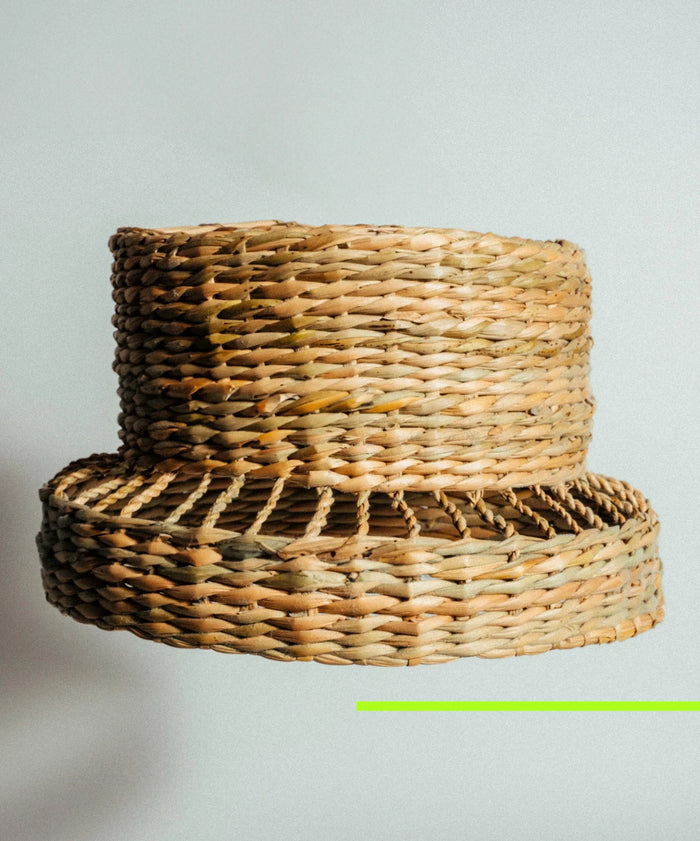
A low, open basket lets fruit breathe and looks good on the counter. The Spiral Basket (€33.20), woven in Tavira, is small and works well for lemons, oranges or apples.
4. Bread on the table
Bread served in a basket lined with a linen cloth is a classic of the Portuguese table. A small round basket is ideal: shake out the crumbs after every meal.
5. A basket wall
Flat baskets and fibre mats hung on a wall create a warm, textured composition. Mix sizes and weaves, start with the largest in the centre and work outwards. The Rug (€87.20), handmade in Tavira, can be used this way too.
6. Bathroom storage
Rolled towels, toilet paper or bath products sit well in a lidded basket that hides what does not need to be on show. The Lidded Basket (€42.20) does the job. Keep it away from the shower and air the room to avoid damp.
7. Hallway: keys, scarves and gloves
In the hallway, a small basket catches keys and a larger one holds scarves, hats and gloves. The Caracoleira (€66.20), a small esparto basket by Isidoro Ramos made for gathering snails, can hang from a coat hook as a catch all.
8. A basket for firewood or laundry: the barreleira
By the fireplace, a large sturdy basket holds firewood; in the bedroom or utility room, it holds dirty laundry. The Barreleira (€246.20), in esparto, was the basket where laundry was gathered before the lye wash. We tell its story in Isidoro Ramos's barreleira.
Which fibres are used in Portuguese basketry
- Banana fibre: each banana plant fruits only once; afterwards, on São Miguel in the Azores, MUSAZ turns the stem into fibre and the fibre into woven and sewn baskets, such as the Sewn Basket (€153.80). Read more in Banana fibre.
- Palm: in the Algarve, dwarf palm leaves are braided into strips and sewn together, a technique called empreita. In Tavira, a group of senior women artisans still weaves it.
- Esparto: a plant with tough, strong leaves, also worked as empreita. Isidoro Ramos learned the craft from his grandmother and mother. The difference between the two fibres is explained in Empreita, palm and esparto.
- Wicker: the thin, flexible shoots of the willow, the best known fibre in traditional basketry, used for carrying and market baskets.
- Bulrush (bunho): a plant that grows in wet places such as ponds and lakes and is braided into light pieces. See Bunho.
How to care for a basket
- Dust: use a soft brush or a vacuum with a brush nozzle now and then.
- Damp: natural fibres do not like being wet all the time. If a basket gets wet, let it dry in the shade somewhere airy.
- Direct sun: it can dry out and fade the fibre; avoid windows with strong sun for many hours.
- Weight: do not overload a small basket; use it for what it was made for.
- Cleaning: a slightly damp cloth is enough for marks; avoid soaking the basket.
Where to buy handmade Portuguese baskets
At Ra-Ro we bring together basketry from three origins: banana fibre from São Miguel, palm from Tavira and esparto by Isidoro Ramos. If you want to start with more than one piece, the Banana Fibre Basket Bundle (€130.59) brings together two woven MUSAZ baskets. See every combination on the bundles page.
Frequently asked questions
How do you decorate a home with baskets?
Use baskets to store throws in the living room, serve fruit or bread, hide towels in the bathroom and catch keys in the hallway. Flat baskets can also be hung on a wall as a composition.
Can I put a plant inside a basket?
Yes, as long as the plant stays in its original pot with a saucer underneath, so water never touches the fibre.
Which fibres are used in Portuguese basketry?
The most common are wicker, palm, esparto and bulrush; in the Azores banana stem fibre is also used.
How do you clean a natural fibre basket?
Use a soft brush or a vacuum for dust and a slightly damp cloth for marks. Let it dry in the shade somewhere airy.
Can baskets go in the bathroom?
Yes, as long as they are kept away from the shower and the room is aired, because constant damp damages natural fibres.
Where can I buy handmade Portuguese baskets?
At Ra-Ro, with banana fibre baskets from the Azores, palm from Tavira and esparto pieces, sold individually or in bundles.
 Autumn
 -10%Packs
 Regions