Cart
0
Bunho: what it is, how it is woven and what is made from it
Bunho is a wetland plant harvested in summer and woven by hand. See what it is, how it is worked and what is made from it, from low stools to cushions.

In this article
 By Tiago Reis, co-founder of Ra-Ro · View profile
About a 4 minute read

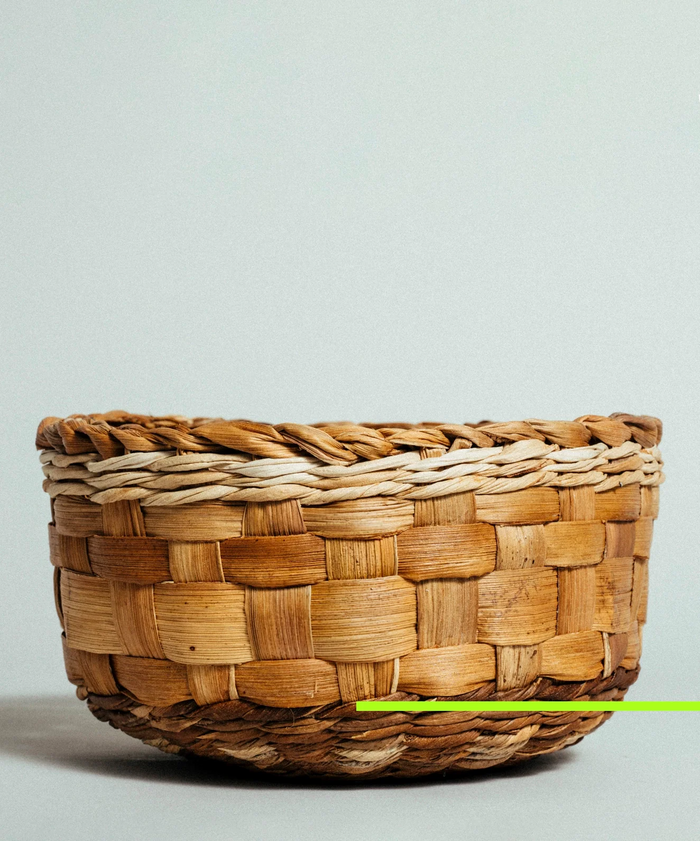
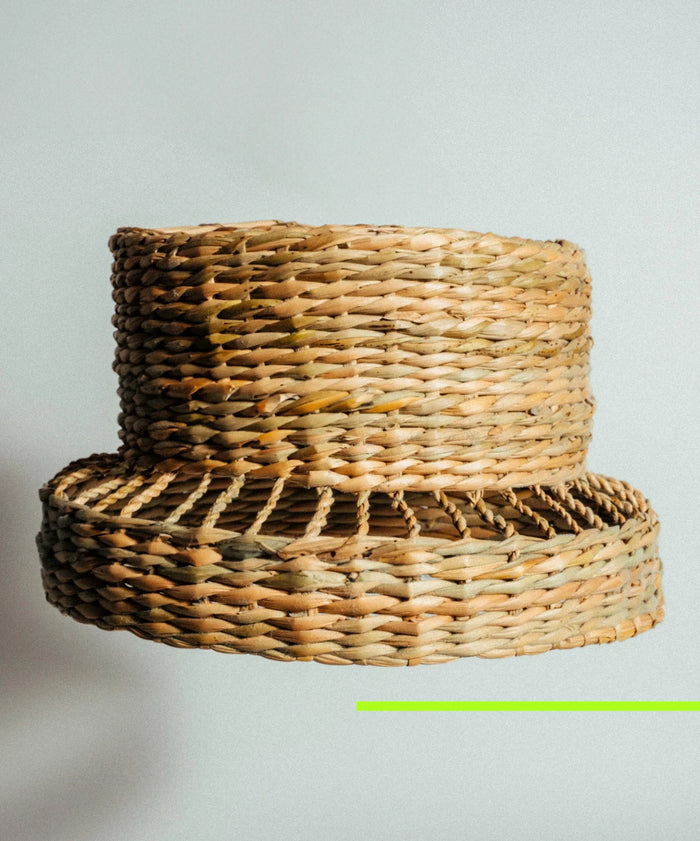
Bunho is a plant with long, flexible stems that grows in ponds, lagoons and riverbanks. Once dried, it is braided by hand and sewn in a spiral to make seats, mats, baskets and lamps. In Portugal the craft has almost disappeared. At Ra-Ro, bunho pieces are made by Helena Novelletto, who harvests the plant in summer and works it in her workshop in Caldas da Rainha.
Bunho at a glance
- What it is: a wetland plant with long stems, used as a natural fibre.
- When it is harvested: in summer, in its natural habitat.
- How it is worked: dried, braided by hand into strips and sewn in a spiral, a technique called empreita.
- What it becomes: low stools (tanhos), cushions, mats, baskets and lamps.
- At Ra-Ro: pieces by Helena Novelletto, from 94.70 to 124.20 euros.
What bunho is
Bunho loves water. It grows in damp places, next to frogs and dragonflies, and forms tall, smooth stems that are soft to the touch. It looks like rush and cattail and is often mistaken for them, but its flexibility once dried is what makes it so good for weaving.
For generations it was a household fibre, used to cover seats and to make floor mats and work baskets. With plastic and industrial production the craft faded, and today few people still work it by hand.
How bunho is harvested and woven
The work starts in summer, when bunho is cut in its habitat and left to dry. The dried stems are braided into long strips, which are then sewn together in a spiral, round after round, until the piece takes shape. This is empreita, the same technique used with palm leaves and esparto grass.
It takes strength and patience: a stool can take days. Because it is made by hand, each piece varies slightly in tone and shape.
Who makes Ra-Ro's bunho
Helena Novelletto was born in Brazil and learned the craft in Portugal from Manuel Ferreira, a master weaver from Santarém who wove while telling her stories of the 1974 revolution. She now works in her workshop in Caldas da Rainha, in Estremadura, and is one of the last bunho weavers still active. All she needs is the plant and her hands.
Bunho pieces at Ra-Ro
- Braided Stool (Tanho): low bunho stool, 124.20 euros.
- Bunho Cushion: round cushion for the floor or a bench, 94.70 euros.
- Bunho Lamp: warm light filtered through the weave, 94.70 euros.
Some pieces are made to order. If one is sold out, contact us to ask about lead times.
How to care for bunho
Keep it somewhere dry and out of strong direct sun for long periods. Dust it with a soft brush or a dry cloth. If it gets damp, let it air dry.
To discover other natural-fibre crafts, such as palm and esparto, see our guide to Portuguese crafts by region.
Frequently asked questions
What is bunho?
A wetland plant with long, flexible stems that, once dried, is braided by hand to make seats, mats, baskets and lamps.
What is a tanho?
A low stool, traditionally made of bunho braided and sewn in a spiral.
Are bunho, rush and cattail the same?
No. They are different wetland plants that look alike, but bunho is the one most used to weave seats and mats.
When is bunho harvested?
In summer, in its natural habitat. It is dried before it is braided.
How do you clean a bunho piece?
With a soft brush or a dry cloth. Keep it somewhere dry and out of strong direct sun for long periods.
Where are Ra-Ro's bunho pieces made?
In Caldas da Rainha, Portugal, by hand, by Helena Novelletto, with bunho harvested in summer.
 Autumn
 -10%Packs
 Regions