Cart
0
Pieces with soul: how handmade objects change the energy of a home
Handmade objects in natural materials bring texture, warmth and a story into a home. Why they change how a room feels and how to start, one piece at a time.

In this article
 By Tiago Reis, co-founder of Ra-Ro · View profile
About a 6 minute read

A home gains good energy, in the sense of atmosphere and feeling, when the objects in it have substance, use and a story. Handmade pieces in clay, wood, wool, linen, plant fibres or copper bring texture, warmth and small imperfections that no mass produced object has. When you know who made them and how, they stop being decoration and become part of the life of the house. You do not need to change everything: start with one well chosen piece in each room.
Pieces with soul in short
- What they are: handmade objects in natural materials, with a known origin and a known maker.
- What they change: the texture, light and warmth of a room, and the way you live in it.
- Materials: clay, wood, wool, linen, plant fibres such as bulrush or banana fibre, and copper.
- The rule: fewer objects, better chosen, and made to be used every day.
- How to start: one piece per room, chosen slowly.
- At Ra-Ro: work by around 40 Portuguese artisans, each piece rated on the Ra-Ro Index.
What is a piece with soul?
We say a piece has soul when you can tell someone thought it through and made it by hand. It carries marks of the process: a slight asymmetry, a wood grain that never repeats, an embroidery stitch pulled a little tighter. It also has an origin: a place, a raw material, a technique handed down through generations. There is nothing mystical about it. It is the difference between an object bought to fill a space and an object chosen because it means something to the person who lives with it.
Why do natural materials change how a home feels?
Natural materials speak to the senses. Clay is cool to the touch and matt to the eye, wood is warm and has a scent, wool and linen soften sound and light, plant fibres let air through, copper deepens in colour over time and gives back a warm glow. A room with these textures feels more welcoming than one made only of plastic and smooth surfaces.
Some research points the same way, although it should be read with care. A study by the University of British Columbia, in Canada, with the research institute FPInnovations, compared offices furnished with wood and with plastic and recorded fewer physiological signs of stress in the wooden rooms. And the report 14 Patterns of Biophilic Design, published in 2014 by the consultancy Terrapin Bright Green, lists a material connection with nature (wood, stone, clay) among the design patterns that can make a space more pleasant. These studies suggest a trend, not a promise: how each person feels at home depends on much more.
Why is handmade imperfection good for a home?
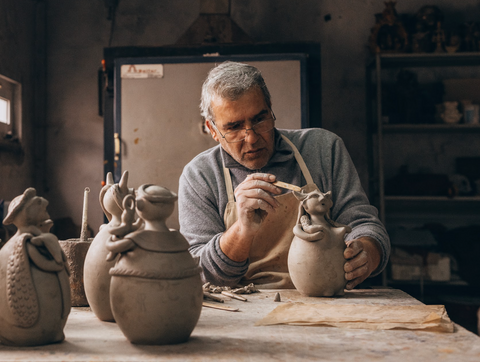
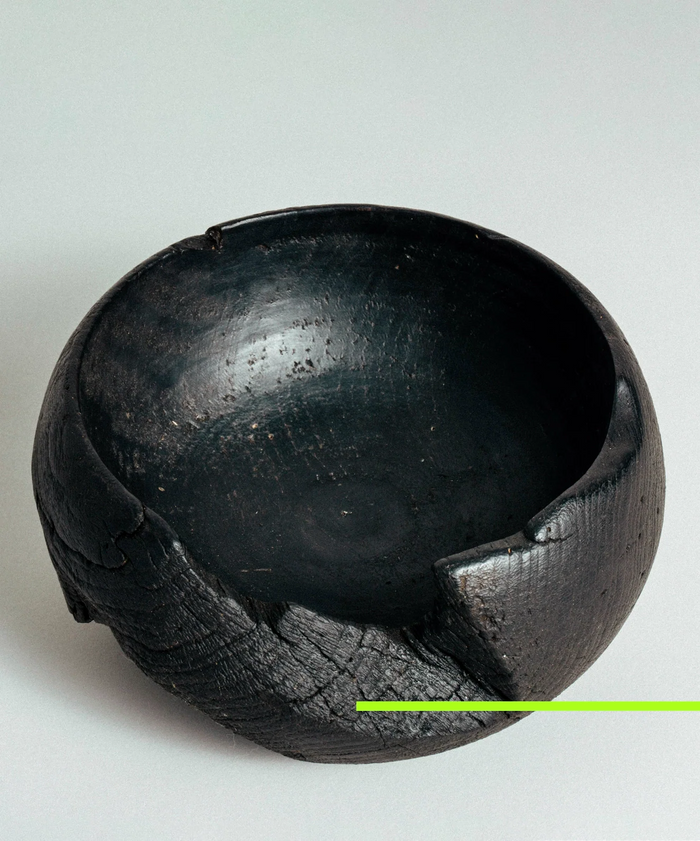
Mass produced objects are all identical, so the eye slides past them. A handmade piece makes you stop and look. In the Black Clay Pot (€60.20) by Cesar Teixeira, the colour comes from the smoke of the soenga, the traditional firing of Gondar, and changes from piece to piece. In the Tamaná Bowl (€72.15), Luca, a self taught carver from the Serra da Estrela, works wood that survived the wildfires and leaves the marks of the fire visible. Its story is in The bowl born from fire. None of these pieces has a twin, and that is what gives them presence in a room.
Why does it matter who made the piece?
An object with a story talks to the person who uses it. Knowing that the Copper Plate (€124.20) was cut and hammered by Nuno Palma, a young craftsman from Loulé who is reviving traditional techniques, changes how you see it, on the table or on the wall. Knowing that the Lavender Pouch (€32.79) is linen with Guimarães embroidery, a technique mastered today by only a few certified embroiderers, gives it another meaning inside a drawer. Many of these crafts rest in very few hands, as we tell in Rare crafts in Portugal: the last masters. What makes a piece rare is explained in What makes a piece rare.
Fewer objects, better chosen: what is slow living at home?
Slow living is the idea of living with more calm and more intention. At home it comes down to a simple rule: own fewer things, but better ones, and use them. A handmade piece does not need to sit behind glass. The Black Clay Jug (€36.20) pours water at the table, a basket holds the fruit, a bowl catches the keys. Looked after properly, pieces like these stay with a home for years. It is also a more conscious way to buy: you buy less, you buy from the maker, and the money helps keep alive a craft that might otherwise disappear.
How to start: one piece per room
- Hallway: a wooden bowl for keys, such as the Tamaná Bowl.
- Living room: warm light and texture with the Bulrush Lamp (€94.70) by Helena Novelletto, braided from a plant that grows in ponds and marshes.
- Kitchen: a black clay pot or jug, to use and not only to look at.
- Table: the copper plate in the centre, with fruit or bread.
- Bedroom: the embroidered linen lavender pouch, among your clothes.
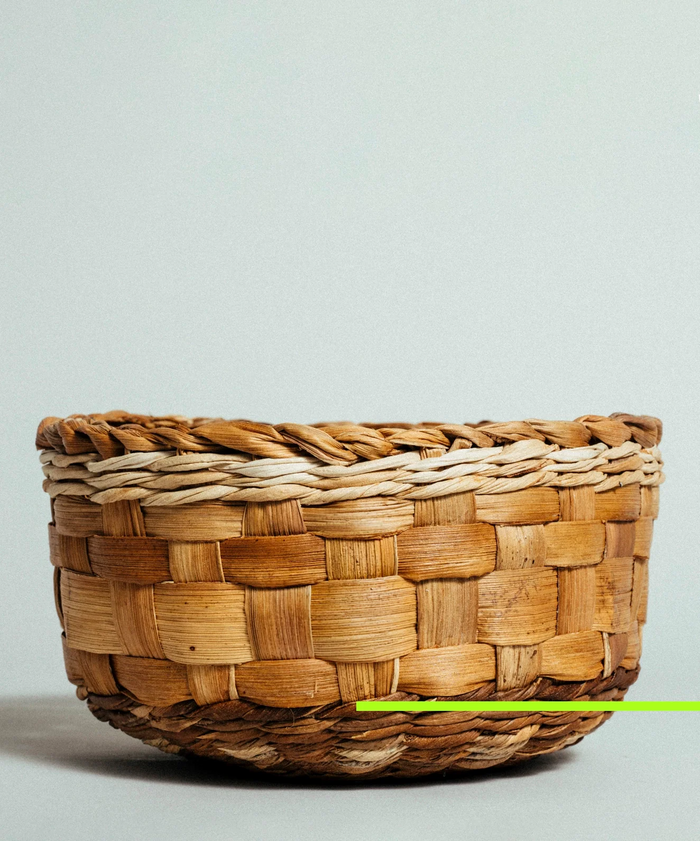
- Storage: the Small Round Braided Basket (€57.80) by MUSAZ, made on São Miguel, in the Azores, from the fibre of banana stems that would otherwise be thrown away.
Start with the room where you spend most time, live with the piece for a few weeks and only then choose the next one. A home with soul is built slowly.
How much do handmade pieces cost and where can you buy them?
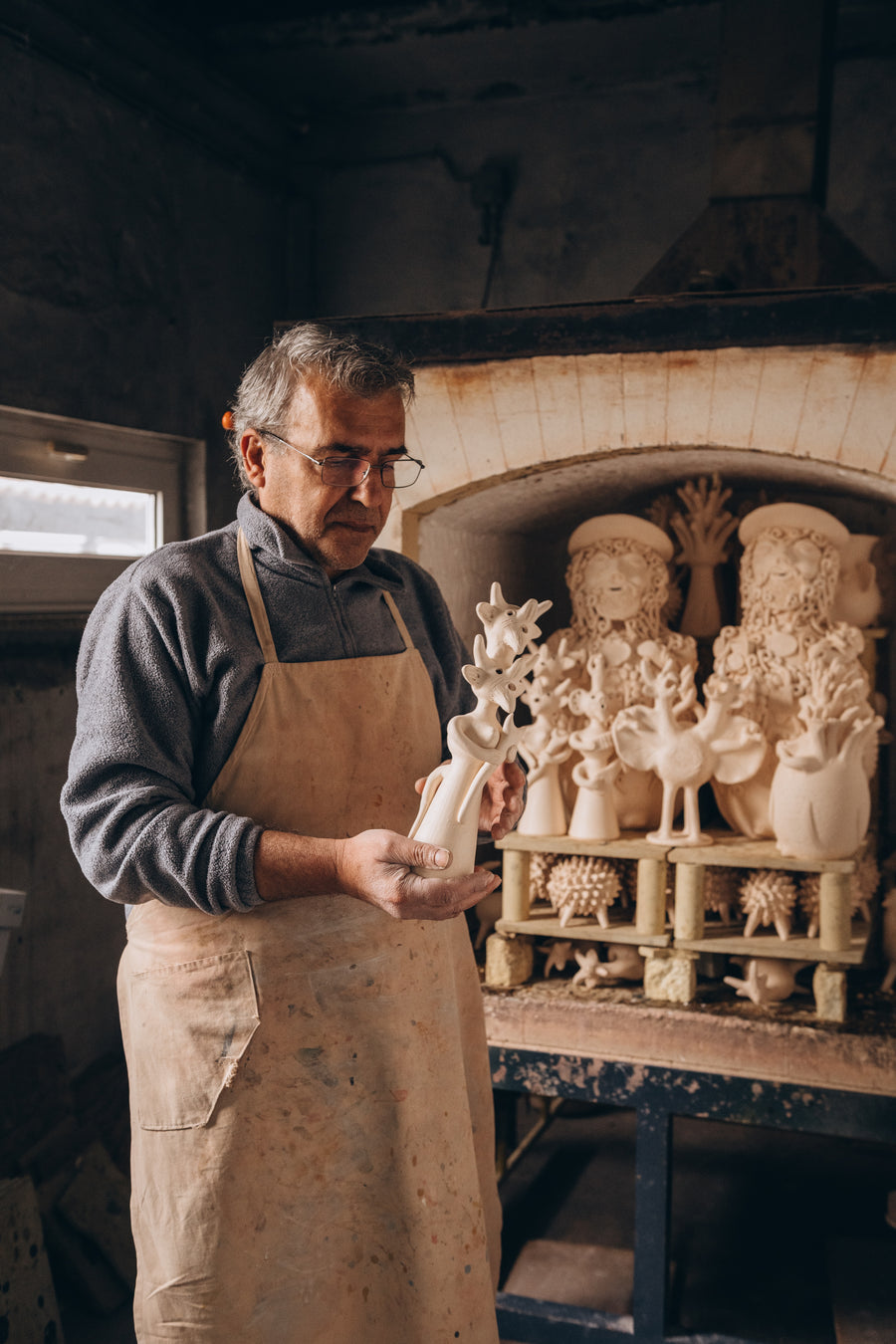
There are pieces with soul for different budgets. Between €30 and €60 you will find embroidered linen and black clay; between €55 and €100, baskets, wooden bowls and the bulrush lamp; hammered copper goes above €120. At Ra-Ro we bring together the work of around 40 artisans from eight regions of Portugal, the Azores included, and every product page tells who made the piece and how. Each one is rated on the Ra-Ro Index, from Unusual to Unique, so you know how hard it is to find.
Frequently asked questions
How do you create good energy at home?
In the sense of atmosphere, it helps to have natural light, fewer objects and materials with texture, such as wood, clay, linen or plant fibres. One well chosen handmade piece per room already changes how a space feels.
What are objects with soul?
Handmade pieces that carry marks of the process, a known origin and an identified maker. They are chosen for what they mean to the people who live with them, not to fill space.
Which natural materials work best in home decor?
Clay, wood, wool, linen, plant fibres such as bulrush or banana fibre, and copper. They add texture and warmth and age well with use.
Are wood and natural materials good for wellbeing?
Some studies suggest so, such as one by the University of British Columbia with FPInnovations, which recorded fewer physiological signs of stress in rooms with wood. These are indications, not guarantees.
What is slow living at home?
Living with more calm and intention: owning fewer things, but better and longer lasting ones, made to be used every day.
Where can I buy handmade Portuguese pieces?
At Ra-Ro, with work by around 40 artisans from eight regions of Portugal, each piece rated on the Ra-Ro Index, from Unusual to Unique.
 Autumn
 -10%Packs
 Regions