Cart
0
How to decorate your home with Portuguese handicrafts without it looking like a souvenir shop
Decorating with Portuguese crafts works best with few pieces, well chosen and given room to breathe. Principles, ideas by room and mistakes to avoid.

In this article
 By Luís Serra, co-founder of Ra-Ro · View profile
About a 6 minute read

To decorate your home with Portuguese handicrafts without turning it into a souvenir shop, choose few pieces and give each one its place: one statement piece per room, mixed with contemporary furniture and lines, in natural materials and with space around it. Handicrafts work best when they look chosen on purpose, not piled up. And they work even better when they are used: a basket that holds things, a plate that serves, a lamp that gives light.
Decorating with handicrafts in short
- Less is more: one strong piece beats ten small ones.
- One star per room: pick the piece that tells the story and keep the rest in the background.
- Mix eras: clay, wood and fibre look best next to simple, modern lines.
- Group with a plan: by material or by colour, never at random.
- Give pieces a job: what is used looks alive; what is only displayed looks like a museum.
- Choose authentic pieces: with a named maker and a clear origin.
Which principles to follow when decorating with handmade pieces
Less is more. The souvenir shop effect almost always comes from excess: lots of small pieces, all at the same height, with no breathing room. Start with one piece and add more only if you miss something.
One statement piece per room. Think of it as the spot where the eye lands first. It can be a sculpture, a mask or a large basket. Keep everything around it calmer.
Mix with the contemporary. Modern rustic decor lives on this contrast: a burnt wood bowl on a lacquered table, a copper plate on a smooth white wall. Crafts gain strength when they are not surrounded by more crafts.
Group by material or colour. Three black clay pieces together make a composition; three pieces of clay, cork and glass in different colours make a messy shelf. Odd numbers at different heights usually work better.
Give context and purpose. A piece that is used makes sense in the room. If it has no use, at least give it a place that explains it: the cantarinha by the front door, the rooster next to the travel books.
Let it breathe and choose natural materials. Empty walls and surfaces around a piece are part of the decor. Linen, wool, wood, stone and plant fibres sit well with handmade objects.
Portuguese decor ideas, room by room
- Living room: a sculpture or wooden bowl on the coffee table, such as the Bayan Bowl (€132.20), by Vago, from Luca, a self-taught woodcarver in the Serra da Estrela who works wood that survived the forest fires. Its story is in The bowl born from fire.
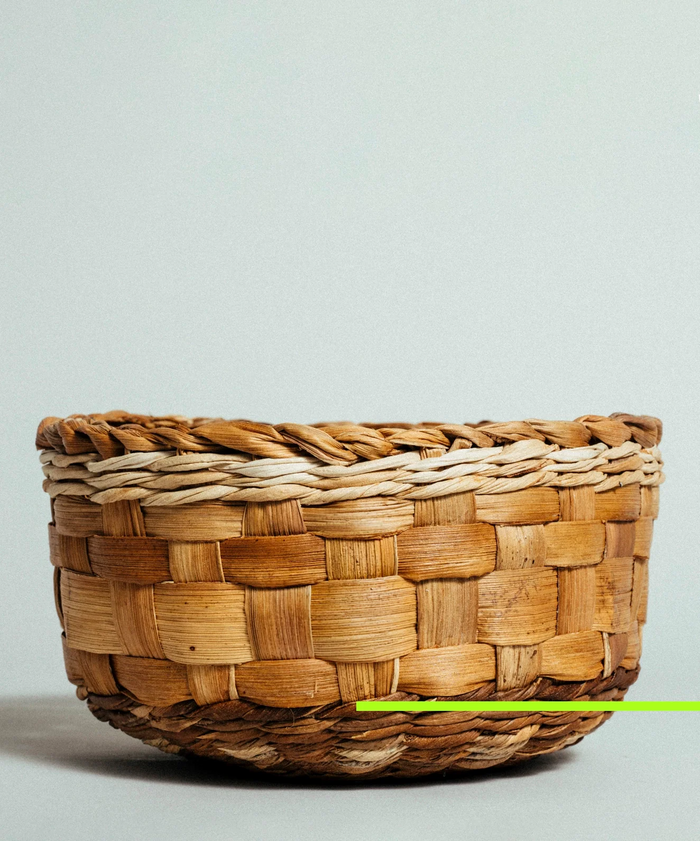
- Kitchen: pieces you actually use. The Sewn Basket in banana fibre by Musaz (€153.80) holds fruit or bread and warms up a cold worktop.
- Dining table: a centrepiece that also serves. The Copper Plate by Nuno Palma from Loulé (€124.20) is made for the table or the wall.
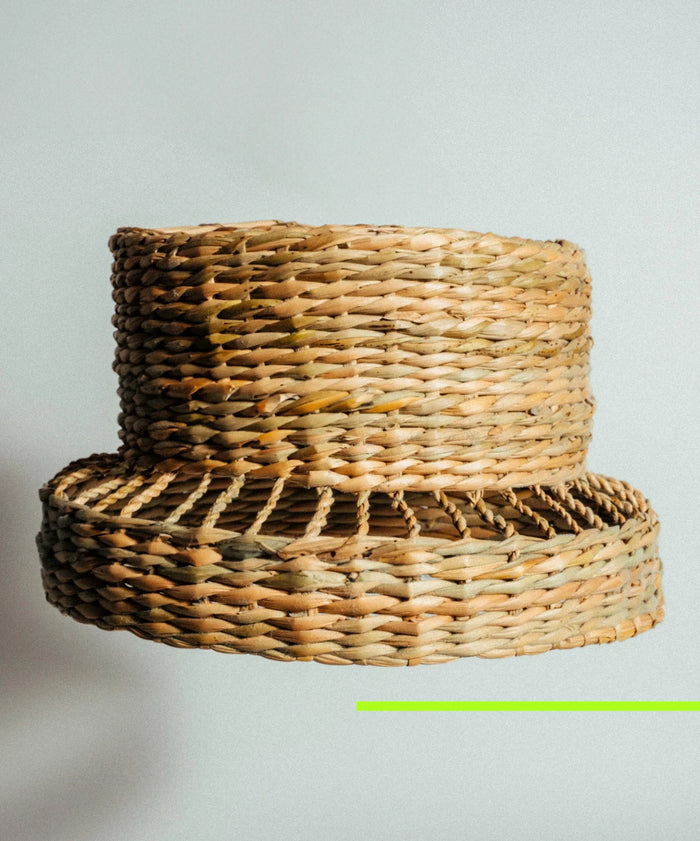
- Bedroom: soft light and texture. The Bulrush Lamp by Helena Novelletto (€94.70) gives a warm light on the bedside table.
- Entrance: a meaningful piece to greet guests. The Cantarinha dos Namorados from Guimarães (€96.20), with flowers in high relief, is a fine welcome.
- Bathroom: few objects, materials that cope with humidity and a natural touch, such as a small botanical panel away from the shower.
- Walls: instead of a crowded gallery, one or two strong pieces. The wild clay Mask by Andreia Pinho from Leiria (€102.20) wants a wall to itself. For something calmer, the Lavender Panel in marquetry by Jacky Cavallari (€40.90).
Mistakes to avoid when decorating with crafts
- Excess: filling every shelf. If everything stands out, nothing does.
- Everything from one place: ten roosters, three scarves and a tile panel in one room look like a theme, not a home. Mix regions and techniques: clay from the Minho, wood from the Beira, fibre from the Azores, copper from the Algarve.
- Pieces with no use or place: objects left in a corner because there was nowhere to put them. If a piece has no purpose and no place, maybe it is not for this home.
- Pieces with no origin: factory replicas next to handmade pieces take value away from the latter.
How to choose authentic handmade pieces
An authentic piece has a maker. Look for the name of the artisan or workshop, the region and the technique. Be wary of prices that are too low for handwork and of pieces that are identical to the millimetre. At Ra-Ro, every piece has a named artisan and a rating on the Ra-Ro Index, from Invulgar (unusual) to Único (unique), which shows how hard it is to find. We explain the criteria in What makes a piece rare. To discover the techniques of each region, see our guide to Portuguese crafts by region.
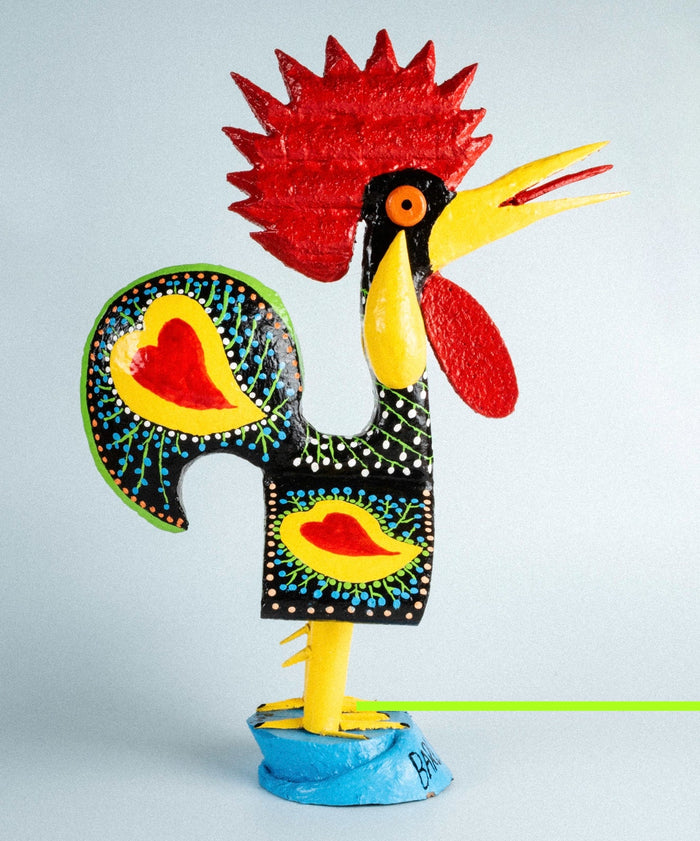
If you want to start with a classic, the cork Barcelos Rooster by Porfírio Mendes (€60.20) shows how a familiar symbol can look new when it is made by hand in an unexpected material.
Frequently asked questions
How do I decorate with handicrafts without overdoing it?
Choose one statement piece per room, leave space around it and mix it with simple modern furniture. Add pieces only when you feel something is missing.
What is modern rustic decor?
It combines natural materials and handmade pieces, such as clay, wood and fibre, with contemporary, uncluttered rooms and furniture.
Which Portuguese crafts work well in home decor?
Pieces with presence and a purpose: baskets, copper plates, fibre lamps, wooden sculptures, clay masks and panels. The key is to keep them few and well chosen.
How should I group handmade pieces on a shelf?
Group them by material or colour, in odd numbers and at different heights, and leave free space between groups.
How can I tell if a craft piece is authentic?
An authentic piece has a named artisan or workshop, a clear origin and technique, and small differences from piece to piece. Very low prices for handwork are a warning sign.
Where can I buy Portuguese crafts to decorate my home?
At Ra-Ro, with pieces by named artisans from several regions of Portugal, each rated on the Ra-Ro Index from Invulgar to Único.
 Autumn
 -10%Packs
 Regions