Cart
0
Rainy nights in Portugal: mead, bitter honey and wool blankets
Heather honey mead, bitter honey from the Algarve and a cobertor de papa from Maçainhas: the Ra‑Ro winter kit for the first rainy nights, with serving tips, wool care and Christmas gift ideas.

In this article
 By Tiago Reis, co-founder of Ra‑Ro · View profile
About a 7 minute read

The rain is here. That fine October rain that taps on the window in the late afternoon and sends us, almost without thinking, looking for a blanket, a glass and a spot on the sofa. I admit it is my favourite time of year to stay home. At Ra‑Ro, we spent the last few weeks gathering the pieces that, for us, make a cold night the Portuguese way: mountain wool, winter honey and a small glass of mead.
For a rainy night in Portugal, the most Portuguese answer I know is this: a glass of hidromel (mead) made with heather honey from the Serra da Estrela, a spoonful of mel amargo (bitter strawberry tree honey) from the Algarve with aged cheese, and a cobertor de papa from Maçainhas over your knees. We brought all of this, plus a few more Portuguese wool blankets, together in the new Ra‑Ro Winter collection.
Ra‑Ro Winter collection
Mead, bitter honey, cobertores de papa, wool blankets and scarves
Every piece in this article, gathered in a single collection for the cold that is coming.
See the collectionWhat should you drink on a cold night in Portugal?
On a cold night, I like a small glass of something made slowly, with mountain ingredients. My two choices come from the same place, the Licores Serrano distillery in Covilhã, where Artur Aleixo began, in the late 1980s, to recreate old drinks with juniper, strawberry tree fruit, sour cherry and heather honey.
- Traditional Mead: made by fermenting heather honey from the Serra da Estrela. It is slightly sweet, recalls the honey it came from and asks for a wine glass and some time.
- Elderflower Liqueur: elderflowers picked at 800 metres above sea level and infused in liqueur using traditional methods. The taste is floral and sweet, and it stays with you long after the last sip.
One note I am always happy to add: these are drinks to taste, not to pour freely. A small glass is enough to warm up the conversation. The blanket takes care of the rest of the evening.
What is hidromel (mead) and how do you serve it?
Hidromel, or mead, is a fermented alcoholic drink in which most of the sugars come from honey. The basic recipe, as the Portuguese Wikipedia explains, is simply water, honey and yeast: the honey is diluted in water, the yeast turns the sugars into alcohol, and the drink is then clarified and left to rest. It is one of the oldest fermented drinks known.
What makes ours different is the honey. Heather honey from the Serra da Estrela is amber in colour, with a taste that is salty, acidic and sweet at once, and that is what reaches the glass. I told the whole story in Heather honey mead: the drink of the gods made in the Serra da Estrela.
So, chilled or warm? For the Licores Serrano Traditional Mead, our suggestion is to serve it lightly chilled, at 10 to 12 °C, in a wine glass. It can also be served at room temperature with cheese and desserts, or chilled as an aperitif. It goes well with aged cheeses, roast meats and sweets. We have no guidance on heating it, so I do not recommend it.
What is mel amargo (bitter honey)?
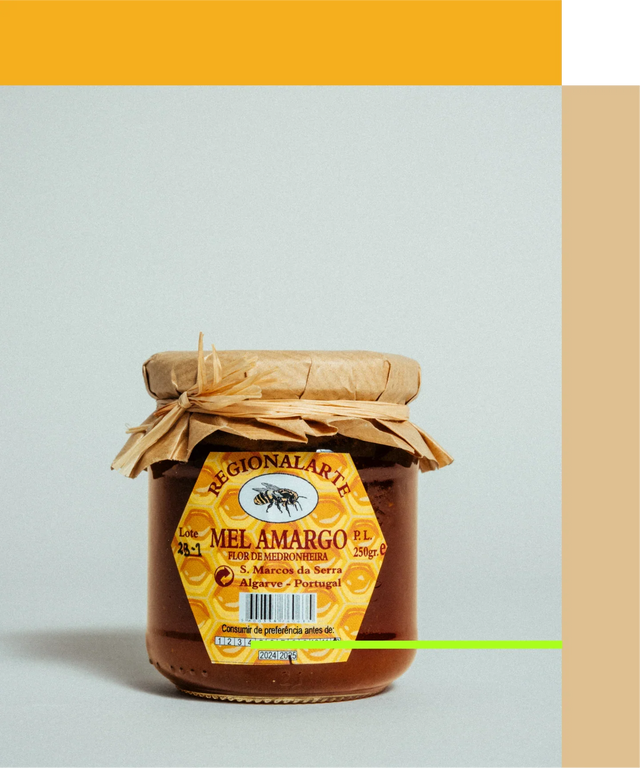
Mel amargo is strawberry tree honey. Bees make it from the nectar of strawberry tree flowers, which bloom in autumn and winter, when almost every other flower is gone. Ours comes from São Marcos da Serra, in the municipality of Silves, where the strawberry tree flowers from October to January and the bees can be seen working in the cold.
It starts sweet and quickly turns to a complex bitterness, with notes that recall coffee. It crystallises fast, which is natural and does not mean it has lost quality. Our Bitter Honey comes from Regionalarte, the Lima family, who have been distilling strawberry tree spirit on the same hills for generations. I like it with aged cheese, fresh curd cheese, plain yoghurt or a square of dark chocolate, next to the glass of mead.
What is a cobertor de papa and where does it come from?
The cobertor de papa is a traditional handmade blanket from the Serra da Estrela region, woven by hand from coarse, long churra wool. It is heavy, warm, dense and fluffy, and almost waterproof. It comes from Maçainhas, in the municipality of Guarda, near the Mondego river, where wool production grew in the 18th century with the support of the Marquis of Pombal.
The name has a lovely explanation: during finishing, the pieces are soaked in water and briefly take on the look of a papa, a porridge. Shepherds used them to keep warm while herding, and tradition says also to keep wolves away. All of this is well described in the Portuguese Wikipedia entry on the Cobertor de Papa and in a report by Gerador in Maçainhas.
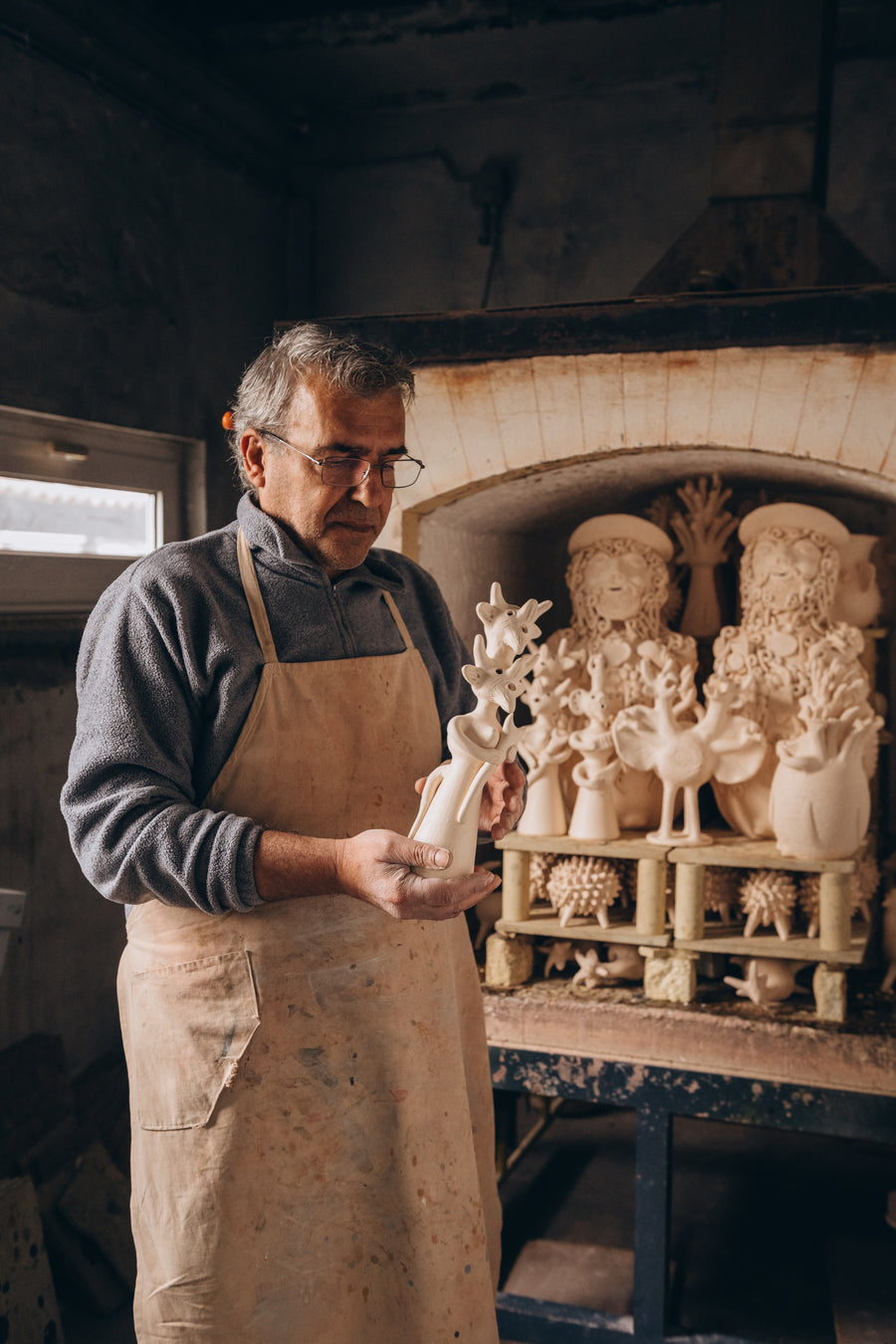
When the factory where she worked closed, Céu Reis did not let the craft die. On 15 May 2018 she founded, with 15 other members, the association O Genuíno Cobertor de Papa, rescued a wooden hand loom around 300 years old and went back to weaving the old way, with her mother, Rosa Baía, and other artisans. If you want to know how to recognise a genuine blanket, I wrote a guide: Cobertor de Papa: price, where to buy and how to spot the genuine one.
Which Portuguese wool blankets keep a home warm in winter?
There is more than one answer, and each has its own mountain. These are the ones in our winter collection:
- Cobertor de Papa (Shepherd's Blanket): the Maçainhas classic, more than 225 by 170 centimetres. On the Ra‑Ro Index it sits at the Unique level.
- Cobertor de Papa (Manta Lobeira): the manta lobeira is the colourful striped version of the cobertor de papa, in white, brown, green, red and yellow.
- Wool Blanket (Manta Pastor) by Ecolã: 100% raw Bordaleira sheep wool, woven in Manteigas, in the Serra da Estrela, by a small family business.
- The scarves by As Capuchinhas, the cooperative in Campo Benfeito, in the Serra de Montemuro: the Mottled Scarf, in 100% wool with mottled yarns, and the Blended Scarf, with an orange dyed with lichens and pompoms in burel.
And for those who want to carry the wool through the day, there is the Cobertor de Papa Notebook, with a cover made of the same cloth.
What goes into a Portuguese winter kit?
If I had to put together a kit for the first real night of rain, it would be this one. Prices are Ra‑Ro prices in September 2026.
| Piece | Why | Approximate price |
|---|---|---|
| Traditional Mead | A slow glass of mountain heather honey | €21.80 |
| Bitter Honey | Winter honey, for cheese and chocolate | €9.60 |
| Ecolã Wool Blanket | Raw Bordaleira wool, for the sofa | €114.00 |
| Cobertor de Papa (Shepherd's Blanket) | The warm weight of Guarda, for the bed | €198.10 |
| Cobertor de Papa (Manta Lobeira) | Coloured stripes to brighten the winter | €271.90 |
| Cobertor de Papa Notebook | The whole winter, in paper and wool | €35.70 |
The Elderflower Liqueur and the As Capuchinhas scarves complete the kit. You can see every piece and the current prices in the Ra‑Ro Winter collection.
How do you care for a wool blanket?
A well cared for wool blanket lasts for generations. The secret is to wash it little and air it often. These are the rules we follow for the cobertor de papa, and they work for almost any heavy wool blanket:
- Air it outdoors on a dry day and shake it. One or two days in the sun help to freshen it without washing.
- Treat stains locally, with cold water and a cloth, without rubbing.
- When it really needs washing, use cold water and a wool detergent, or ask a laundry that knows the piece is 100% wool.
- Never use hot water or strong agitation, and never put it in a tumble dryer: the wool felts further and shrinks.
- Dry it flat in the open air and only put it away when it is completely dry.
- Store it folded in a dry place, ideally in a breathable cotton bag, protected from moths.
Which Portuguese Christmas gifts should you give this winter?
Christmas is closer than it looks, and a winter gift has one advantage: it gets used straight away. My Portuguese Christmas gift ideas, from this side of the collection:
- For people who love the table: Traditional Mead and Bitter Honey together. One sweet, one bitter, both from winter.
- For people who always feel cold: an As Capuchinhas scarf, woven on hand looms in the Serra de Montemuro.
- For a new home or a wedding: a cobertor de papa, a gift to hand down to the children.
- For people who are always taking notes: the Cobertor de Papa Notebook.
For more ideas sorted by budget, see our guide Portuguese handmade Christmas gifts: a guide by price. And if you want to give the whole winter at once, it is all in the Ra‑Ro Winter collection.
Here at home, the rain has already started. The blanket is on the sofa, the mead is in the fridge, and I am ready.
Frequently asked questions
Is mead served chilled or warm?
For the Licores Serrano Traditional Mead, we suggest serving it lightly chilled, at 10 to 12 °C, in a wine glass. It can also be served at room temperature with cheese and desserts, or chilled as an aperitif.
What is hidromel?
Hidromel is the Portuguese word for mead, a fermented alcoholic drink in which most of the sugars come from honey. It is made with water, honey and yeast. The one at Ra‑Ro is made in Covilhã with heather honey from the Serra da Estrela.
Where is the genuine cobertor de papa made?
In Maçainhas, in the municipality of Guarda, by the association O Genuíno Cobertor de Papa, founded in 2018 by Céu Reis. The blankets are woven by hand on a wooden loom around 300 years old.
Why is it called cobertor de papa?
During finishing, the pieces are soaked in water and briefly take on the look of a papa, a porridge, which is said to be the origin of the name.
How do you wash a cobertor de papa?
Wash it rarely. Air it outdoors, treat stains with cold water without rubbing and, if it needs washing, use cold water and a wool detergent, without agitation. Dry it flat and never in a tumble dryer.
Is bitter honey really bitter?
It starts sweet and turns to a complex bitterness with coffee notes. It is strawberry tree honey, harvested in winter in São Marcos da Serra, in the Algarve, and it pairs very well with aged cheese or dark chocolate.