Cart
0
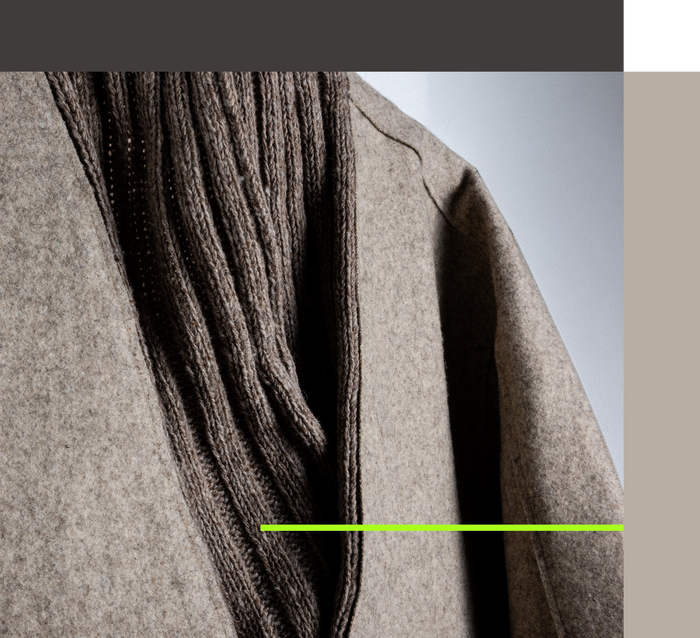
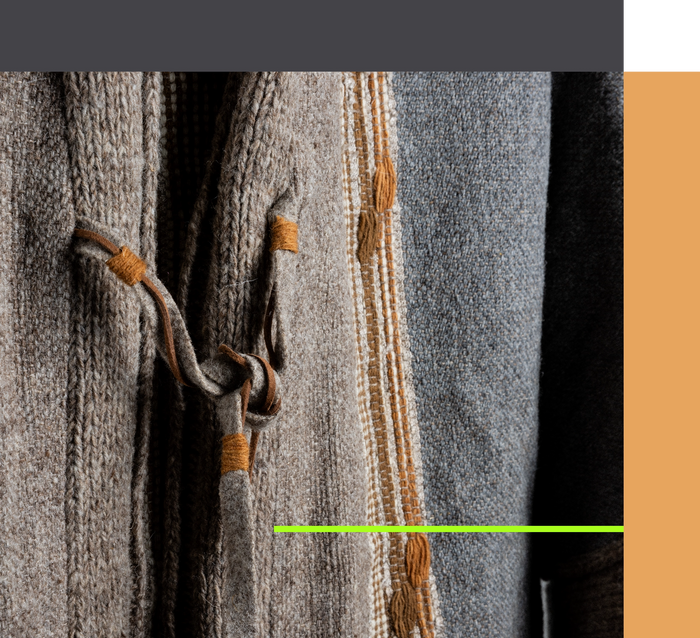
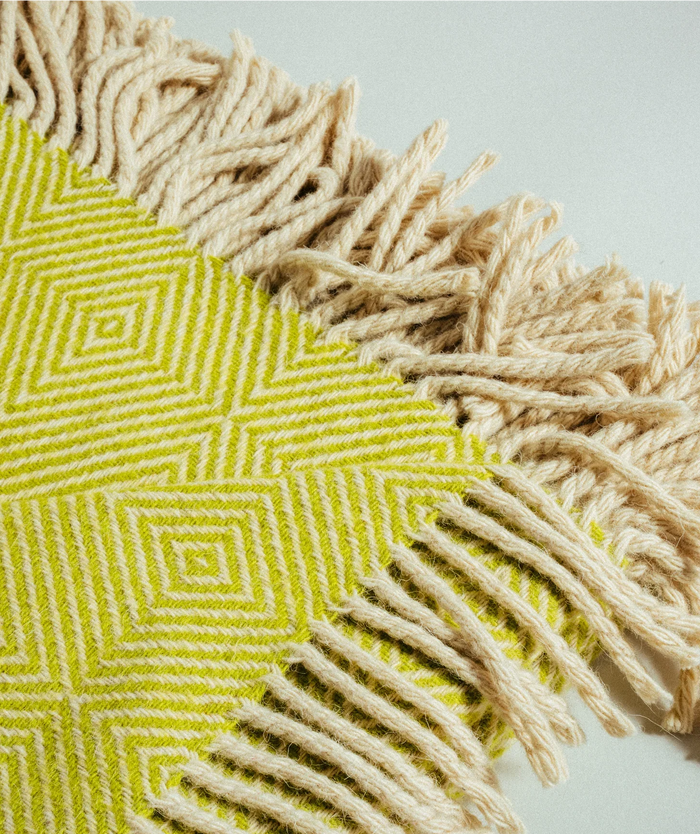
Burel is a wool cloth that is woven on a loom and then fulled, meaning it is beaten and scalded in very hot water until it becomes dense, compact and warm. It is the traditional cloth of the shepherds of Serra da Estrela, in Portugal, used for capes, coats and waistcoats. It protects against cold, wind and rain.
Origin and history
Burel was born from the pastoral life of the mountains of central Portugal. Ecolã, a family workshop founded in 1925 in Manteigas, describes it as a fabric of medieval origin, worn by shepherds and clergy. As many wool mills went bankrupt, the cloth almost disappeared. It came back to life in Manteigas, where the old Lanifícios Império mill reopened in 2010, and today it also appears in fashion and interiors. In the Serra de Montemuro, the tradition is tied to the capucha, the cape shepherds wore to shelter from cold and rain. The cooperative As Capuchinhas, founded in 1987 in Campo Benfeito, took its name from it.
How it is made
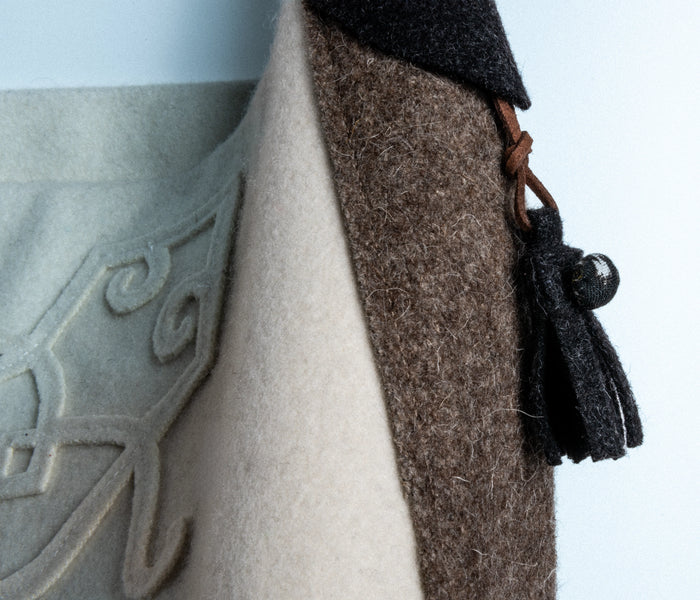
It all starts with wool, traditionally from native Serra da Estrela sheep such as the Bordaleira. The wool is washed, carded and spun. Then it is woven on a loom. The step that defines burel comes next: the cloth goes into the pisão, a fulling machine that beats and scalds the wool to make it harder and tighter. With hot water and pounding, the fibres lock together and the fabric shrinks. The result is a thick, cohesive cloth that resists tearing and heavy use. It can keep the natural colours of the wool, white, brown or mixed, or be dyed.
Where it comes from
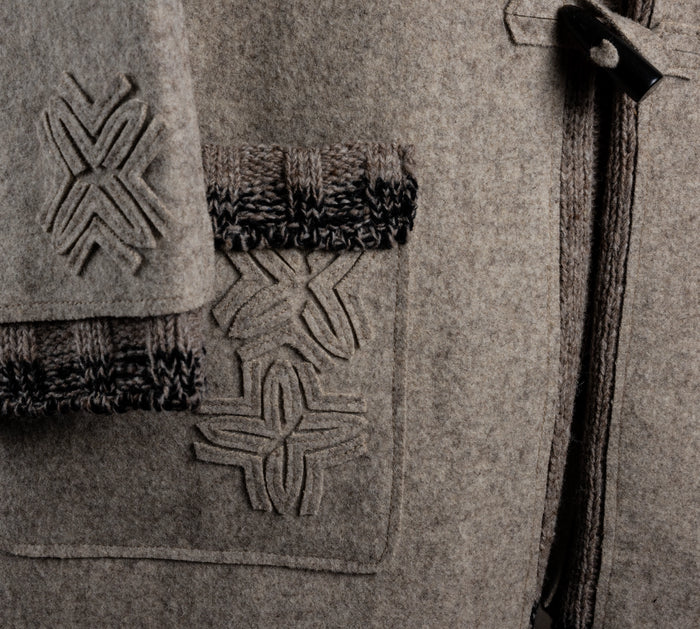
Burel belongs above all to Serra da Estrela, with documented production in Manteigas and in São Romão, in the municipality of Seia. In Manteigas, Ecolã makes burel from Bordaleira Serra da Estrela wool. In the Serra de Montemuro, north of the Viseu district, As Capuchinhas turn Serra da Estrela burel into clothing on hand looms, with traditional techniques and contemporary design by Paula Caria.
How to recognise burel
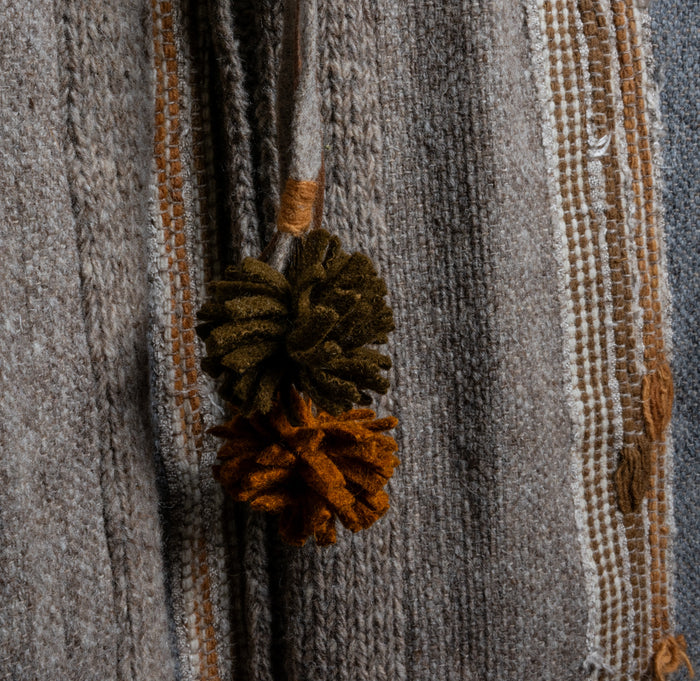
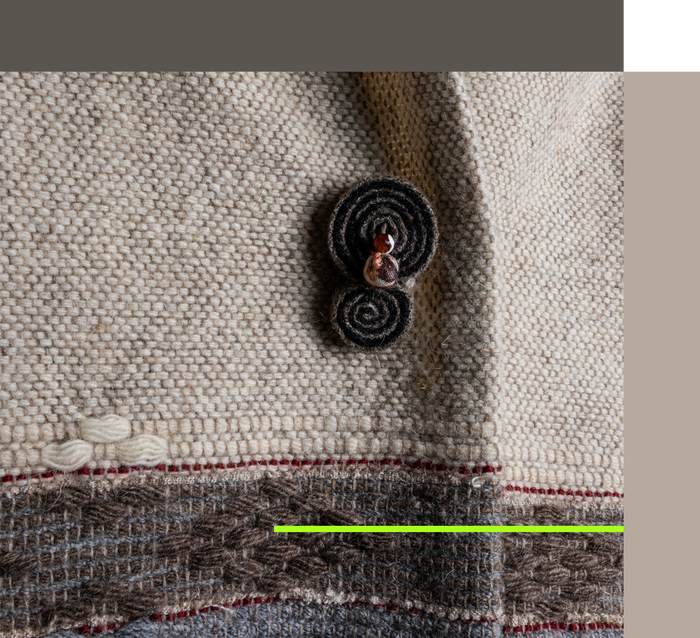
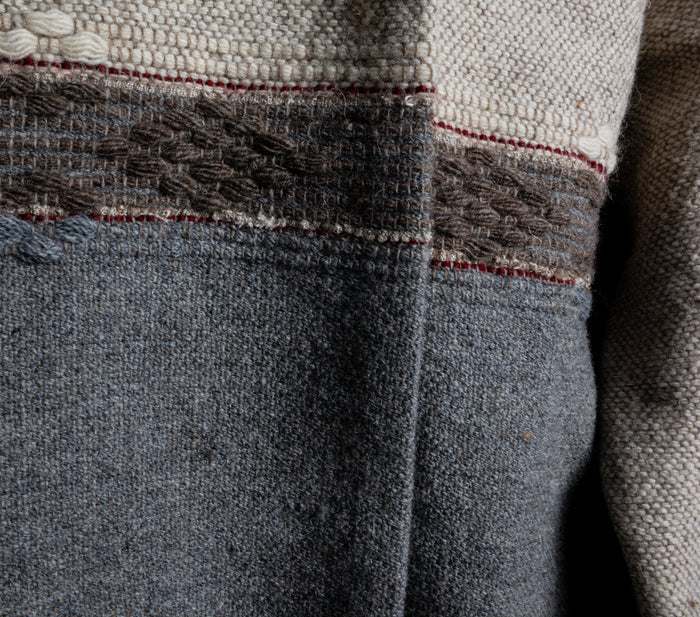
Touch the cloth. Burel is thick, firm and heavy for its size. The surface looks felted and the weave is barely visible. Cut edges stay clean. Water tends to run off the surface instead of soaking in straight away. It is made of wool, so it is warm and breathable. Be wary of thin, stretchy or synthetic fabrics sold as burel.
Where to buy
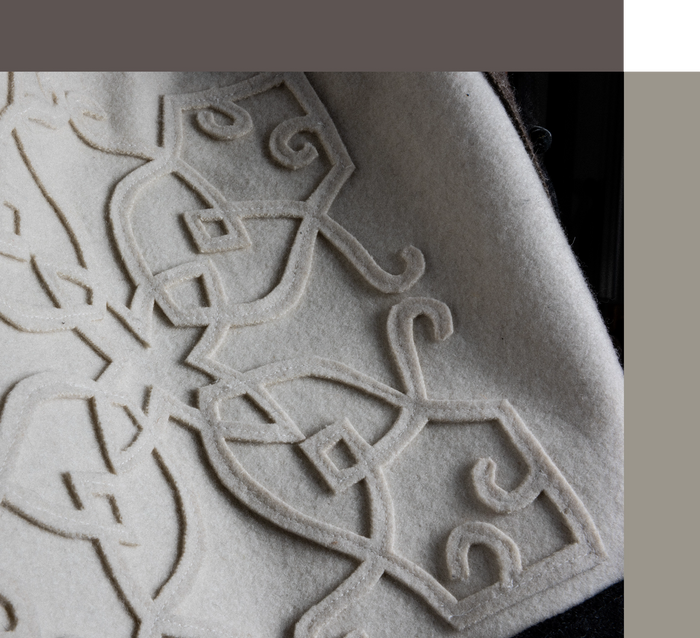
At Ra‑Ro you will find burel pieces handmade by As Capuchinhas in Campo Benfeito: the Light Mottled Burel Coat, the White Azulejo Bag, with cut-out burel inspired by Portuguese tiles, and the Dyed Weave Poncho, in linen and burel dyed with walnut and lichens. From the same artisans comes the Hooded Coat with Laced Hem, in Serra da Estrela wool. From Ecolã in Manteigas comes the Wool Blanket (Shepherd's Blanket), in raw Bordaleira wool. Read also about the cobertor de papa and the manta lobeira, or see the Ra‑Ro Index.
Frequently asked questions
Is burel waterproof?
Burel is not a technical fabric, but it is very dense. Water tends to run off the surface and the cloth protects well against rain and wind. That is why it was the cloth of shepherds' capes for generations.
What is the difference between burel and felt?
Burel is first woven on a loom and only then fulled. Felt is made from loose fibres pressed together, with no weaving. So burel keeps a woven structure beneath its felted surface.
What is a capucha?
The capucha is the traditional cape worn by shepherds in the Serra de Montemuro to shelter from cold and rain. It gave its name to the cooperative As Capuchinhas, founded in 1987 in Campo Benfeito.