Cart
0
Flor de sal, the Portuguese flower of salt, is the thin layer of crystals that forms on the surface of the water in salt pans on hot days with a gentle breeze. It is gathered by hand, carefully, before it sinks. It is not really meant for cooking: it is mainly used to finish a dish that is already made.
Origin and history
Salt has shaped Portuguese history for more than a thousand years. The oldest known document about Portuguese salt dates from 959. It records a gift of land and salt pans in Aveiro from Countess Mumadona to the Monastery of Guimarães.
On the Tagus estuary, the first records of salt making around Samouco date from the 13th century. Alcochete was once the largest and most important salt producing centre in Portugal. The Samouco complex had 56 salt pans over 360 hectares and employed much of the local population. Today one remains: the Marinha do Canto, the only salt pan still working on the whole Tagus, protected since 2000 by the Samouco Salt Pans foundation.
How it is made
Work begins in March. The pans are cleaned, the wooden boards that edge them are repaired and the water is prepared. Then sun and wind evaporate the seawater from pan to pan until it is saturated. Crystals form in the final basins.
Flor de sal appears alongside ordinary sea salt. With strong heat, bright sun and a gentle wind, small fine crystals form on the surface, like a white, shiny film. It must be lifted several times a day so the crystals do not sink. At Samouco it is gathered with a net. Sea salt, by contrast, crystallises on the bottom and is raked with a wooden rake. The harvest runs mostly from June to September. At Samouco the salt has no additives and is not washed.
Where it comes from
In Portugal, traditional salt is made in the salt areas of Aveiro, Figueira da Foz, the Sado estuary (Setúbal and Alcácer do Sal) and the Algarve, in the Ria Formosa. Some origins have European protection: Flor de Sal de Tavira has been a Protected Designation of Origin since 2013.
How to recognise flor de sal
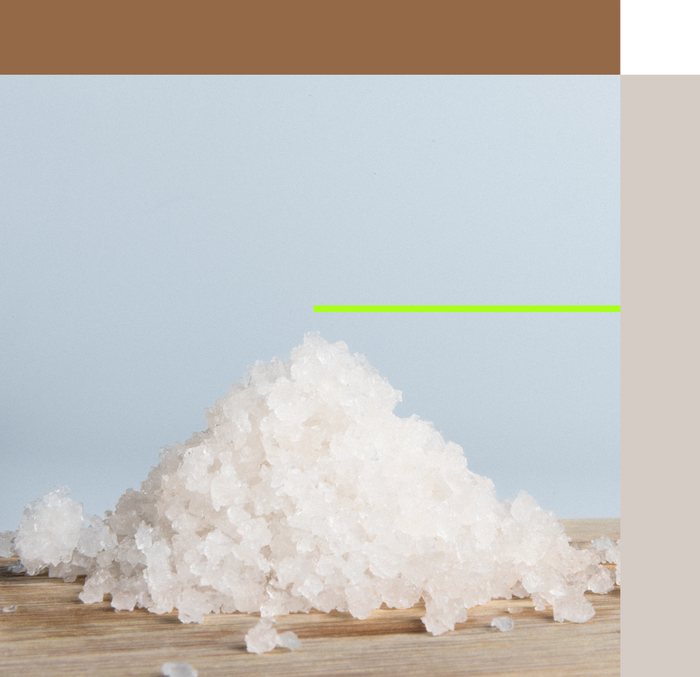
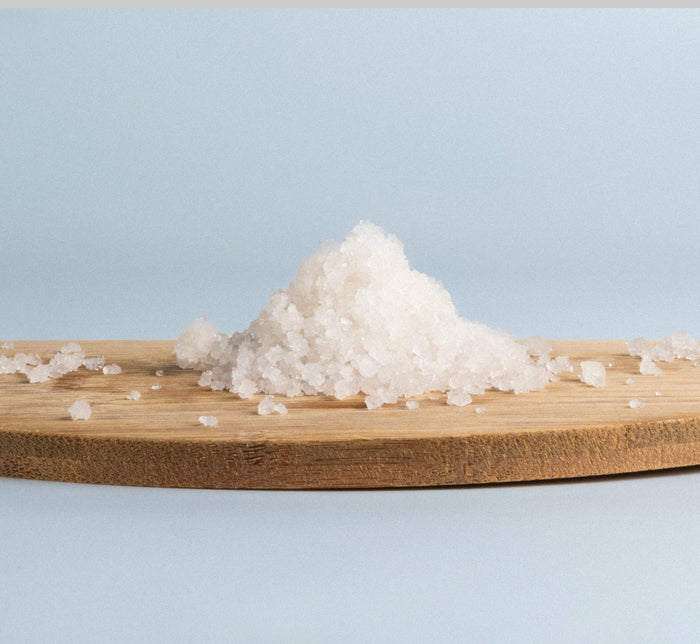
True flor de sal is gathered by hand, every day, only from the layer of crystals floating on the surface. The crystals are fine and irregular, like small flakes, very different from the large grains of coarse salt. They are white and crisp. They crack between your fingers and melt on the tongue. On the label, look for the salt pan of origin and, where it exists, the PDO seal.
Where to buy
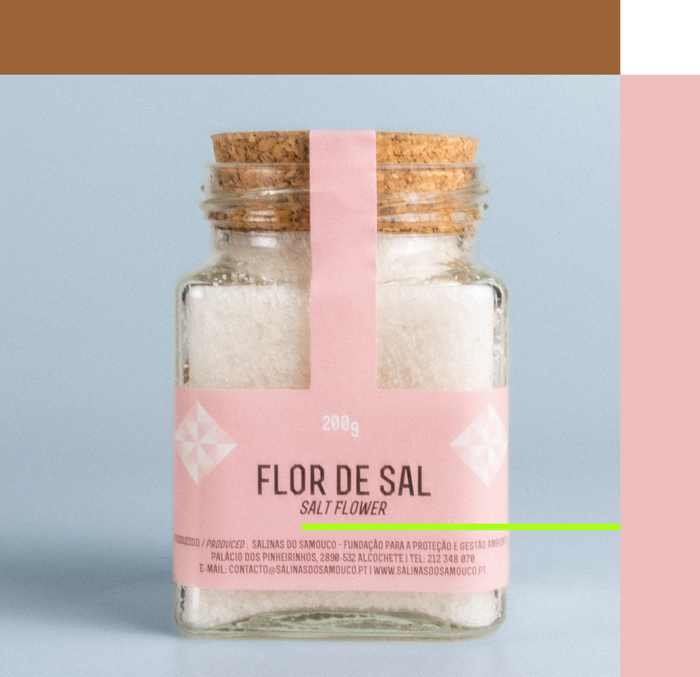
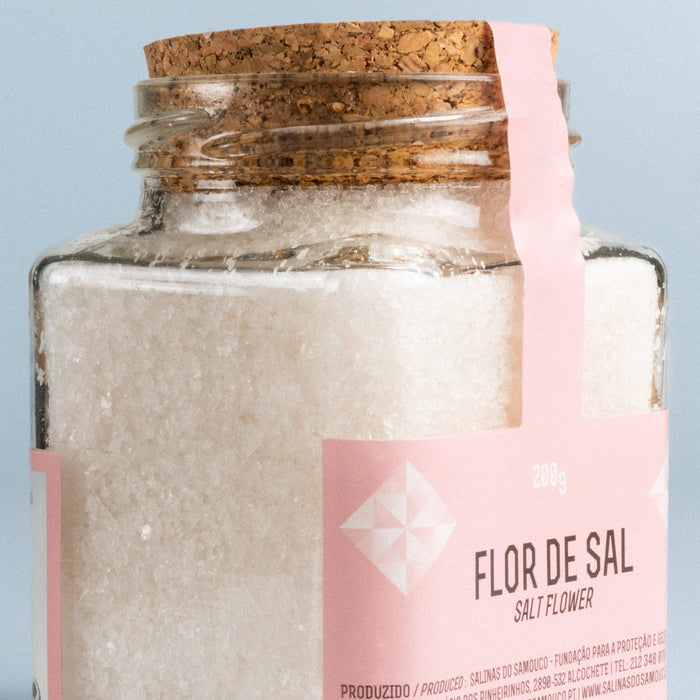
At Ra‑Ro you will find Flor de Sal and Sea Salt, coarse or fine, from Salinas do Samouco, harvested at the Marinha do Canto. Try the flor de sal to finish fish cooked in a cataplana or over a slice of fumeiro. For more Portuguese rarities, see the Ra‑Ro rarity index.
Frequently asked questions
What is the difference between flor de sal and sea salt?
Flor de sal forms on the surface of the water and is gathered by hand with a net, as fine, delicate crystals. Sea salt crystallises on the bottom of the pan and is raked out. Flor de sal is for finishing, sea salt for cooking.
When is flor de sal harvested?
In the warm months, mostly from June to September, when heat and a gentle wind speed up evaporation. It is lifted several times a day, before the crystals sink.
Does flor de sal contain additives?
No. At Salinas do Samouco the salt has no additives and is not washed. Traditional sea salt keeps elements of seawater such as magnesium, calcium and potassium.