Cart
0
Clay water jug: how terracotta keeps water cool without a fridge
Clay keeps water cool because it is porous: a little water passes through the walls and, as it evaporates, cools the rest. Luís Serra explains the moringue, the flask and the clay jug from Olaria XT in Redondo, and how...

In this article
 By Luís Serra, co-founder of Ra-Ro · View profile
About a 4 minute read

The explanation almost everyone gives is that clay "is cool". I have heard it all my life and it never struck me as an explanation at all. Clay has no temperature of its own. A jug left in the sun heats up like anything else. If the water comes out cool, something is happening. And it is.
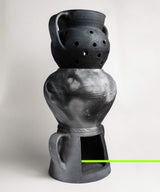
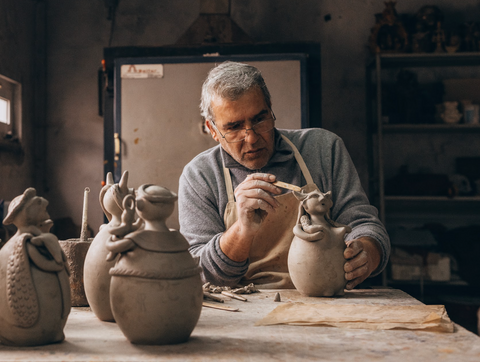
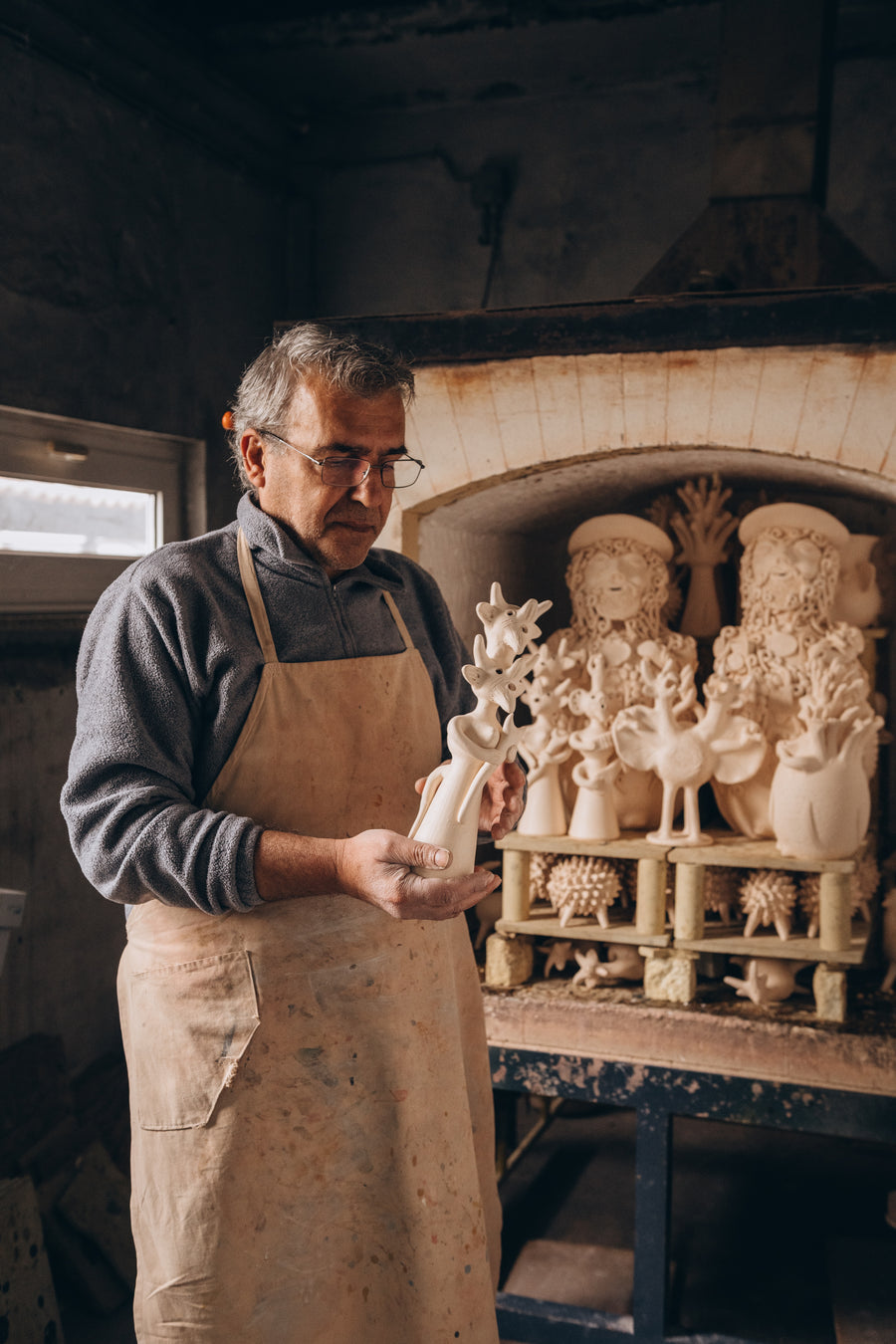
A clay moringue keeps water cool through evaporation: unglazed clay is porous, a small amount of water passes through the walls, evaporates on the surface and, in doing so, draws heat from the water left inside. It is the same principle as the bilha (clay jug) and the clay flask that people took to the fields in the Alentejo. At Olaria XT, in Redondo, in the district of Évora, master potter Xico Tarefa throws a moringue, a ring flask called barril câmara de ar and a jug that work this way, and Zeza paints them by hand.
Why does clay keep water cool?
Evaporation is water turning into vapour, and to do that water needs energy, which it takes from its surroundings. That is why you feel cold stepping out of the sea in the wind. Clay works the same way. Water seeps through the pores, reaches the outer surface, evaporates, and carries off some of the heat of the water still inside. The piece "sweats" a little. It is not a flaw. It is the mechanism at work.
Three practical consequences follow that people rarely mention. First: it works best in dry, hot air, which is exactly the Alentejo summer. In very humid air, little water evaporates and the effect drops. Second: it needs moving air. A jar shut in a cupboard cools nothing. Third: it needs porous clay. A piece glazed inside and out becomes watertight, and the principle no longer applies.
Moringue, bilha, flask: what changes?
The name changes with the region and the use; the physics stays the same. The moringue, or moringa, is the clay vessel that keeps cool water to hand. The barril câmara de ar is the working version. Its flat shape made it easier to carry water to the fields, and it had openings for a rope so it could be slung over a shoulder or hung from a cart. The Olaria XT one is porous, unglazed clay, as the job required. The name means inner tube, like a bicycle's, which I admit made me smile. In practice, it was the portable fridge of anyone who spent the day in the sun.
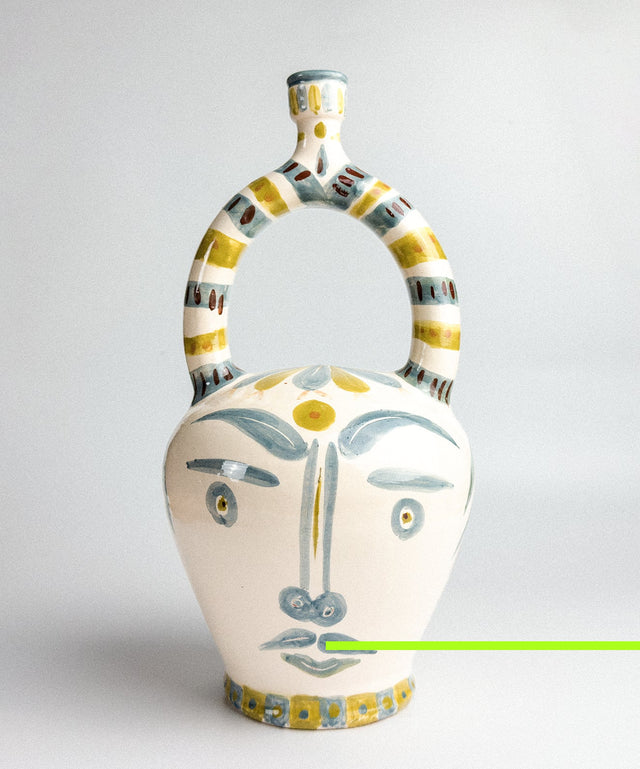
The Jarro Nove takes the same principle to the table: a clay jug for cool water or for wine. And the Olaria XT moringue has a feature that has nothing to do with physics: Zeza painted a face on it. A vessel that looks back at you. I like the idea that a useful object need not apologise for being fun.
A fair question: does the paint not block the pores? It depends on how much clay is covered and how the piece is finished. The moringue's own description says the effect depends on the clay keeping the right porosity. When in doubt, do not guess. Ask, which is what our contact page is for.
How to use and care for a clay water jug
Before first use, fill the piece with clean water, leave it for a few hours and pour that water away; new clay can give off some taste the first few times. After that the rules are simple. Wash with water only, no detergent, because porous clay absorbs smells and flavours. Change the water every day. Keep the piece in the shade where air circulates, ideally on a plate or stand, because the surface gets damp. Between uses, let it dry thoroughly, open, so it does not grow mould. No dishwasher.
One more thing is worth saying. This does not replace the fridge, nor does it try to. The water comes out cool, not ice cold. For me, that is the point: a simple solution, with no electricity, that worked for generations because it rested on sound physics, even when those using it could not explain it. Xico Tarefa could, because he learned it from the masters, and it shows in these pieces: they are decorative, but they still do the job they were made for.
If you want to meet the potter and the painter, their story is in Tiago's article on Redondo pottery and on the Olaria XT page. And if your question is how to treat clay that goes on the heat, I have written about how to cure a clay pot. That is another conversation. The clay is the same.
Frequently asked questions
How does clay keep water cool?
Unglazed clay is porous: a small amount of water passes through the walls and evaporates on the surface, and that evaporation draws heat from the water inside.
What is a moringue?
A moringue, or moringa, is a clay vessel for keeping and serving cool water, traditional in several regions of Portugal such as the Alentejo.
Does a glazed clay jug keep water cool?
Little or not at all if it is fully glazed, because the glaze makes the clay watertight and stops the evaporation that cools the water.
Where should I put a clay water jug?
In the shade, somewhere with moving air, ideally on a plate or stand, because the outer surface gets damp.
How do I clean a clay water jug?
With water only and no detergent, because clay absorbs smells and flavours; then let it dry thoroughly, open, so it does not grow mould.
What was the barril câmara de ar used for?
To carry cool water to work in the fields; its flat shape and rope openings let it be carried over a shoulder or hung from a cart.


 -10%Rare Combinations
 November Selection