Cart
0
Figurado de Barcelos is the tradition of hand-modelling fired and painted clay figures in the municipality of Barcelos, in Minho, Portugal. Roosters, saints, musicians, scenes of daily life and fantastic creatures such as devils make up a folk universe recognised as certified craft production and registered as a geographical indication in the European Union.
Origin and history
Figurado began as a side activity of Barcelos pottery, using clay left over from utilitarian pieces. Many of the first figures had a musical function, and for a long time they were anonymous. In the 20th century, artisans began signing their pieces and figurado became recognised as folk art. Several families of figure makers come from the parish of Galegos de Santa Maria.
The most famous figure is Rosa Ramalho, born in 1888, who started working clay as a child, gave up the craft after marrying and took it up again when she was nearly sixty, creating a world of fantastic figures that shaped Portuguese folk art. The tradition continued in the family with her granddaughter Júlia Ramalho and today with her great-grandson António Ramalho.
How it is made
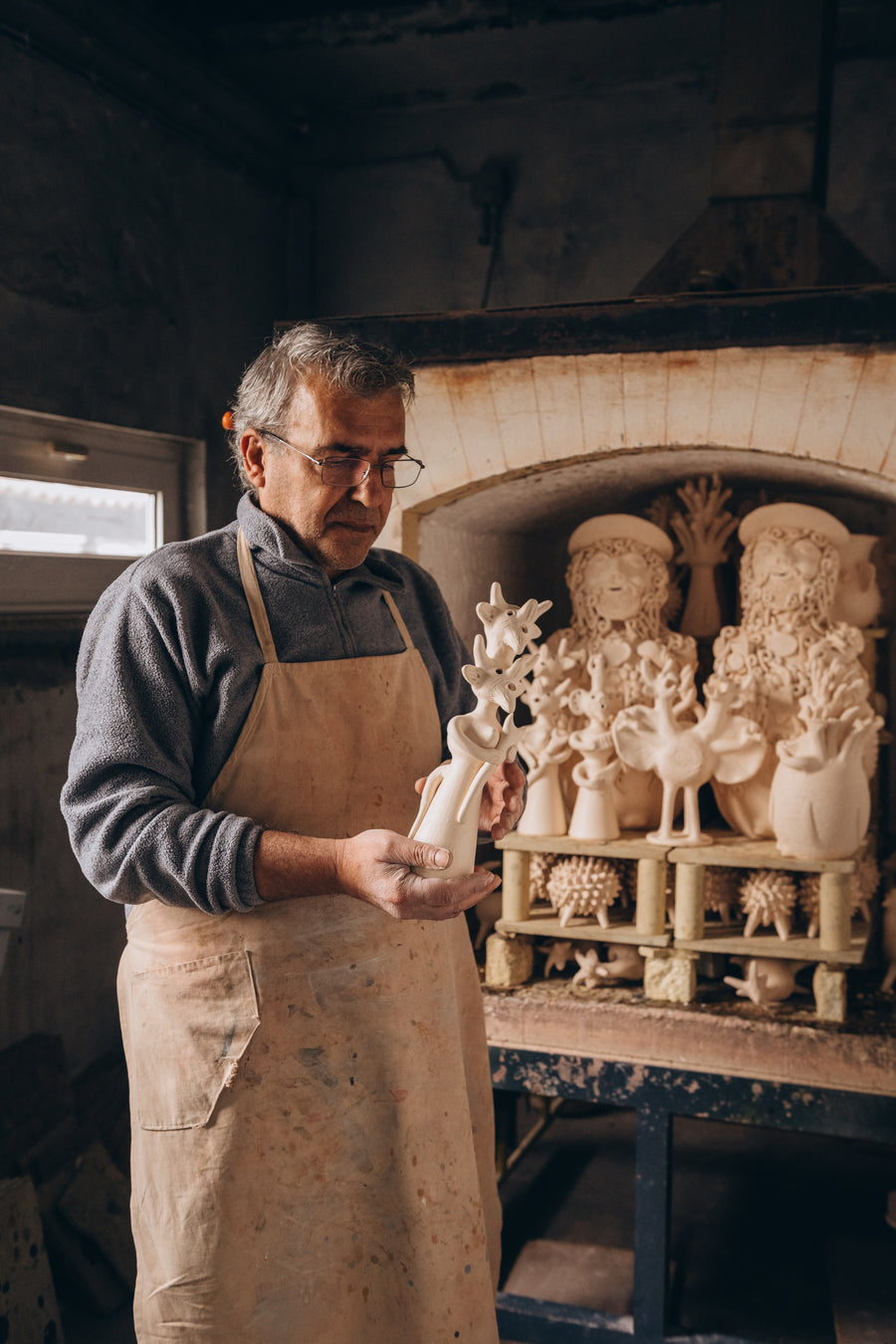
Each figure is modelled by hand from red clay, sometimes with simple moulds for repeated parts. Once dry, it is fired in a kiln and painted in bright colours, or glazed, depending on each artisan’s style. Themes range from the Barcelos Rooster to religious figures, from musicians and dolls to rural scenes and profane creatures such as devils and souls in purgatory.
In 2008, Barcelos council began the certification process for figurado, which distinguishes authentic pieces from imitations. Today dozens of artisans are certified by ACertifica, and figurado has been entered in the European Union register of geographical indications for craft products.
Where it comes from
Figurado comes from Barcelos, in the district of Braga, in Minho. The town’s weekly market and the Pottery Museum are two good places to discover it. António Ramalho, born in Barcelos in 1969, returned home in 2004, after years in England and France, to carry on the family tradition.
How to recognise it and care for it
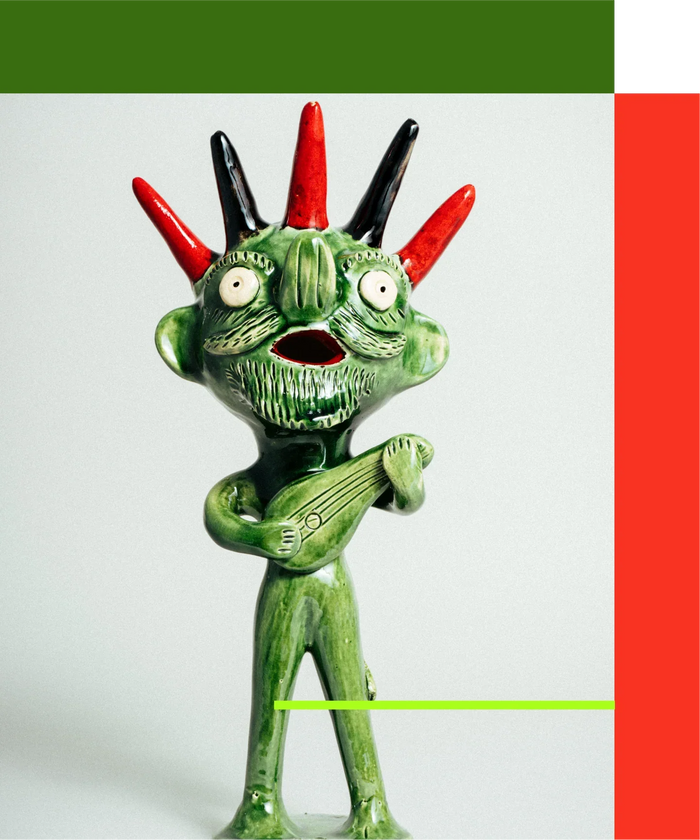
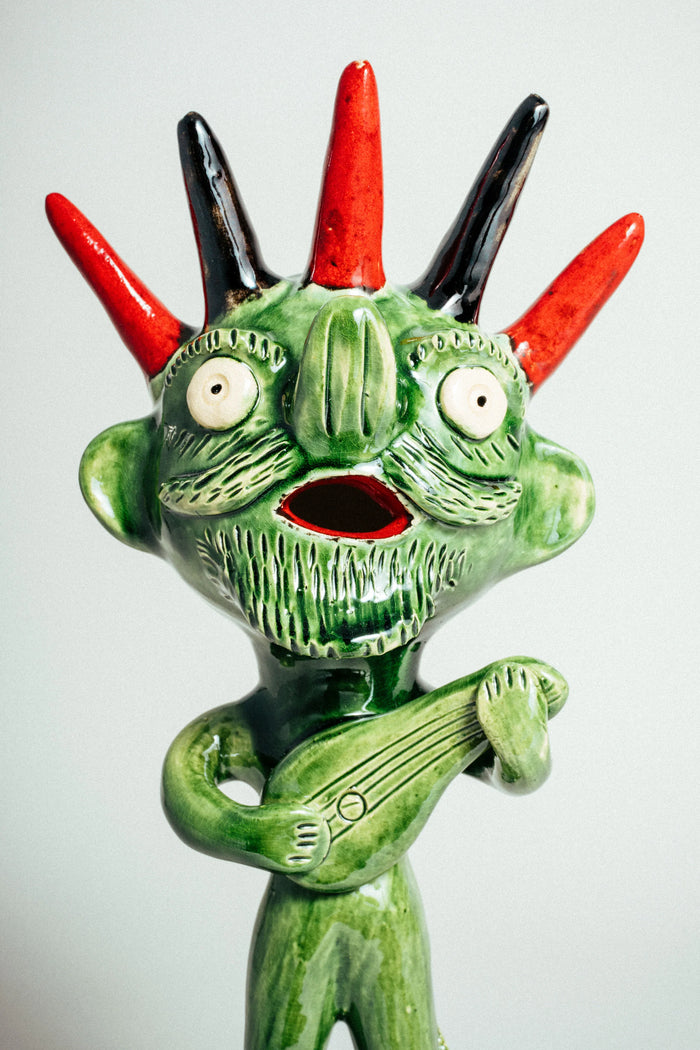
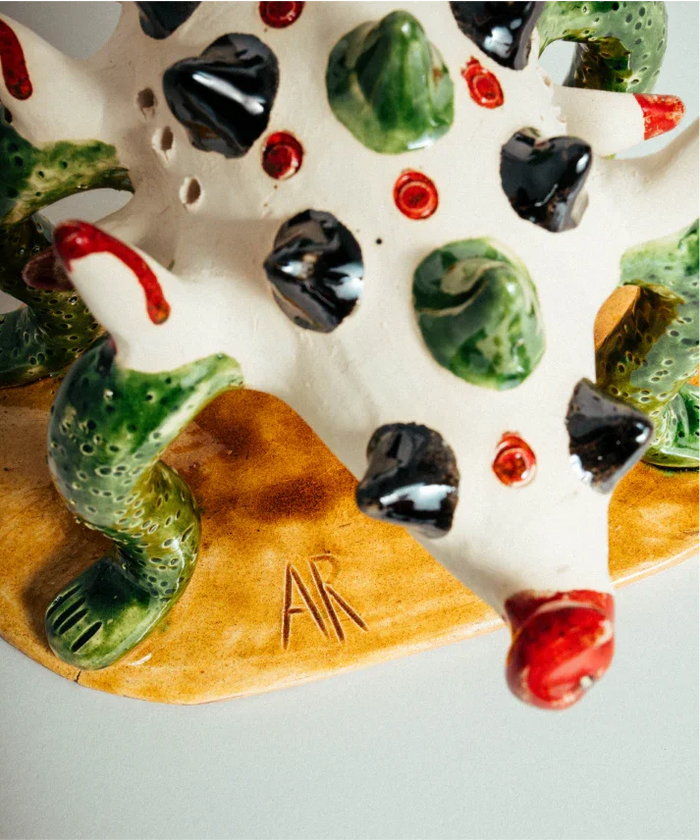
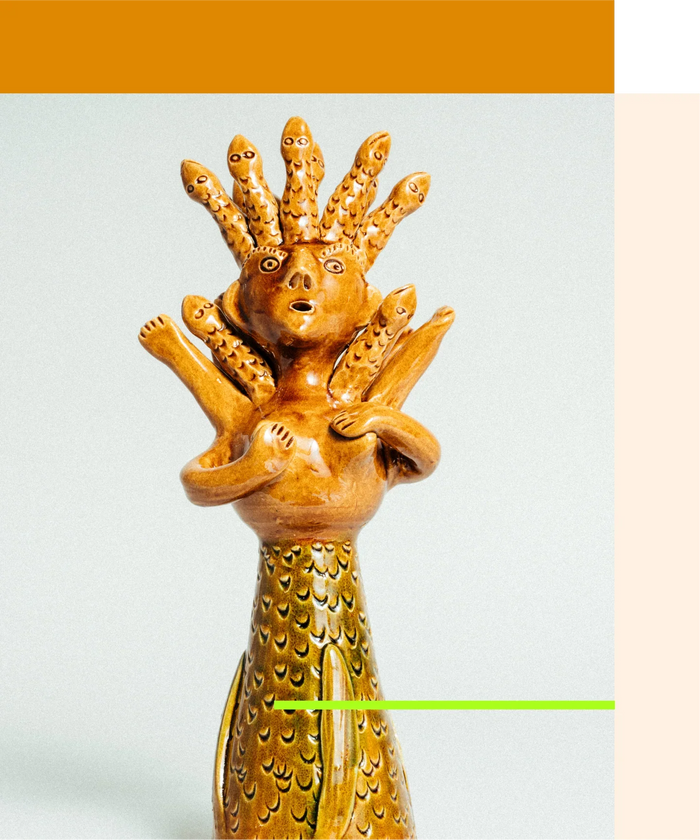
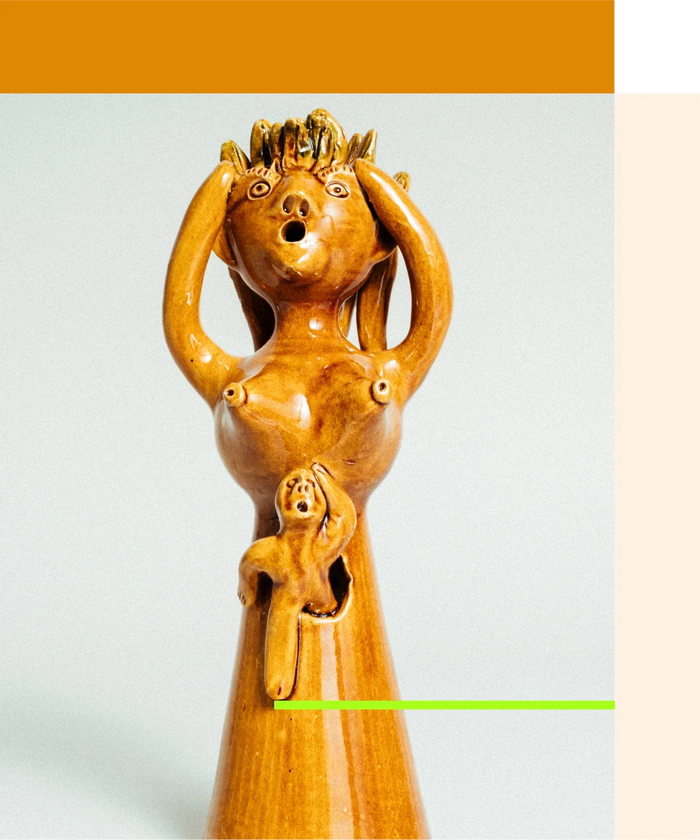
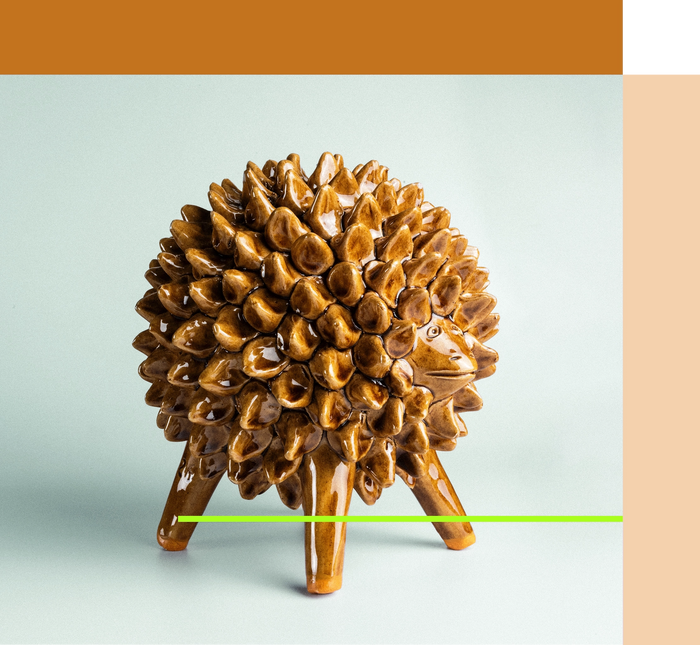
Certified figurado is identified as such by the certifying body, and many pieces bear the artisan’s signature. Each figure is unique, with small differences in shape and painting. The pieces are decorative: clean them only with a brush or a dry cloth and keep them away from damp and falls. António Ramalho’s figures are recognisable by their glassy, often green texture and their own surreal bestiary.
Where to buy
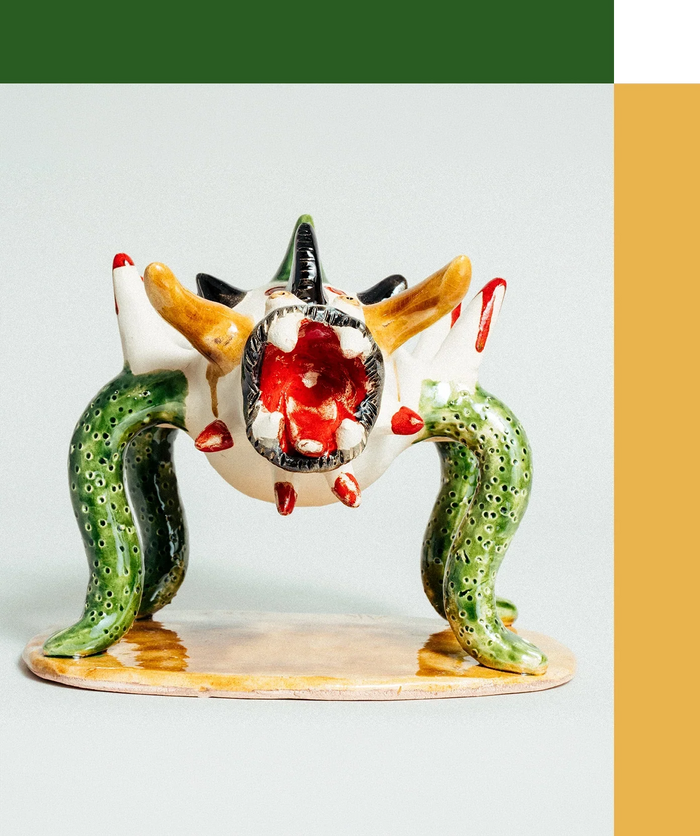
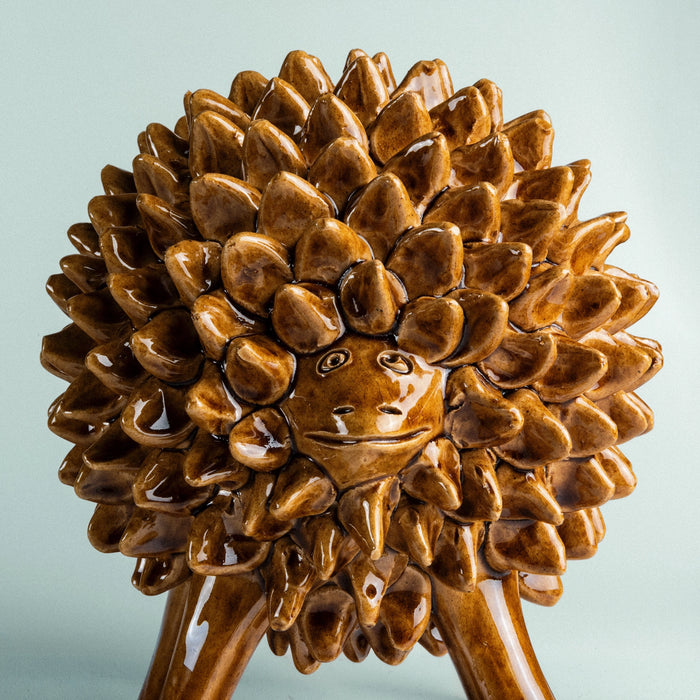
At Ra-Ro you can buy figurado by António Ramalho, such as the Barcelos Devil, the Sarronco (Bogeyman), the Medusa, A Parideira and the Hedgehog. See also the entries mafarrico and sarronco, two figures of folk imagination often found in figurado.
Frequently asked questions
What is figurado de Barcelos?
It is the art of modelling painted clay figures in Barcelos, Minho, with themes ranging from the rooster and saints to devils and scenes of daily life. It is certified craft production.
Who is António Ramalho?
He is a ceramicist from Barcelos, born in 1969, son of Júlia Ramalho and great-grandson of Rosa Ramalho. He reinvents figurado with glazed pieces and surreal creatures.
Where can I buy Barcelos figurines?
In Barcelos, at the weekly market and from certified artisans, or online at Ra-Ro, which sells pieces by António Ramalho such as the Devil and the Sarronco.