Cart
0
Mafarrico is a Portuguese folk word meaning devil and, by extension, an impish person or a mischievous child who is always up to something. Its etymology is considered obscure. In folk art, the mafarrico is one of the best-loved clay figures, somewhere between frightening and funny.
Meaning of the word
The Priberam dictionary lists several meanings for mafarrico. The first, informal, is devil. By extension, it refers to an impish, unruly person and, figuratively, to a mischievous child. Informally and pejoratively, it can also mean someone from Mafra, and it is also the name of a card game from the Bairrada region.
The origin of the word is unknown. Its scratchy, playful sound helps explain why it is so often used, affectionately, for a child who cannot sit still.
The devil in folk art
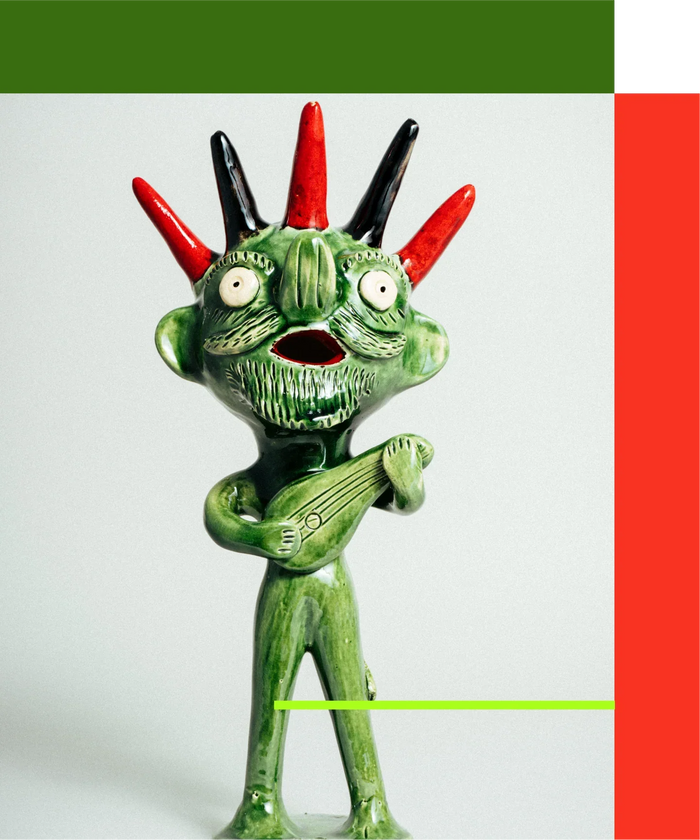
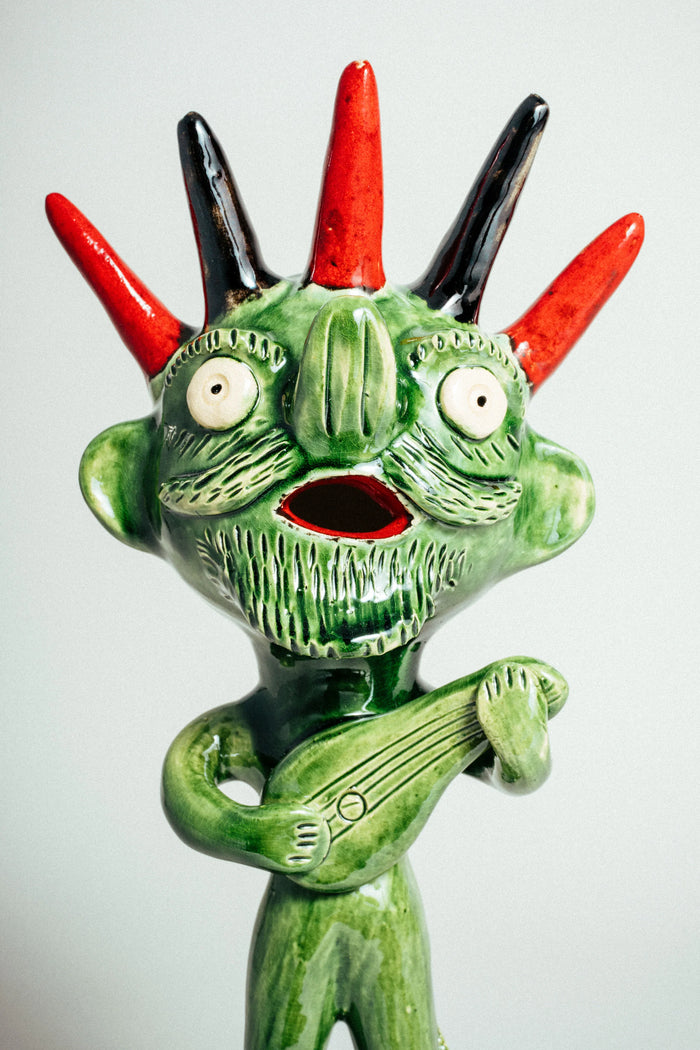
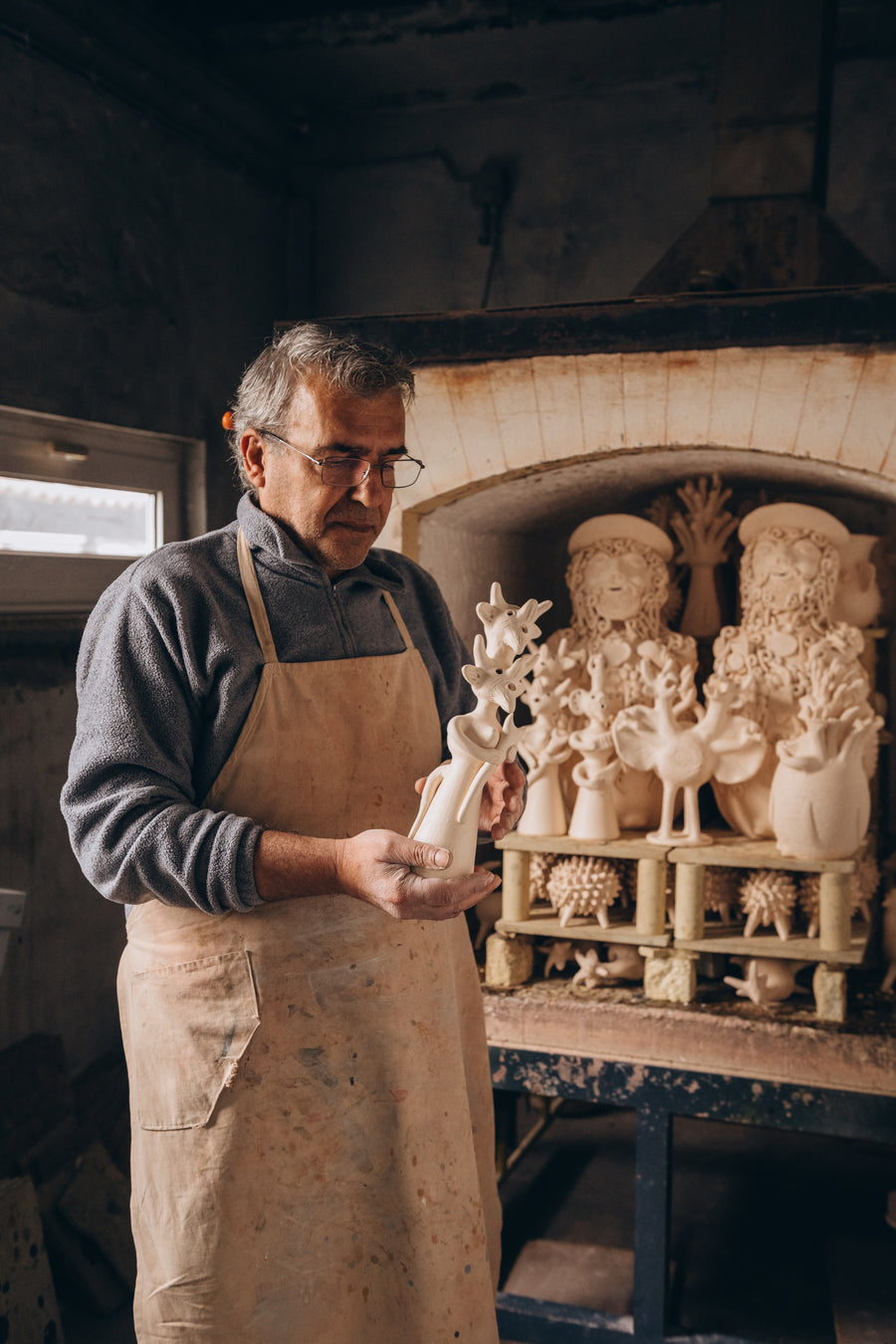
Devils are recurring characters in Portuguese folk art. In Barcelos figurado, profane and fantastic creatures, especially devils, live side by side with saints, roosters and scenes of daily life. Families of figure makers became known for their devils, and ceramicists such as António Ramalho keep reinventing them.
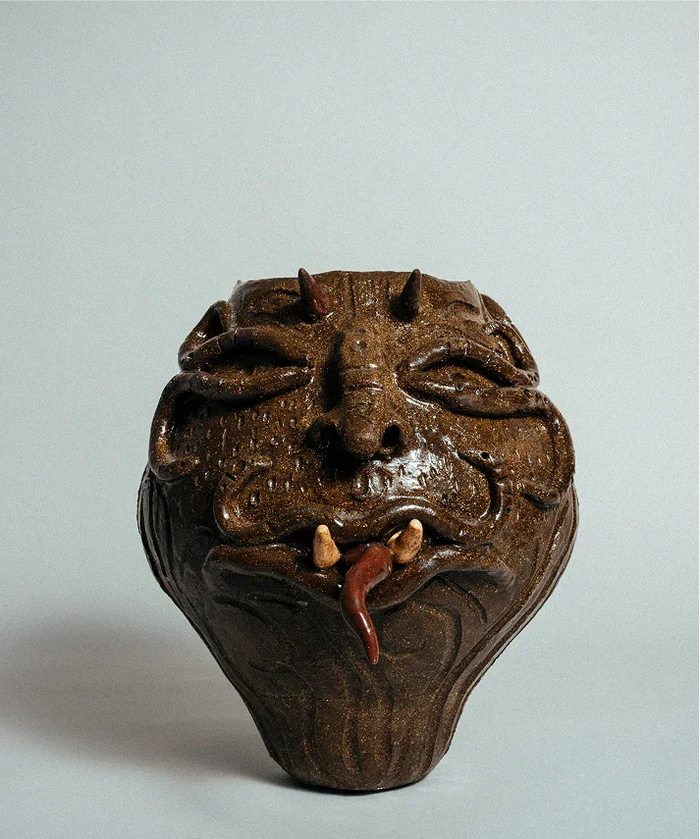
The folk mafarrico is rarely frightening. It has horns, a tail and a cheeky look, but also humour. It is a figure that plays with fear, close to the sarronco and the bogeyman adults used to scare children.
How it is made
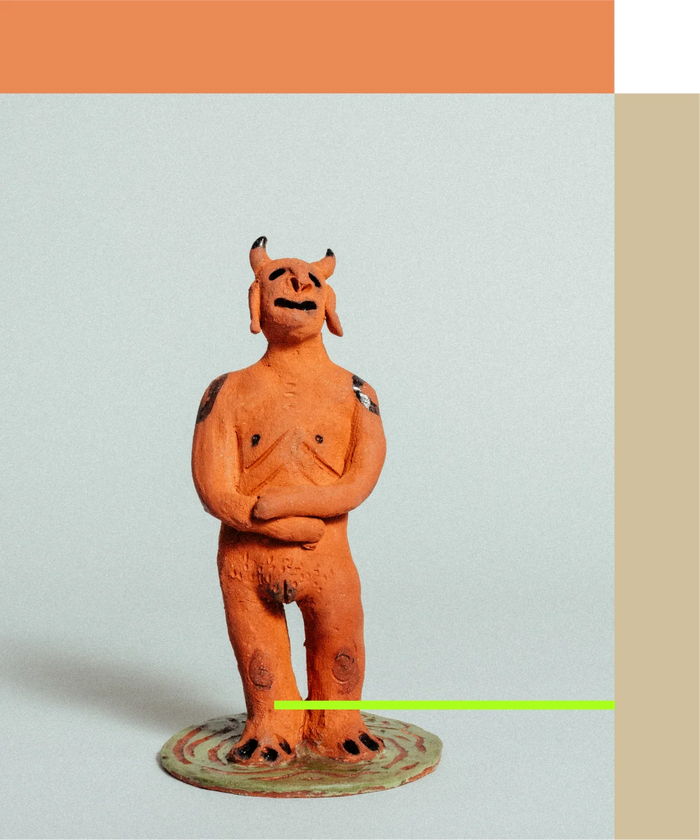
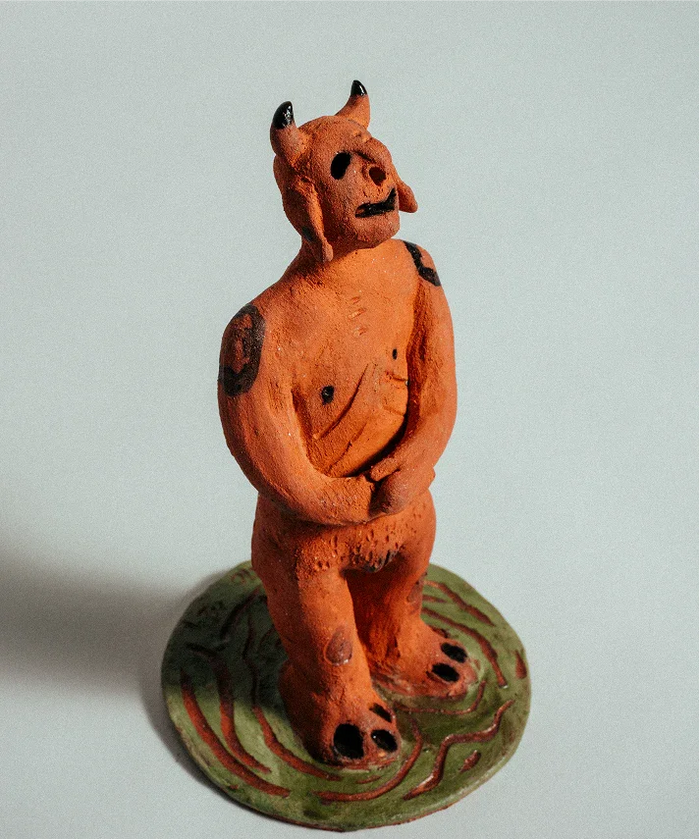
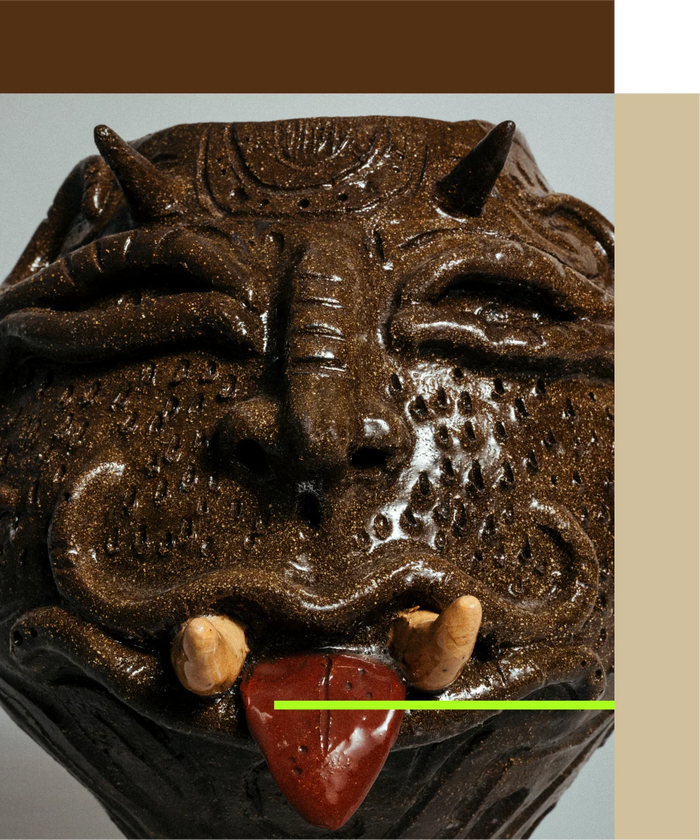
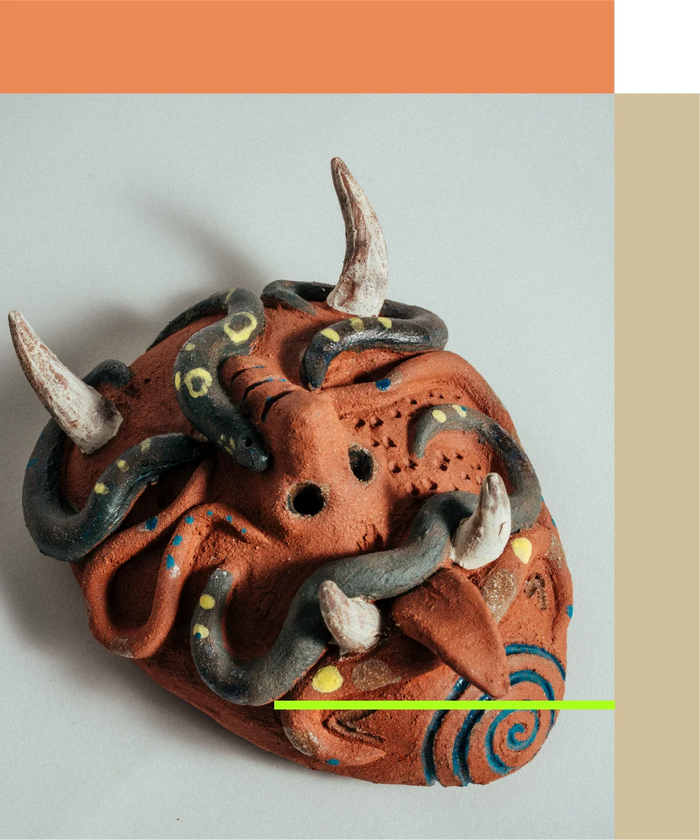
A clay mafarrico is modelled by hand, dried, fired and, depending on the artisan, painted or glazed. The ceramicist Andreia Pinho works with wild clay, which she collects by hand in different parts of Portugal, and draws on Portuguese folklore, Iberian mythology and cult cinema to create strange, expressive figures.
Where it comes from
The word is used all over Portugal. Devil figures have a strong tradition in Minho, in Barcelos, but appear in many potteries. Andreia Pinho has had a workshop in Leiria since 2021, after a master’s degree in Fine Arts at ESAD.CR and training at the CENCAL ceramics laboratory.
Where to buy
At Ra-Ro you will find the Mafarrico (Devil) by Andreia Pinho, in wild clay, and the Barcelos Devil by António Ramalho. From the same ceramicist, see also the Cabeçudo and her Masks.
Frequently asked questions
What does mafarrico mean?
It means devil, in informal Portuguese. By extension, it is an impish person or a mischievous child who is always up to something.
Where does the word mafarrico come from?
Dictionaries consider its etymology obscure. The origin of the word is not known with certainty.
Where can I buy a clay mafarrico?
At Ra-Ro, which sells the Mafarrico (Devil) in wild clay by ceramicist Andreia Pinho, from Leiria, and the Barcelos Devil by António Ramalho.