Cart
0
A cabeçudo (literally "big head") is a festival figure with a huge, oversized head, worn like a helmet, that dances through the streets to the beat of bass drums. It nearly always appears alongside the gigantones, the giants, at Portuguese pilgrimages and street festivals, above all in the Minho. The same figure has also moved into clay, in folk figurines and in authored ceramics.
Origin and history
Giants and big heads belong to a tradition of festive figures that have accompanied processions and celebrations in the Iberian Peninsula for centuries. The oldest references in Portugal link the giant figures to Corpus Christi processions. Over time they left the religious setting and became stars of the romarias, the local festivals.
Cabeçudos are the size of a person. That lets them move more freely than the giants and dance among the crowd. Many are caricatures, others are monsters or devils. In the Minho they are also called almajonas or armazonas. The best known example is the Revista de Gigantones e Cabeçudos at the Romaria d'Agonia in Viana do Castelo: at midday, in Praça da República, the figures dance to the Zés P'reiras, the bands of drums and bagpipes.
How it is made
The cabeçudo head is made of papier mâché and painted by hand. The giants have an iron frame, can reach four metres in height and weigh around 30 kilos, and are carried by one person inside.
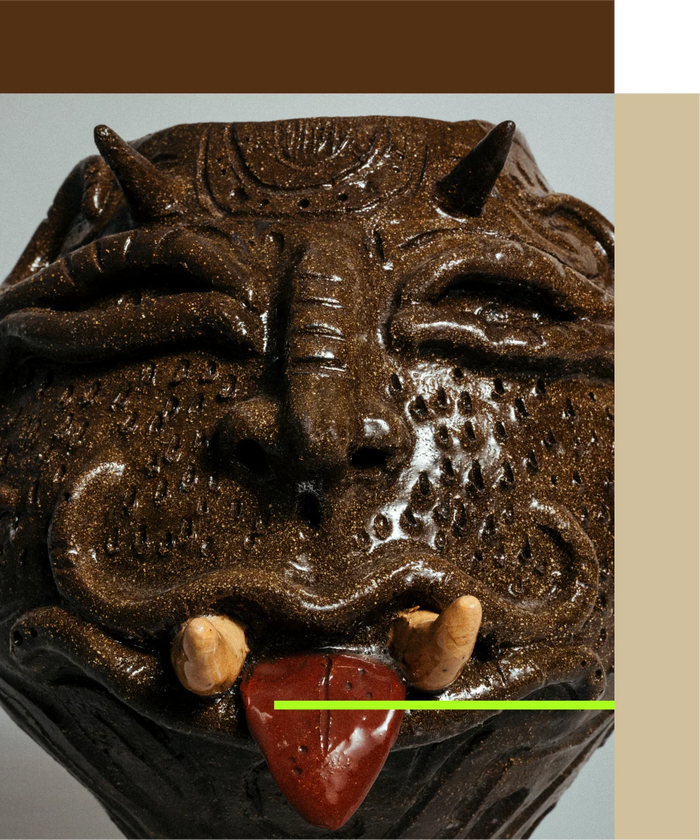
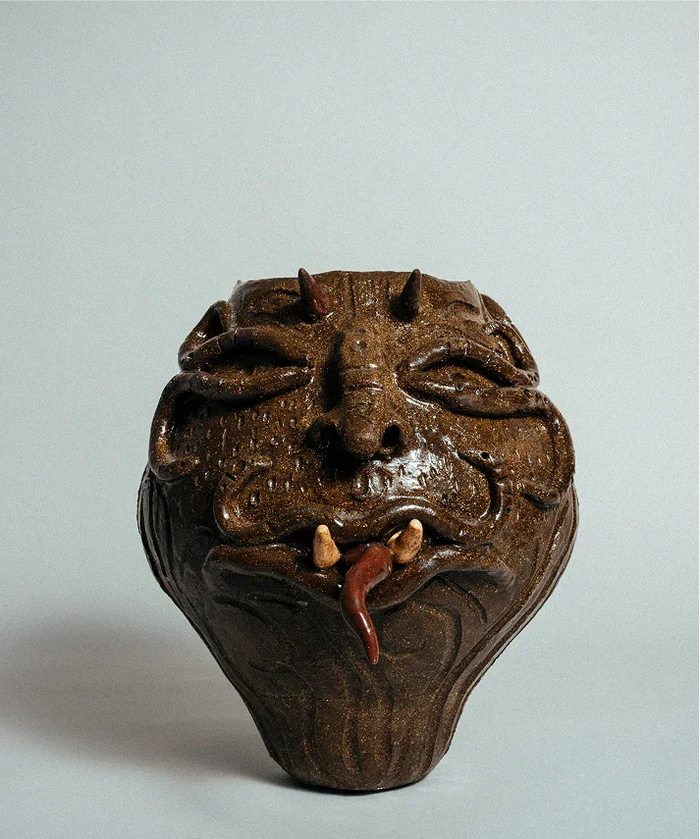
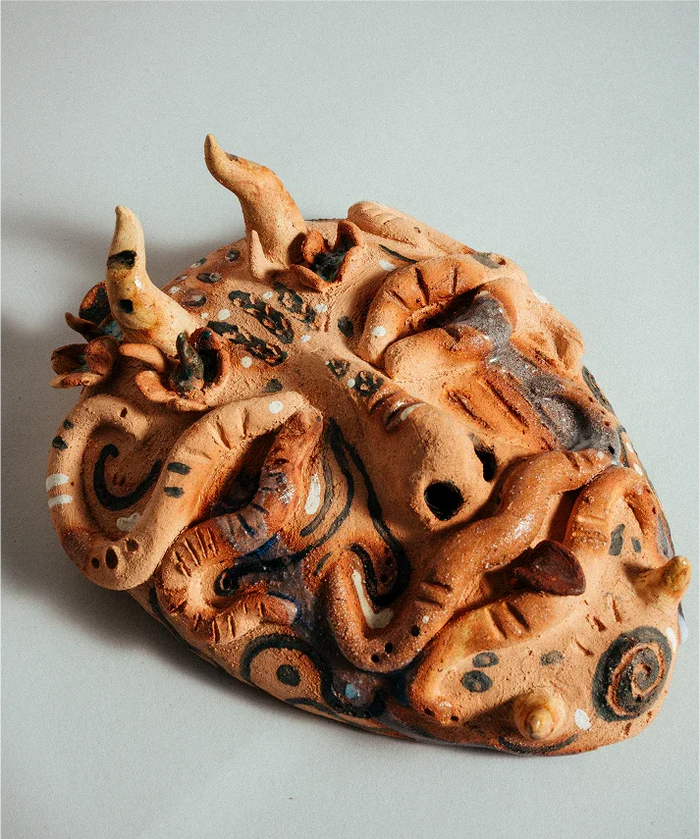
In clay, the figure found another life. The specification of the figurado de Barcelos lists giants and big heads among its religion and festival themes, next to devils and musicians. In authored ceramics, Andreia Pinho works with wild clay that she gathers by hand around Portugal. Her Cabeçudo is a sculptural vase: ears that look like teeth, tusks, a moustache like a snake and a dark red tongue.
Where it comes from
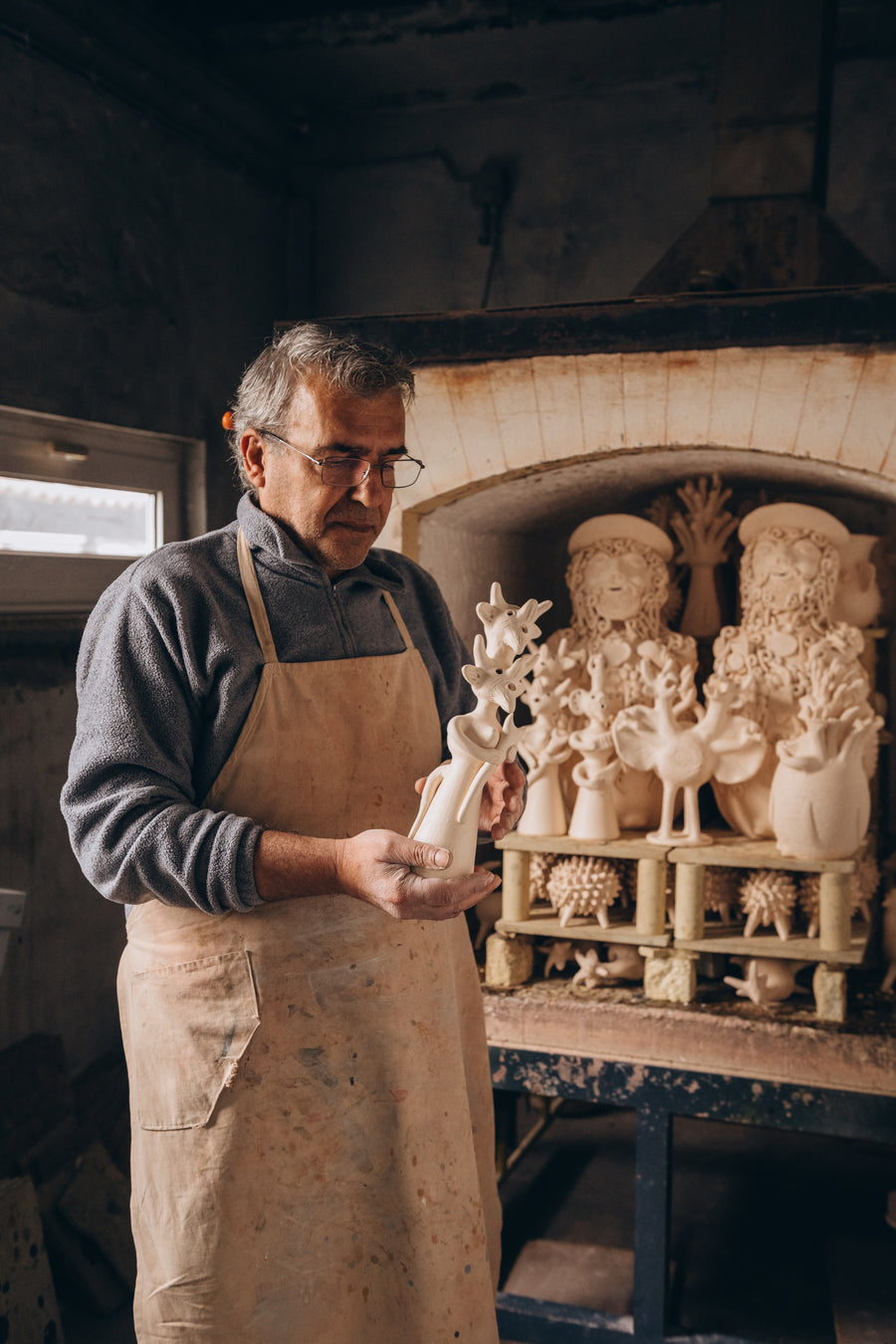
Cabeçudos take to the streets at festivals from north to south, but they matter most in the Minho, with Viana do Castelo in the lead. Andreia Pinho works in Leiria, a ceramics capital, where she set up her studio in 2021. She holds a master's degree in Fine Arts from ESAD.CR and trained at the CENCAL ceramics laboratory.
How to recognise a cabeçudo
The key feature is disproportion: a head much larger than the body, with exaggerated eyes, nose and mouth and bright colours. The expression can be comic, grotesque or frightening. On a handmade ceramic piece, look for modelling marks, variations in colour and a texture that shows where the clay came from.
Where to buy
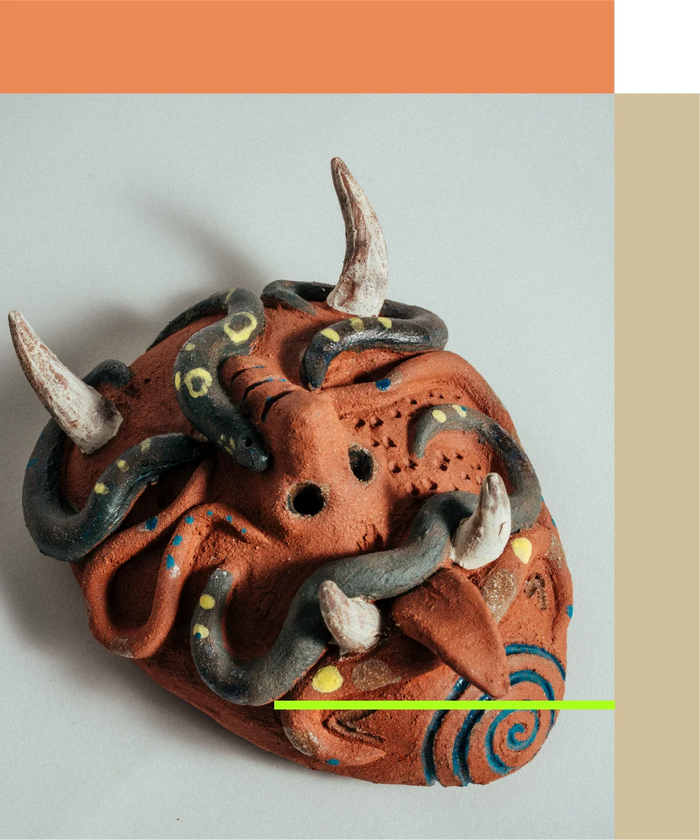
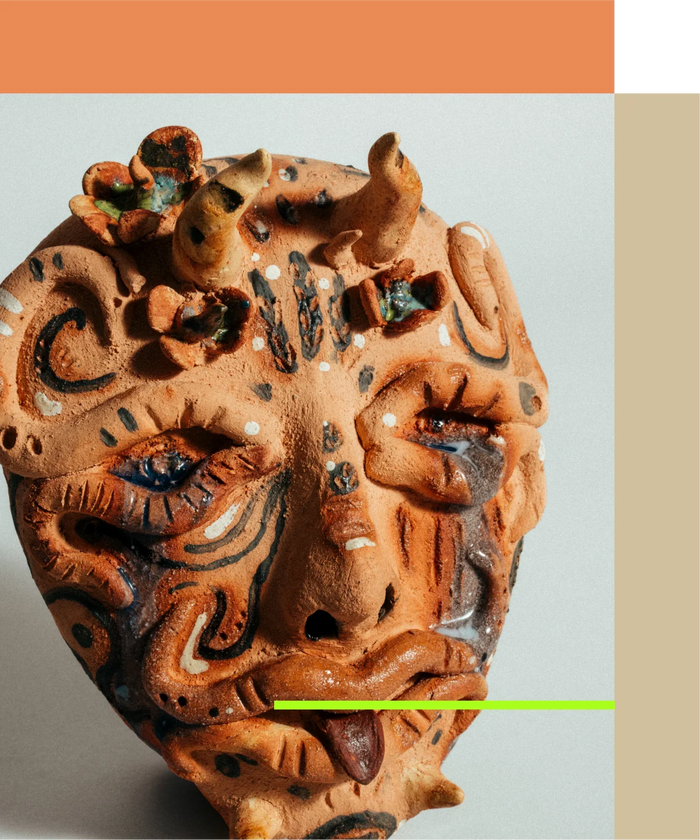
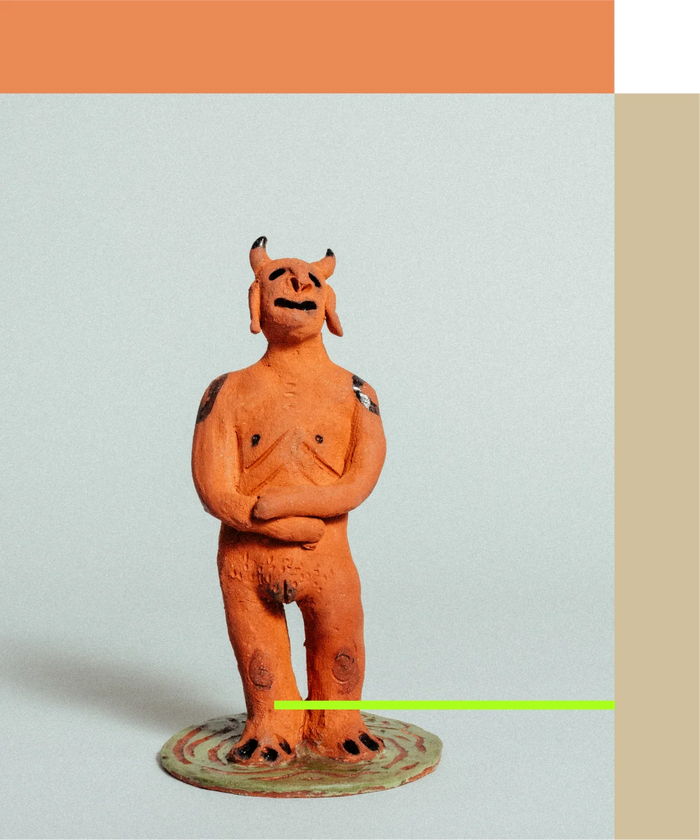
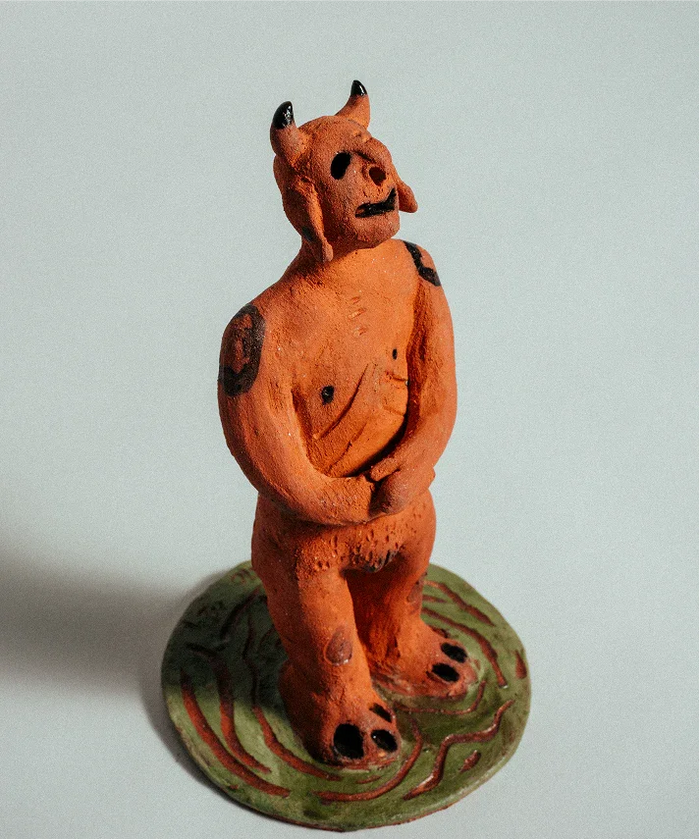
At Ra‑Ro you will find the Cabeçudo by Andreia Pinho, a wild clay vase with attitude. From the same maker there are two clay masks, Mask (1) and Mask (2), and the Mafarrico, a little devil you can read about in the mafarrico glossary entry. Meet the maker on the Andreia Pinho page and find other rarities in the Ra‑Ro index.
Frequently asked questions
What is the difference between gigantones and cabeçudos?
Gigantones are tall figures, up to four metres, carried by one person inside. Cabeçudos are the size of a person with a huge papier mâché head, which gives them more freedom to dance.
Where can you see cabeçudos in Portugal?
At many festivals and pilgrimages across the country, above all in the Minho. The Revista de Gigantones e Cabeçudos at the Romaria d'Agonia in Viana do Castelo is the best known example.
Is the Cabeçudo by Andreia Pinho a mask to wear?
No. It is a sculptural vase in wild clay, gathered by hand by the maker, inspired by the big-headed figures of folk festivals. It is a decorative, one of a kind piece.