Cart
0
Esparto is a tough grass, Stipa tenacissima, that grows in the limestone barrocal and inland hills of the Algarve and Alentejo. Once pulled, sun-dried and soaked, it is braided into strips called empreita, which are coiled and sewn together to make baskets, bags, mats and other objects of rural daily life.
Origin and history
Thanks to its strength, esparto was for centuries the fibre of working objects in southern Portugal: baskets strapped to donkeys for market, carry bags, doormats and rugs. Sixty to seventy years ago, the area of Alte, especially Sarnadas, had a large community devoted to this craft.
Being hard to work and poorly valued, esparto almost disappeared. In recent years, courses and artist residencies in the municipality of Loulé and workshops in Albufeira have tried to bring it back to life, with the help of the few artisans who still master it.
How it is made
Esparto is not cut: it is pulled. The plant sprouts and grows between April and May and the harvest takes place from July to September. Once pulled, it is left in the sun to turn golden and then soaked for days to soften. In some techniques it is also beaten to loosen the fibres.
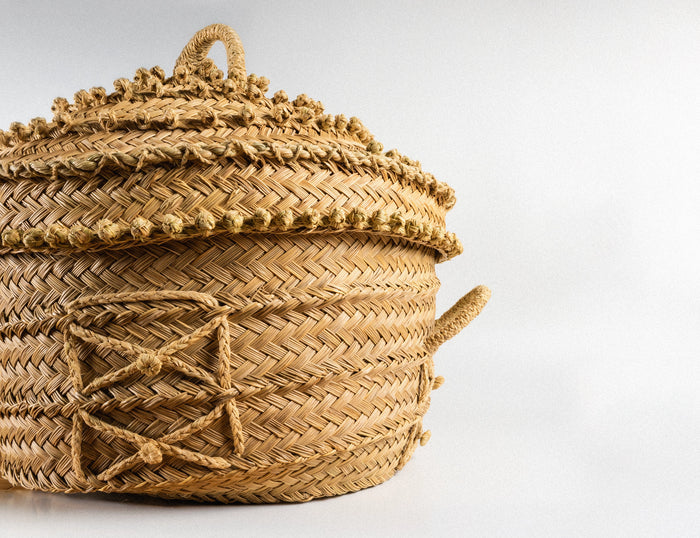
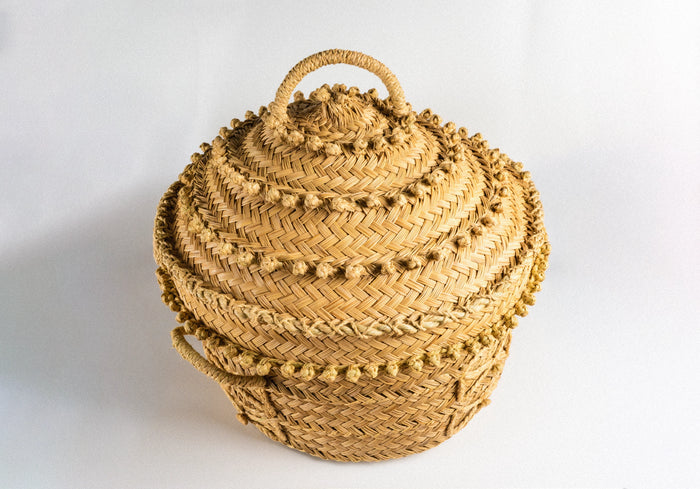
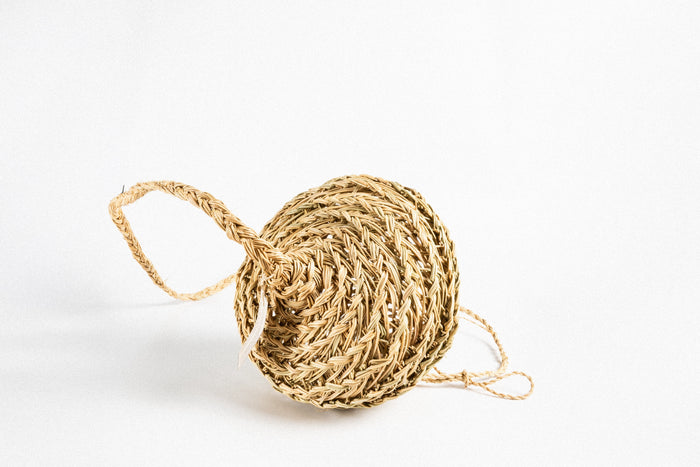
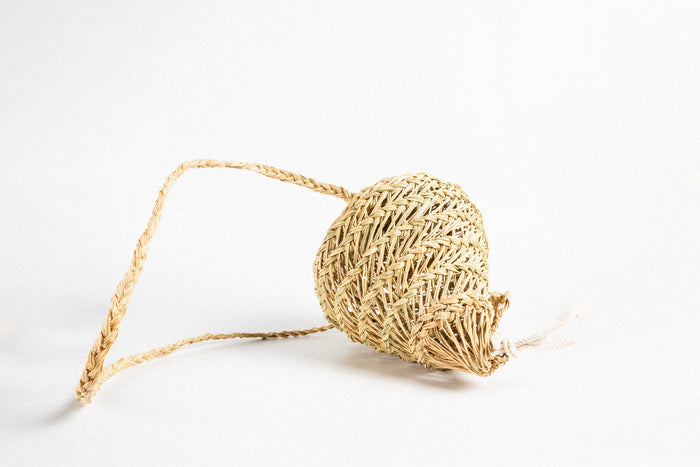
The softened esparto is braided into strips, the empreita, which are then coiled and sewn together with a thick needle and jute or sisal cord. For a piece like the barreleira, the base is coiled and the walls rise slowly, with pressure and precision, up to the top.
Where it comes from
Esparto grows wild in the Algarve barrocal and in the inland hills of the Algarve and Alentejo. The artisan Isidoro Ramos, from Paderne in the municipality of Albufeira, is one of the few people in Portugal who still harvest esparto in the Algarve hills and work it with the technique he learned as a child from his grandmother and mother.
How to recognise it and care for it
An esparto piece is golden, rough to the touch and made of regular braids sewn in a spiral. It is light but very strong. Keep it in a dry, airy place and clean it with a brush or a dry cloth. Prolonged damp is its worst enemy. Do not confuse it with palm empreita, made from dwarf palm leaves, which are smoother and more flexible.
Where to buy
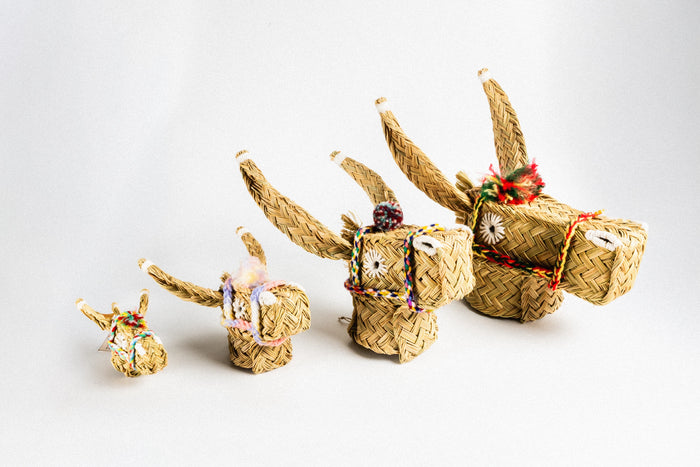
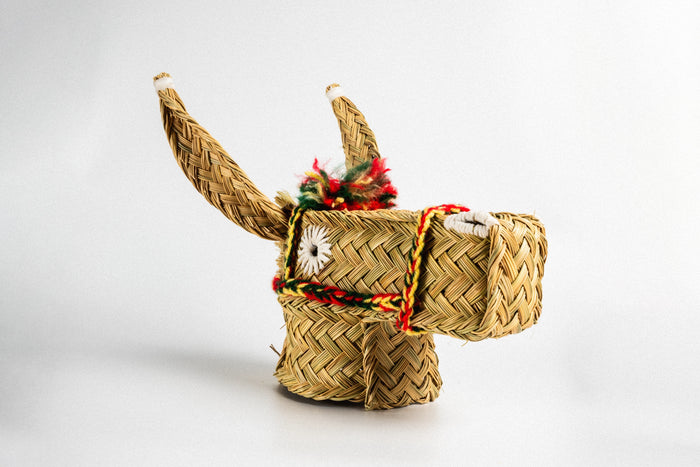
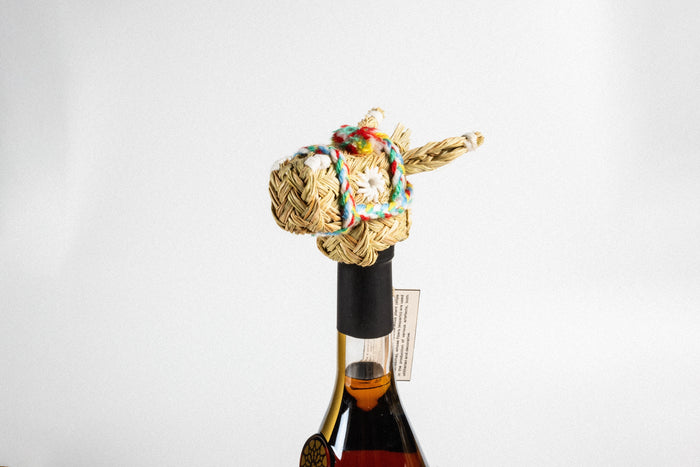
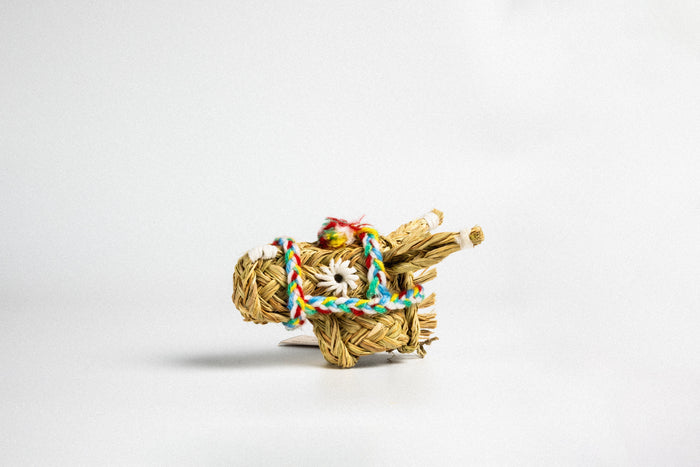
At Ra-Ro you can buy esparto pieces made by Isidoro Ramos, such as the Barreleira, a basket for laundry waiting for the wash, the Caracoleira, the decorative Donkey Head in several sizes and the Donkey Head for bottles, a tribute to the donkey, the Algarve’s old working companion.
Frequently asked questions
What is esparto?
It is a tough grass from the south of the Iberian Peninsula, Stipa tenacissima, which in Portugal grows in the Algarve and Alentejo. Its leaves are braided into empreita to make basketry.
What is the difference between esparto and palm?
Esparto is a grass pulled in the hills. The palm used in empreita comes from dwarf palm leaves. Esparto is rougher and golden, palm smoother and more flexible.
Where can I buy esparto pieces?
From Algarve artisans such as Isidoro Ramos, in Paderne, or online at Ra-Ro, which sells the barreleira, the caracoleira and the esparto donkey heads.