Cart
0
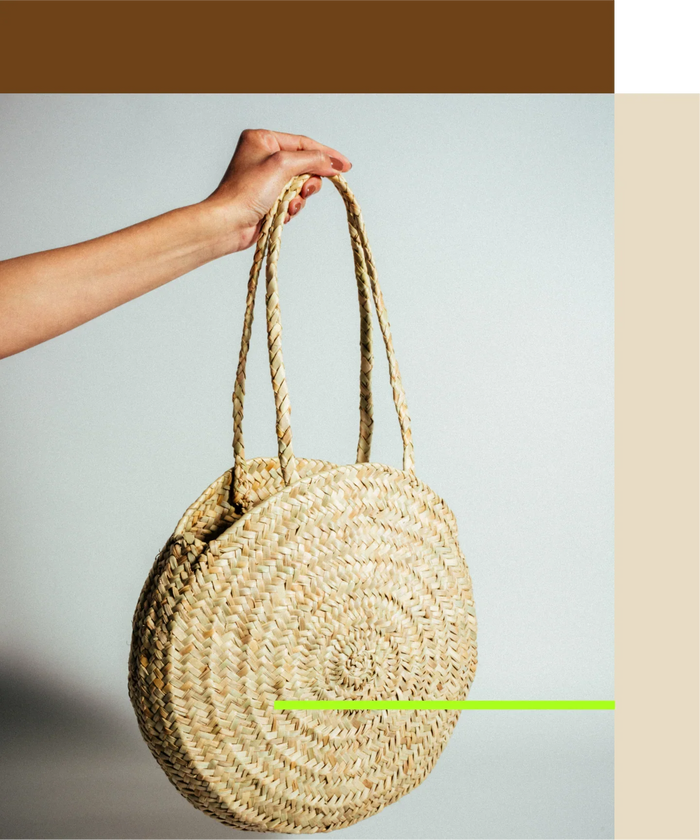
Palma is the leaf of the dwarf palm (Chamaerops humilis), a low palm that grows wild in the dry scrubland of southern Portugal. In the Algarve it is dried, cut into strips and braided into ribbons called empreita. Sewn together, these ribbons make baskets, carry bags, rugs, doormats and handbags, in a tradition several centuries old.
Origin and history
Palm empreita was already a thriving industry in the 16th-century Algarve, linked to harvesting and transporting almonds, carob and dried figs. For centuries it was work that complemented farming, done mostly by women at home in the quieter seasons. Palm frails, bags and mats went along with the harvests and the export of dried fruit.
At AECT, in Tavira, we were told that fifty years ago farmers still commonly made their own palm baskets to gather potatoes and carob. Today the craft is kept alive by older artisans and by revival projects such as the Casa da Empreita, opened in 2017 by Loulé council within the Loulé Criativo network.
How it is made
The harvest takes place between June and September, in the hottest hours of the day. The preferred parts are the cogolhos, the tender shoots at the centre of the plant, which give the softest fibre. The leaves dry in the sun by day and take in the night moisture, but must not get rained on, which darkens and weakens them. For green palm, they dry in the shade.
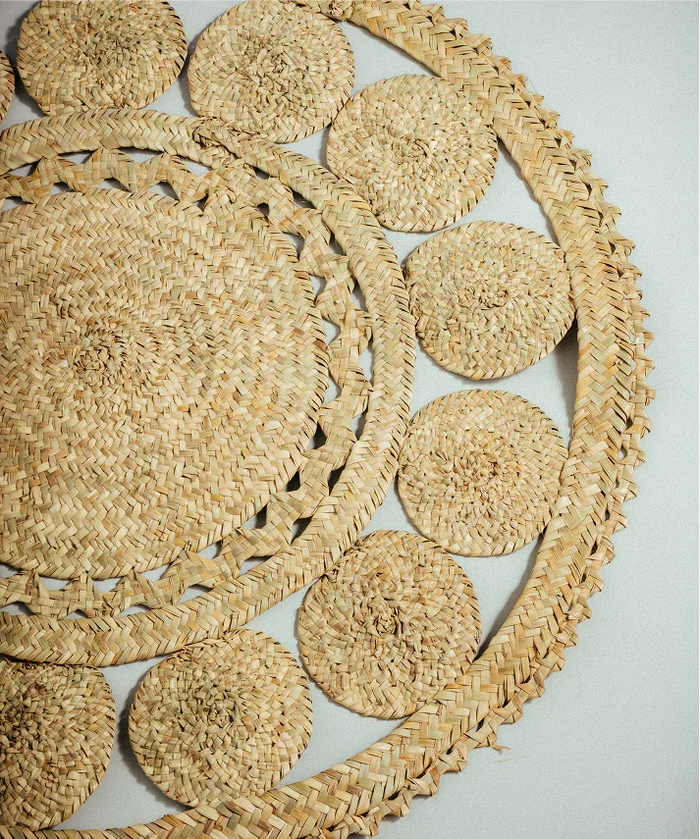
The leaves are then split into strips and braided into long ribbons, the empreita. These ribbons are sewn together with a thin cord, the baracinha, to form flat or tubular pieces. The palm can also be bleached with sulphur smoke or dyed.
Where it comes from
The dwarf palm grows in the dry scrubland of the Algarve, and palm empreita was concentrated mainly in Loulé and Estômbar, in the municipality of Lagoa, though it spread throughout the Algarve hills. In Tavira, AECT (Associação Em Contacto Tavira) brings together women aged 70 to 80 who still weave palm.
How to recognise it and care for it
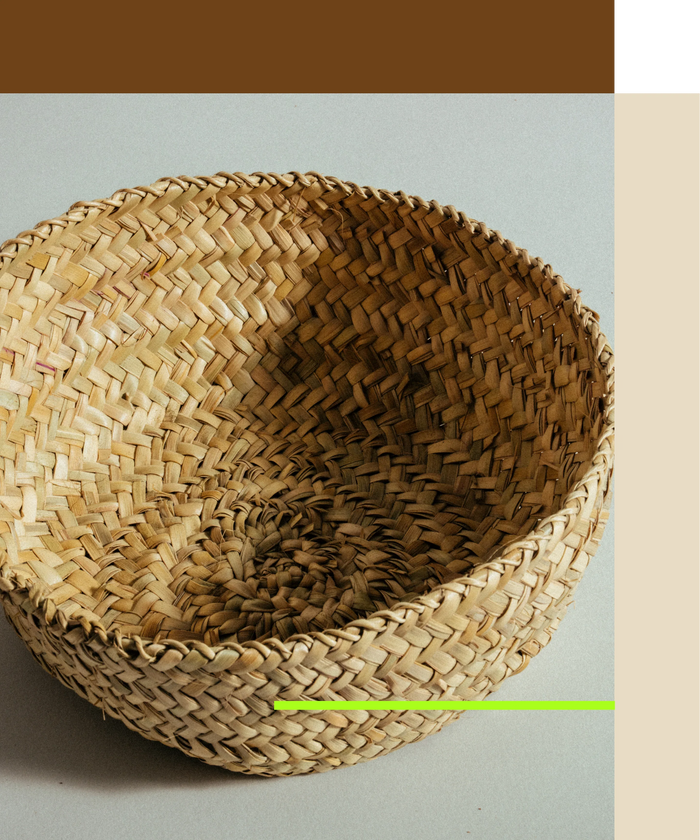
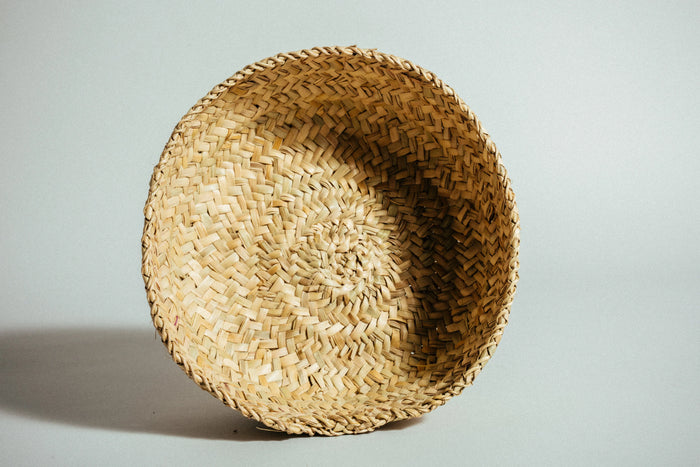
Palm is smoother, lighter and more flexible than esparto. The pieces show fine, regular braids sewn side by side. Keep them in a dry place, away from rain and damp, and clean them with a dry cloth. Over time, palm takes on a more golden tone.
Where to buy
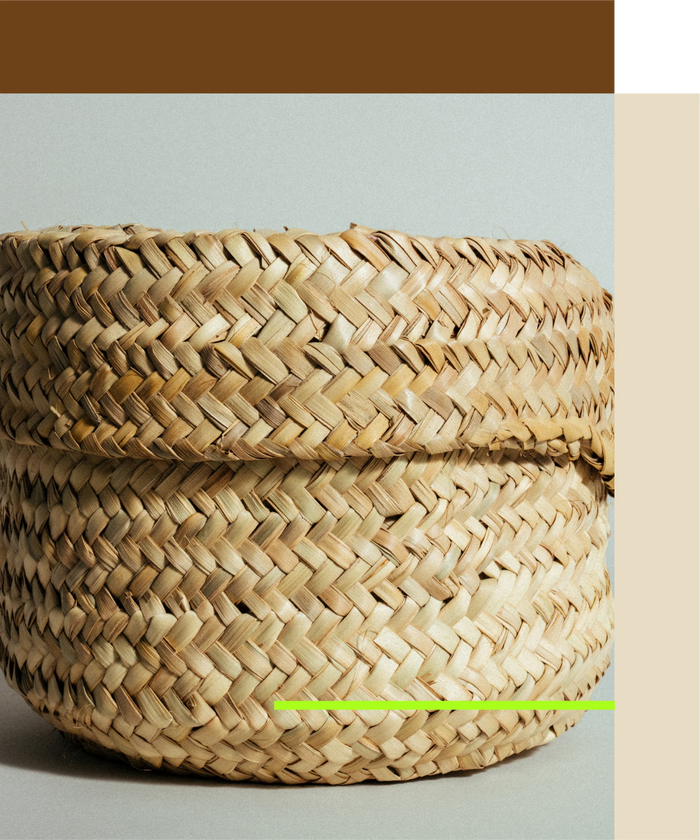
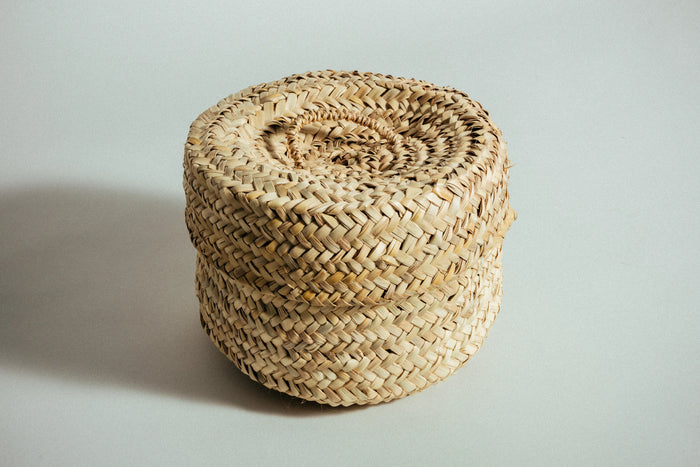
At Ra-Ro you will find palm pieces made by the AECT artisans in Tavira: the Spiral Basket, the Basket with Lid, the Handmade Bag and the Rug. Each purchase supports an active ageing project that fights isolation among older people.
Frequently asked questions
What is palm empreita?
It is the Algarve technique of braiding strips of dwarf palm leaf into ribbons, the empreita, which are then sewn together to make baskets, rugs, bags and handbags.
When is palm harvested?
Between June and September, in the hottest hours of the day. The cogolhos, the shoots at the centre of the plant, are preferred because they give the softest fibre.
Where can I buy palm baskets?
In Algarve workshops such as the Casa da Empreita in Loulé, or online at Ra-Ro, which sells palm baskets, bags and rugs made by the AECT artisans in Tavira.