Cart
0
Empreita is the technique of plaiting thin strips of palm leaf, or esparto grass, into long braids. The braids are then coiled and sewn together to make baskets, bags, mats and other pieces. It is a traditional craft of the Algarve, in southern Portugal, rooted in rural life.
Origin and history
Empreita was born from rural life. For generations, families in the Algarve's barrocal and hills made their own working objects: baskets, carrying bags, seiras, doormats, brooms and mats for drying figs. In Tavira, around fifty years ago, farmers still made the palm baskets they used to harvest potatoes and carobs. From the 16th century to the mid 20th century, empreita had economic weight in the Algarve and was even exported. In Loulé, production grew around packaging for exported figs. Later, plastic and cheap imports pushed it back. Today it survives in the hands of artisans and associations.
How it is made
For palm empreita, the dwarf fan palm (Chamaerops humilis) is used. Between June and September, in the heat, the tender new leaves are gathered. They dry in the sun and must be kept from the rain so they do not darken. They are then split into strips, moistened to soften and sometimes bleached with sulphur or dyed. An odd number of strips, from five to eleven, is plaited into one continuous braid. The braids are sewn with baracinha, a thin cord of twisted palm. For esparto empreita, Isidoro Ramos pulls the plant up between July and September, dries it in the sun until it turns golden and soaks it to make it supple again. The braids are coiled from the base upwards and sewn with a thick needle and jute or sisal cord.
Where it comes from
The dwarf fan palm grows in dry scrub and limestone soils in the Algarve and Andalusia, mainly in the barrocal and the hills. Esparto grows in the inland hills of the Algarve and in the Alentejo. In Tavira, AECT, the Associação Em Contacto Tavira, brings together women artisans aged 70 to 80 who still plait palm. In Paderne, in the municipality of Albufeira, Isidoro Ramos works esparto as he learned it as a child from his grandmother and mother.
How to recognise empreita
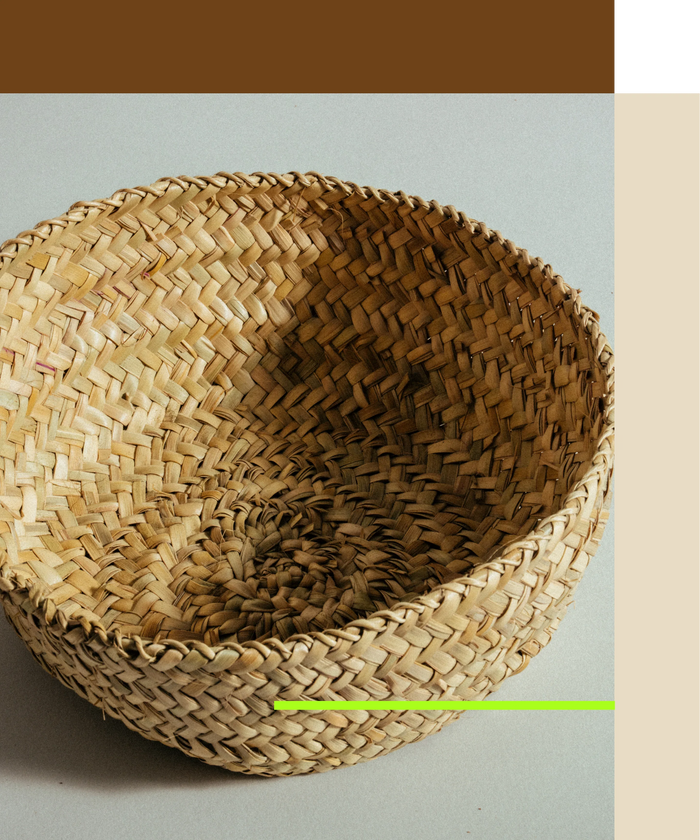
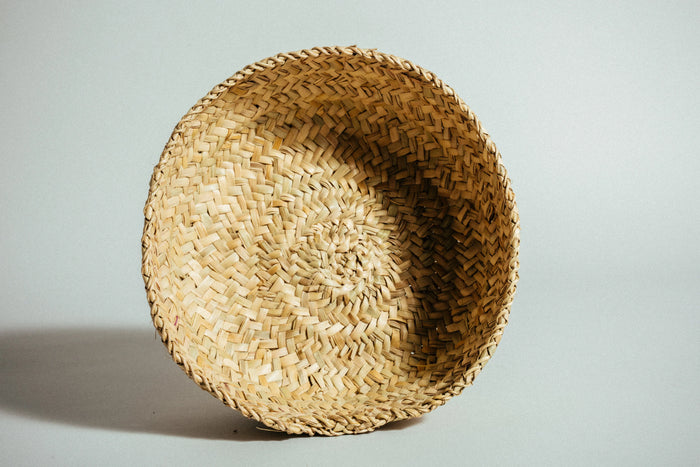
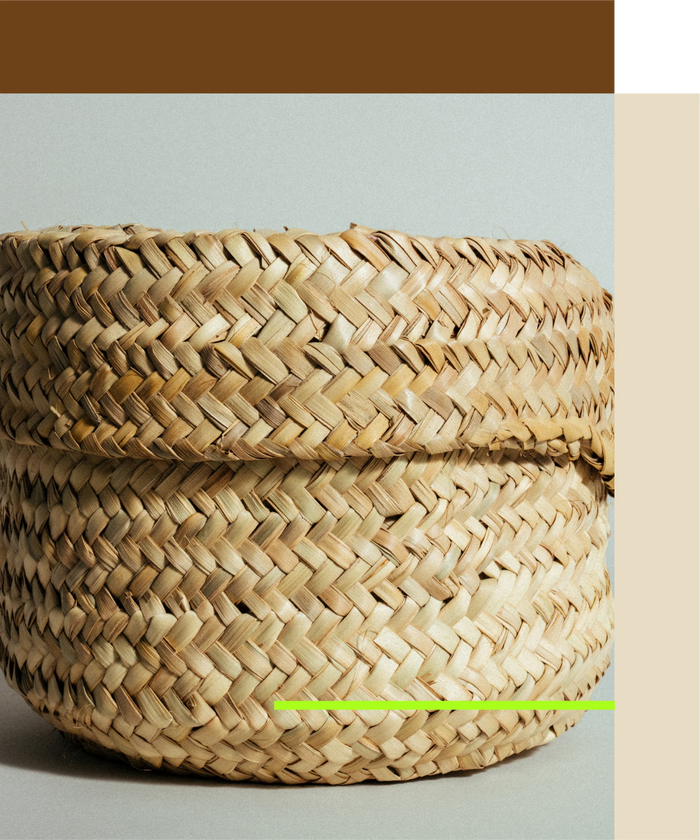
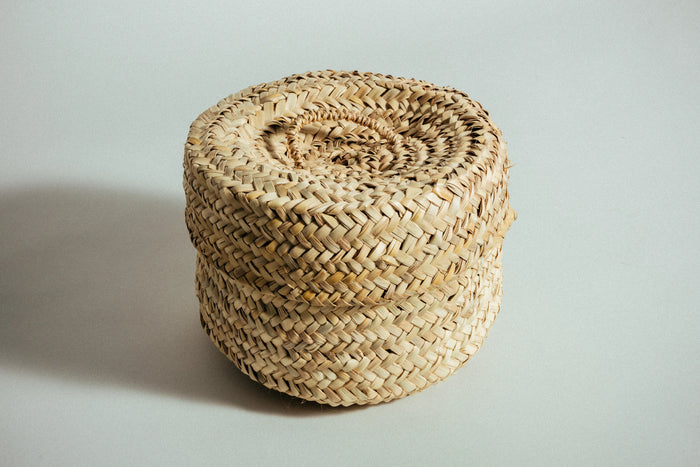
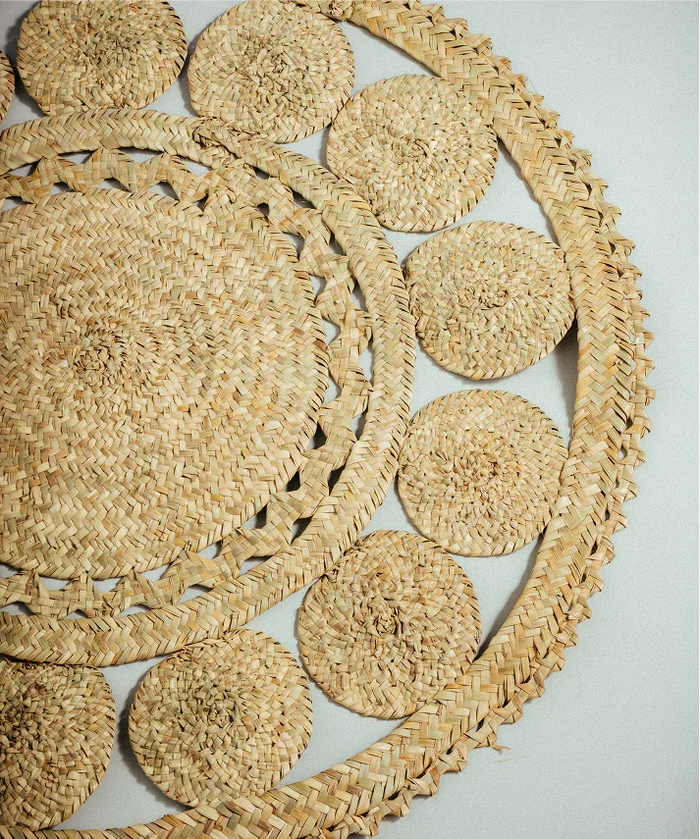
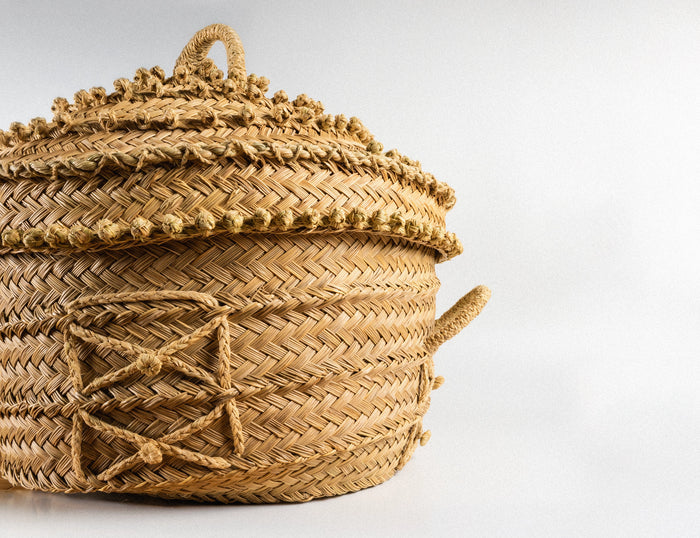
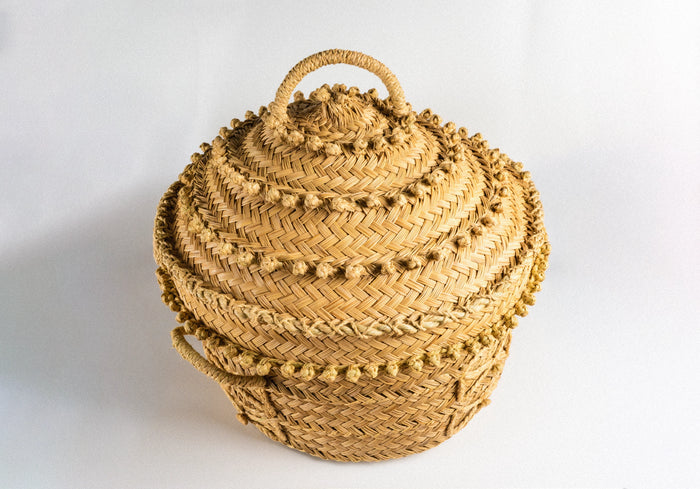
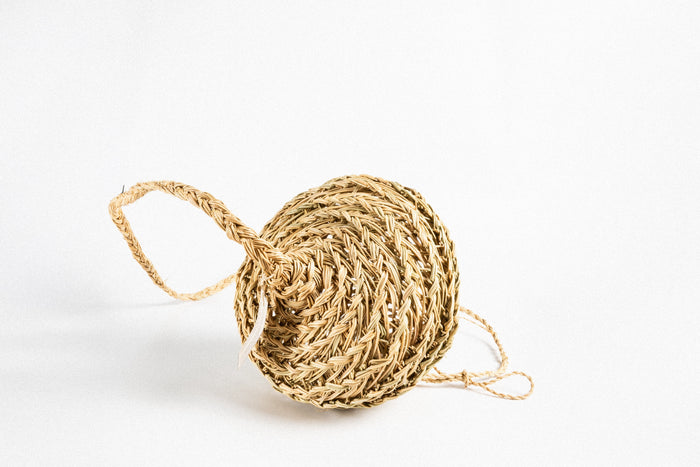
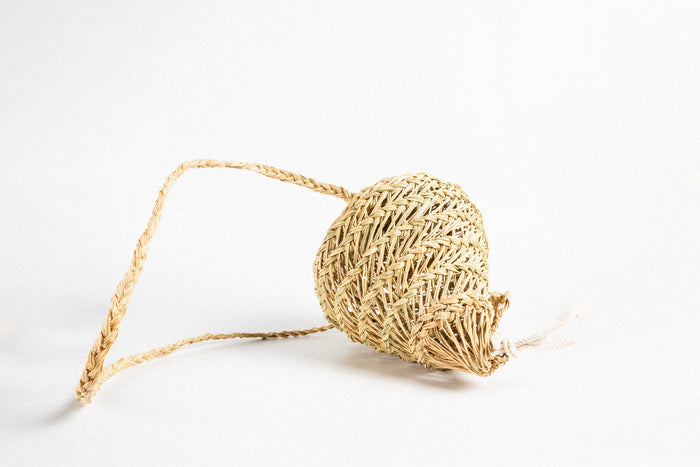
In a piece of empreita you can see the plaited braid, with its strips crossing diagonally. The braid runs in a spiral or in stacked rows, and the stitching is almost hidden between them. A good braid keeps the same width from start to finish. Dried palm has light tones and a smooth surface. Sun-dried esparto turns golden and is stiffer. In dyed pieces, the colour appears as stripes within the braid itself.
Where to buy
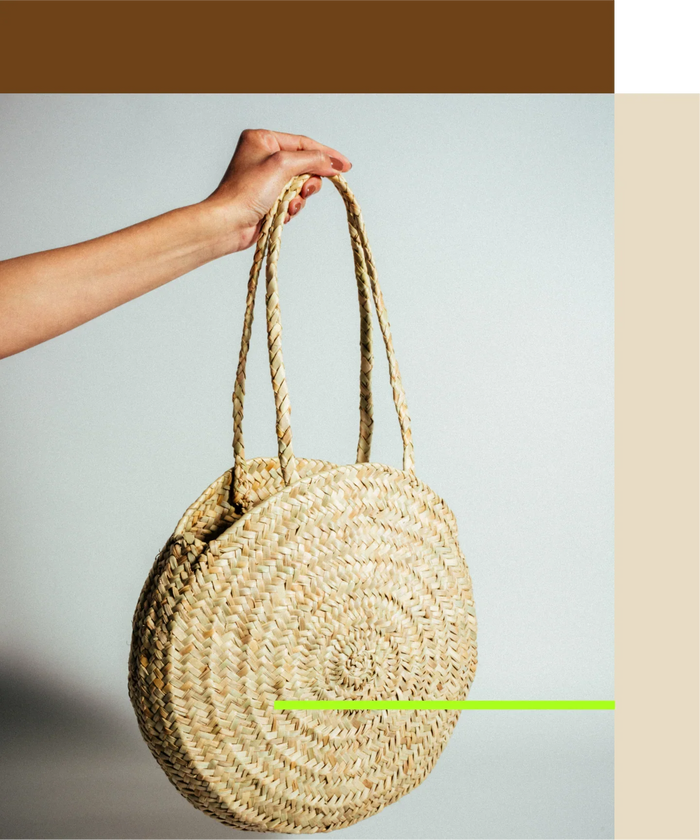
At Ra‑Ro you will find palm empreita made by the artisans of AECT in Tavira: the Spiral Basket, the Lidded Basket, the Handmade Bag and the Rug. In esparto, there are pieces by Isidoro Ramos of Paderne: the Barreleira laundry basket, the Caracoleira snail basket and the Donkey Head. Read also about esparto, palma and bunho, or see the Ra‑Ro Index.
Frequently asked questions
What is the difference between empreita and esparto?
Empreita is the technique: plaiting strips into braids and sewing the braids together. Esparto is one of the plants used, alongside palm. A piece can be palm empreita or esparto empreita.
Which plant is the palm used in empreita?
It is the leaf of the dwarf fan palm, Chamaerops humilis, a low palm that grows wild in the Algarve. The tender new leaves are used, gathered between June and September.
How do you care for an empreita piece?
Keep it in a dry, airy place, away from damp. Dust it with a dry cloth or a soft brush. If it gets wet, let it dry naturally in the shade.