Cart
0
Samphire (salicornia): what it is, where it grows, how to eat it and what plant salt is
Samphire is a salt marsh plant with a naturally salty taste. Where it grows in Portugal, how to cook it and how to use plant salt in place of some of your salt.

In this article
 By Luís Serra, co-founder of Ra-Ro · View profile
About a 5 minute read

Samphire, or salicornia, is a succulent plant that grows in salt marshes and salt pans with its roots in salt water, which is why it tastes naturally salty, fresh and of the sea. In Portugal it grows in places such as the Ria de Aveiro, the Ria Formosa and the Tagus estuary. It is eaten raw in salads, sautéed with fish and shellfish, or dried and ground as "plant salt" to season with less added salt.
Samphire in short
- What it is: a halophyte (a plant of salty ground) with green, fleshy, jointed stems and no visible leaves.
- Other names: sea asparagus, glasswort; in Portuguese, salicórnia or espargo do mar.
- Where it grows: coastal salt marshes and salt pans such as the Ria de Aveiro, the Ria Formosa and the Tagus estuary.
- Taste: salty, green and crunchy when fresh.
- How it is used: raw, sautéed, blanched, pickled or dried and ground as plant salt.
- At Ra-Ro: Organic Crunchy Samphire and Organic Plant Salt by Salina Greens, in Alcochete.
What is samphire
Samphire is one of the few plants that can live where the tide comes and goes. Instead of leaves it has thick stems divided into small segments that store water and salt. That is why it tastes salty without anyone salting it. In the Ria de Aveiro, for example, the species Salicornia ramosissima grows wild. In spring and summer it is green and tender; in autumn many plants turn reddish and toughen.
Where samphire grows in Portugal
It likes flat, muddy ground that salt water covers and uncovers: salt marshes, the banks of tidal creeks and the walls of old salt pans. You find it along the coast, especially in the Ria de Aveiro, the Ria Formosa in the Algarve and the Tagus estuary. That is where, in Alcochete on the south bank of the Tagus, Salina Greens works, the producer of the samphire and plant salt we sell at Ra-Ro. In the same municipality, in Samouco, the salt pans still yield sea salt and hand harvested fleur de sel.
Today it is also cultivated, in greenhouses or restored salt pans, so fresh samphire is available for more months of the year. Wild samphire is gathered mainly from spring to the end of summer, while the stems are tender.
What does samphire taste like
Fresh, it is crunchy and juicy, with a clean salty taste that recalls the sea, a little like very thin green beans seasoned with salt water. Cooked for too long it goes limp and loses its charm, so it needs little heat. Dried and ground, it loses its texture but keeps the salt and a green, almost grassy, background.
How to eat and cook samphire
- Raw: rinsed and well drained, in tomato, potato or chickpea salads with olive oil and lemon. No salt needed.
- Sautéed: one or two minutes in olive oil and garlic, at the end, over grilled fish, clams or prawns.
- Blanched: 30 seconds in boiling water, then straight into cold water, to remove some salt and set the green colour.
- With pasta and rice: stir it in at the last moment, as you would parsley.
- Pickled: in vinegar, to go with fish and cheese.
- As a garnish: a few sprigs add colour and crunch to sushi, ceviche and fish dishes.
Salina Greens' Organic Crunchy Samphire 120 g (€5.70) is made for exactly this: use it as a seasoning, raw or cooked, in salads, with fish, sushi, shellfish, meat and pasta, and even in juices and smoothies. The golden rule holds for every recipe: taste before you salt.
What is plant salt and how to use it instead of salt
Plant salt is samphire that has been dried and ground into a powder or small green flakes. You use it like salt, at the end of cooking or at the table, and it brings a green flavour along with the saltiness. Because it is not pure salt (the plant also contains fibre and other minerals), a spoonful has less sodium than a spoonful of table salt. But it does contain sodium: anyone who must limit salt on medical advice should count it as salt.
At Ra-Ro we sell Salina Greens' Organic Plant Salt 40 g (€6.30). It works well on scrambled eggs, soups, roast vegetables, fish and potatoes. To start, swap half the salt in a recipe for plant salt, taste and adjust.
Samphire, sea salt and fleur de sel: which to choose
- Sea salt: for boiling, salting water and seasoning before cooking. Sea Salt from the Samouco salt pans costs €3.70.
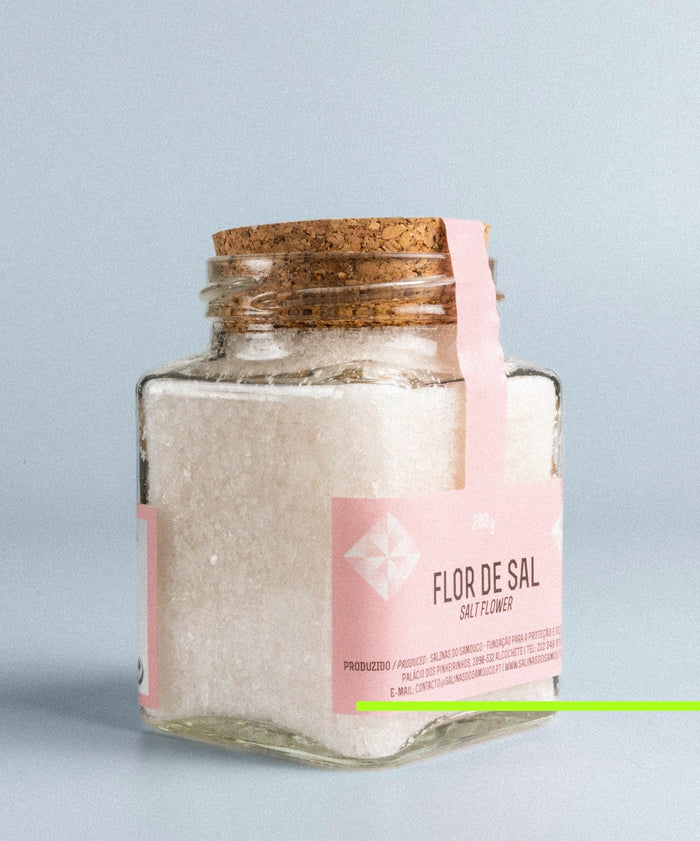
- Fleur de sel: the fine crystals that form on the surface of the salt pans and are gathered by hand with nets. Add it at the end for crunch. Samouco Fleur de Sel costs €7.30. We explain it all in Fleur de sel: what it is and how to use it and in our fleur de sel glossary entry.
- Samphire and plant salt: when you want saltiness with a green note, or want to use less salt in salads and fish dishes.
All three come from the same salt water landscape of the Tagus estuary. The story of the salt pans is in Samouco Sea Salt: the flavour that endures on the Tagus estuary.
Benefits of samphire, without exaggeration
Samphire is a vegetable: it contains water, fibre and minerals such as potassium, calcium and magnesium, as well as the sodium that gives it its taste. The clearest advantage is practical: since it is already salty, it lets you season many dishes with less added salt. There is research on its antioxidant compounds, but it is not a medicine and does not replace advice from a doctor or dietitian, especially on a low sodium diet.
Where to buy samphire and how much it costs
Fresh samphire turns up at some fishmongers, markets and supermarkets, mostly in season. Dried or as plant salt, it keeps much longer in a tightly closed jar away from moisture. At Ra-Ro, Salina Greens' samphire and plant salt cost €5.70 and €6.30, and you can add Samouco sea salt and fleur de sel to the same order.
Frequently asked questions
What is samphire?
It is a succulent plant that grows in salt marshes and salt pans, with green fleshy stems and a naturally salty taste. It is also called salicornia, glasswort or sea asparagus.
Where does samphire grow in Portugal?
In coastal salt marshes and salt pans such as the Ria de Aveiro, the Ria Formosa and the Tagus estuary. It is also grown in greenhouses and restored salt pans.
How do you eat samphire?
Raw in salads, sautéed for a minute or two with fish and shellfish, blanched, pickled, or dried and ground as plant salt.
What is plant salt?
It is dried, ground samphire. You use it like salt, at the end of cooking or at the table, and it adds a green flavour to the saltiness.
Can samphire replace salt?
It can replace part of the salt in many dishes because it is already salty. It does contain sodium, so anyone on a restricted diet should ask their doctor.
Do you need to salt samphire?
No. Most recipes need no extra salt; always taste before seasoning.

 Autumn
 -10%Packs
 Regions