Cart
0
Samouco Sea Salt: the flavour that endures in the Tagus estuary
The salt that was once currency and moved empires is still harvested by hand at the Salinas do Samouco. Discover the rare story that endures in the Tagus estuary.

In this article
 By Luís Serra, co-founder of Ra-Ro · View profile
About 3 min read

Salt is probably the most underrated product in the kitchen. It's always there and nobody thinks about it. And yet few things have ever had so much power.
Why was salt once so valuable?
It was a currency. It inspired trade routes. It was a political weapon, immortalised in Gandhi's Salt March, which turned a handful of crystals into a gesture of freedom. The simplest thing is often the one that lasts longest.
Today it's in every kitchen in the world, to bring out flavour, to preserve and to purify. The real question is a different one: where does the salt we use come from, and what do we lose when we stop asking?
Where does Samouco Sea Salt come from?
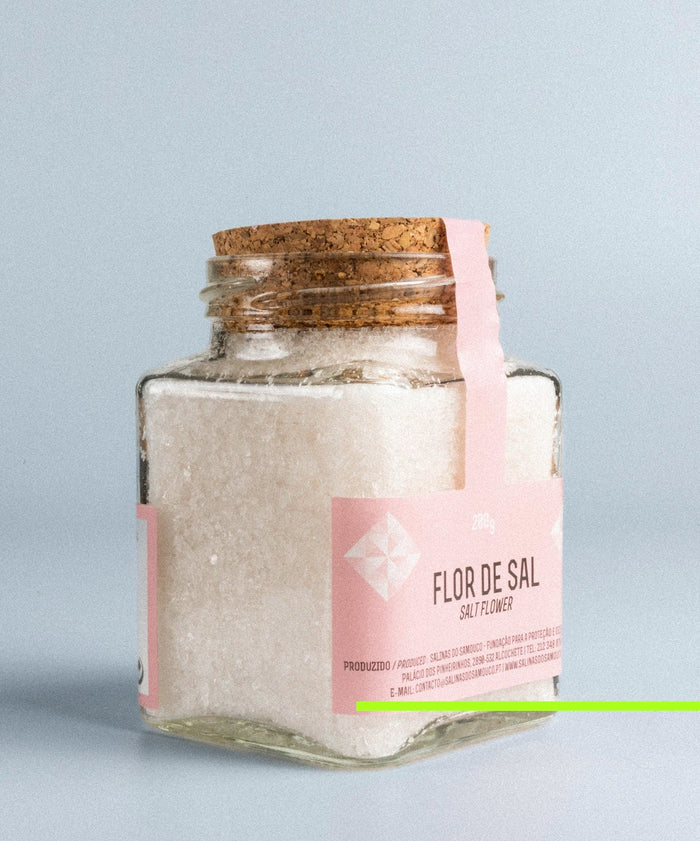
Samouco Sea Salt is produced traditionally at Marinha do Canto, in the Salinas do Samouco salt pans, in the municipality of Alcochete, beside the Tagus estuary. The Salinas do Samouco were once among the largest salt producers in the country. Today Marinha do Canto holds out, where the salt, stubbornly, has stayed.

How is traditional salt made?
Seawater evaporates in the sun and wind and the salt crystallises. As it does, it keeps its natural minerals: magnesium, calcium and potassium. It's harvested by hand, with no industrial processing. This purity is what sets it apart.
In practice, this means a salt with more character. And it also means people at Marinha do Canto who insist on producing it when giving up would be easier.
Coarse or fine?
Coarse is ideal for roasts and crusts. Fine blends in more discreetly day to day, in sauces and stocks. For me, the choice matters less than the question that comes before it: is salt worth thinking about? I think so. It's what brings back the smell of grandma's cooking.

Discover Samouco Sea Salt.


Frequently asked questions
What is Samouco sea salt?
A natural sea salt, harvested by hand, produced from the evaporation of seawater. The crystals retain natural minerals such as magnesium, calcium and potassium.
Where and by whom is it produced?
In the Tagus estuary, at the Salinas do Samouco, once the largest in the country; today at the Marinha do Canto, which keeps these traditional salt pans alive.
What is the technique?
Seawater flows into the tanks and evaporates in the sun and wind; as it concentrates, crystals form and are harvested by hand, without industrial processing.
Why is it rare and scarce?
The traditional method has almost disappeared; only a small-scale artisanal production remains, which makes this salt scarce.
What is the difference between the coarse and the fine?
Both in 1 kg packs. The coarse is for roasts and crusts of meat or fish; the fine for everyday use, sauces and broths.
How is it used in cooking?
A pinch or two is enough to bring out the flavour of foods: to season, enhance and intensify the aromas of dishes.


 Autumn
 -10%Packs
 Regions