Cart
0
Banana fibre is the plant fibre taken from the stem and leaves of the banana plant after it has fruited. Extracted, dried and cleaned by hand, it is plaited, coiled or crocheted into baskets, coasters and other objects. In the Azores, it gives new life to a plant that would otherwise be thrown away.
Origin and history
The banana plant is a herbaceous plant of the genus Musa, and each plant fruits only once. After harvest, the stem is cut down and becomes waste. Elsewhere in the world, that stem has been a source of fibre for centuries: the Philippines make abacá from Musa textilis, and in Okinawa, Japan, bashōfu cloth is woven from layers of the stem.
On the Portuguese islands the banana has old roots. In Madeira, its cultivation is recorded from the mid 16th century. In the Azores, it is common in backyards. It was there, on São Miguel, that in 2022 architect and researcher Vanessa Melo began a collaborative project: collecting banana plants from the backyards of friends and family and testing how to extract, dry and shred the fibre from the stems. The experiment led to the book "Uma Viagem ao Centro da Bananeira" and, in 2025, to the Musaz brand.
How it is made
The banana stem is made of overlapping layers. These layers are separated by hand, dried and gently cleaned until a flexible fibre remains. The flag leaf, which protects the fruit early in its growth, is also used.
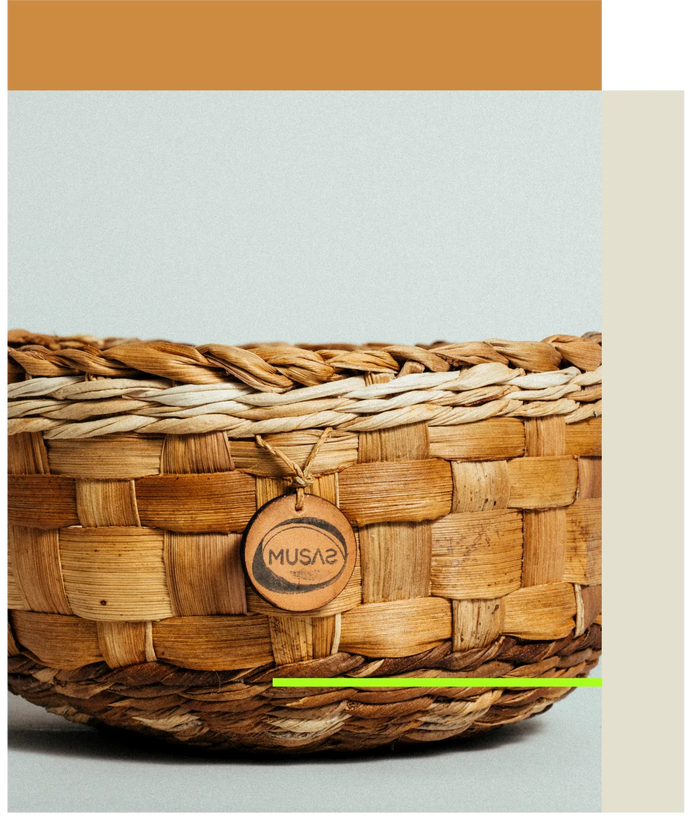
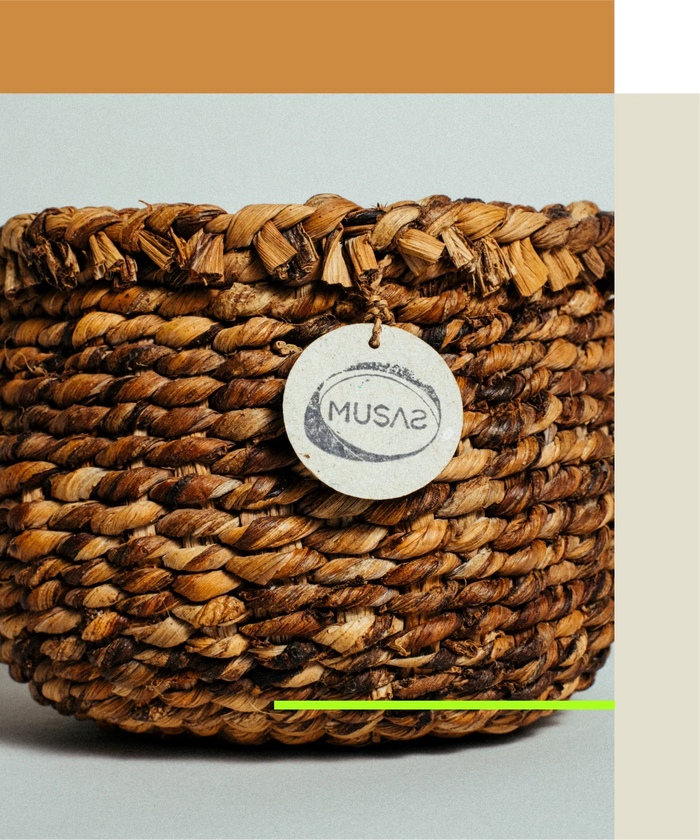
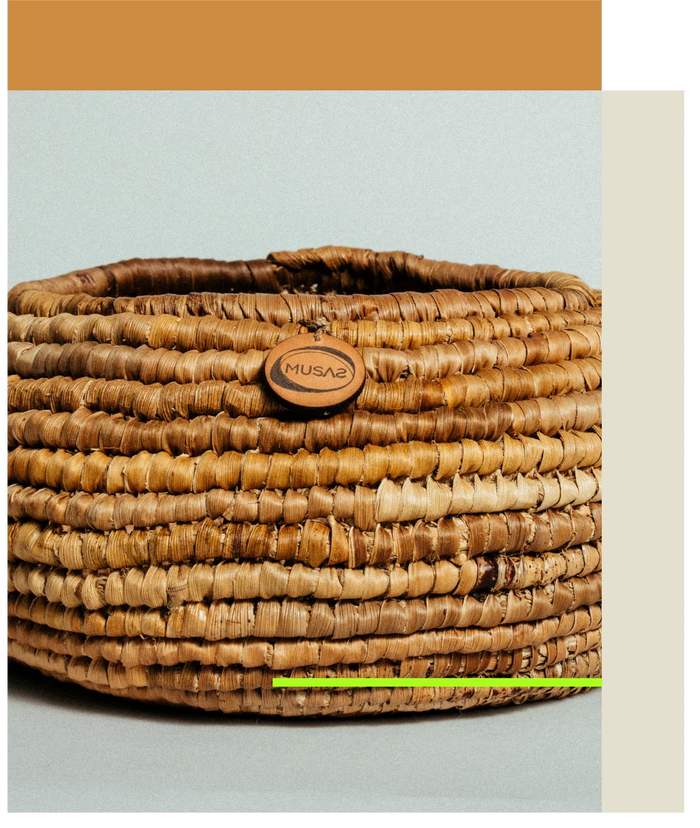
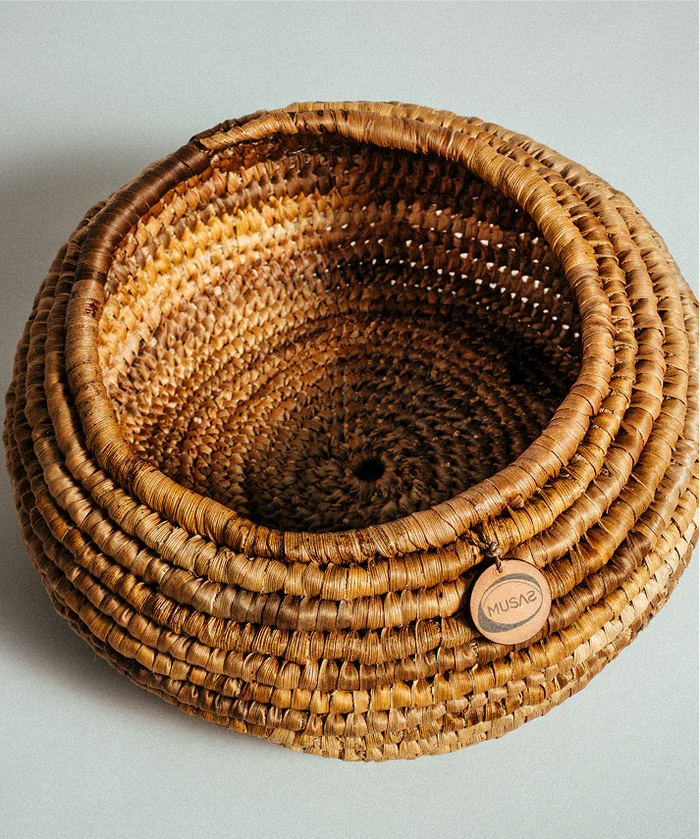
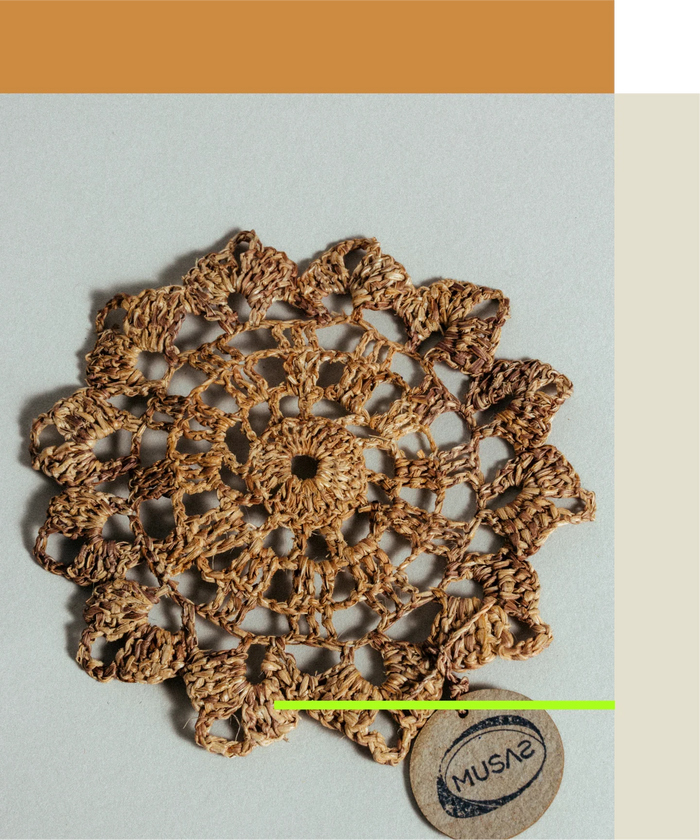
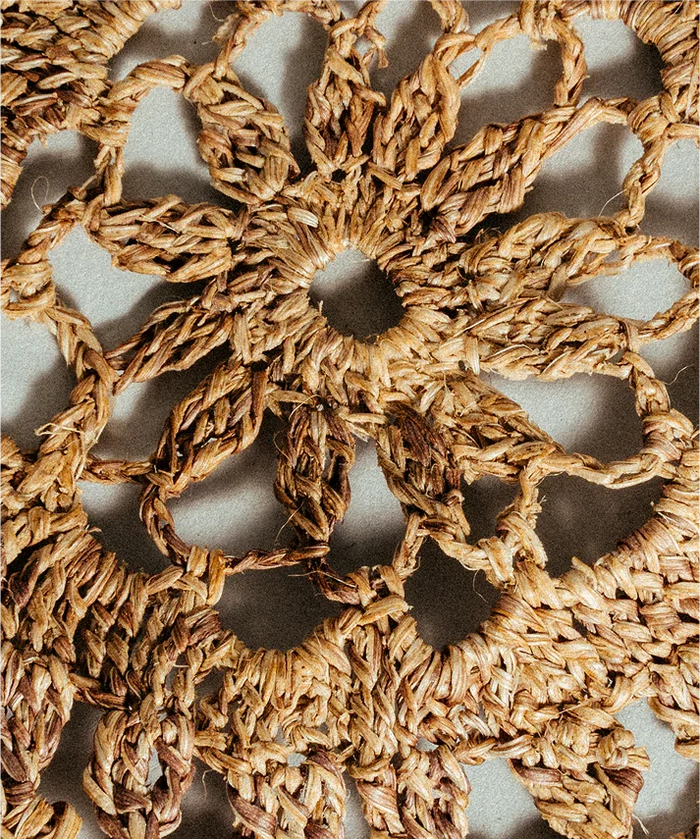
Once the fibre is ready, there are several paths. In a plaited basket, strips cross over each other as in empreita. In a coiled basket, the fibre is wound in a spiral and stitched round after round. Coasters are crocheted. Colour and texture change with the plant used. Musaz baskets are finished with a blend of beeswax and camellia oil, both produced in the Azores.
Where it comes from
Musaz works on São Miguel, with a small team of family and friends whose hands are skilled in other crafts. Besides objects, it runs workshops for older people, children and visitors. In 2025, Vanessa Melo led banana fibre basketry workshops in Ribeira Grande, as part of the Saber Fazer programme and the "Açores: Do Oceano, As Artes" lab, which also celebrates willow and espadana.
How to recognise banana fibre
Banana fibre has natural tones from cream to brown, often within one piece. The strips are not perfectly even, and it feels dry and light. On wax finished baskets, the surface has a soft sheen. It is a close relative of other Portuguese plant fibres such as palma and bunho, but it comes from a tropical plant grown on the islands.
Where to buy
At Ra‑Ro you will find pieces by Musaz: the Plaited Basket (squares), the Small Round Plaited Basket, made with the flag leaf, the Coiled Basket and the Crochet Coaster. Read the brand's story on the Musaz producer page and see the Ra‑Ro index.
Frequently asked questions
Which part of the banana plant gives the fibre?
Mainly the layers of the stem, which are separated, dried and cleaned by hand. Some pieces also use the flag leaf, which protects the fruit early in its growth.
Why is banana fibre a sustainable material?
Each banana plant fruits only once and is then cut down. Using the stem turns farm waste into lasting objects.
Which techniques are used with banana fibre?
In the Azores, Musaz plaits, coils and crochets the fibre, and finishes the baskets with Azorean beeswax and camellia oil.