Cart
0
Supporting Portuguese artisans: how buying handmade crafts helps endangered trades
A craft only passes to the next generation if someone buys the pieces. Why so many trades are at risk, what changes when you buy from a named artisan and how to choose authentic crafts.

In this article
 By Tiago Reis, co-founder of Ra-Ro · View profile
About a 6 minute read

Buying Portuguese crafts from the people who make them is the most direct way to support artisans: a trade only passes to the next generation if someone buys the pieces. At Ra-Ro, every piece carries the name of the artisan or workshop, the technique and the place it comes from, and most are only made once they are ordered. Buying a blanket, a clay casserole or a bulrush lamp means commissioning work from a real workshop.
Supporting Portuguese artisans in short
- The problem: many trades depend on a handful of masters and little demand; without buyers, there is no reason to teach the next generation.
- What your purchase changes: the order goes to a named workshop and often it is what sets the piece in motion.
- How to spot authentic crafts: a named maker, an explained technique, a clear origin.
- At Ra-Ro: 40 artisans from 29 workshops and producers, from Minho to the Azores, and the Ra-Ro Index to show what is rarest.
Why so many traditional trades are at risk
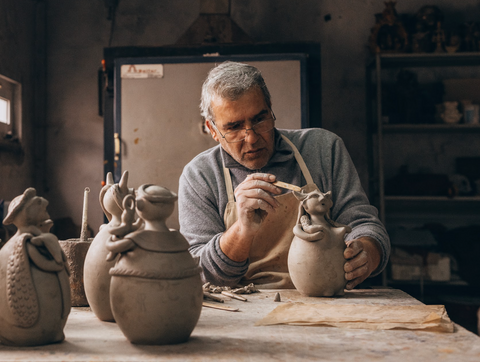
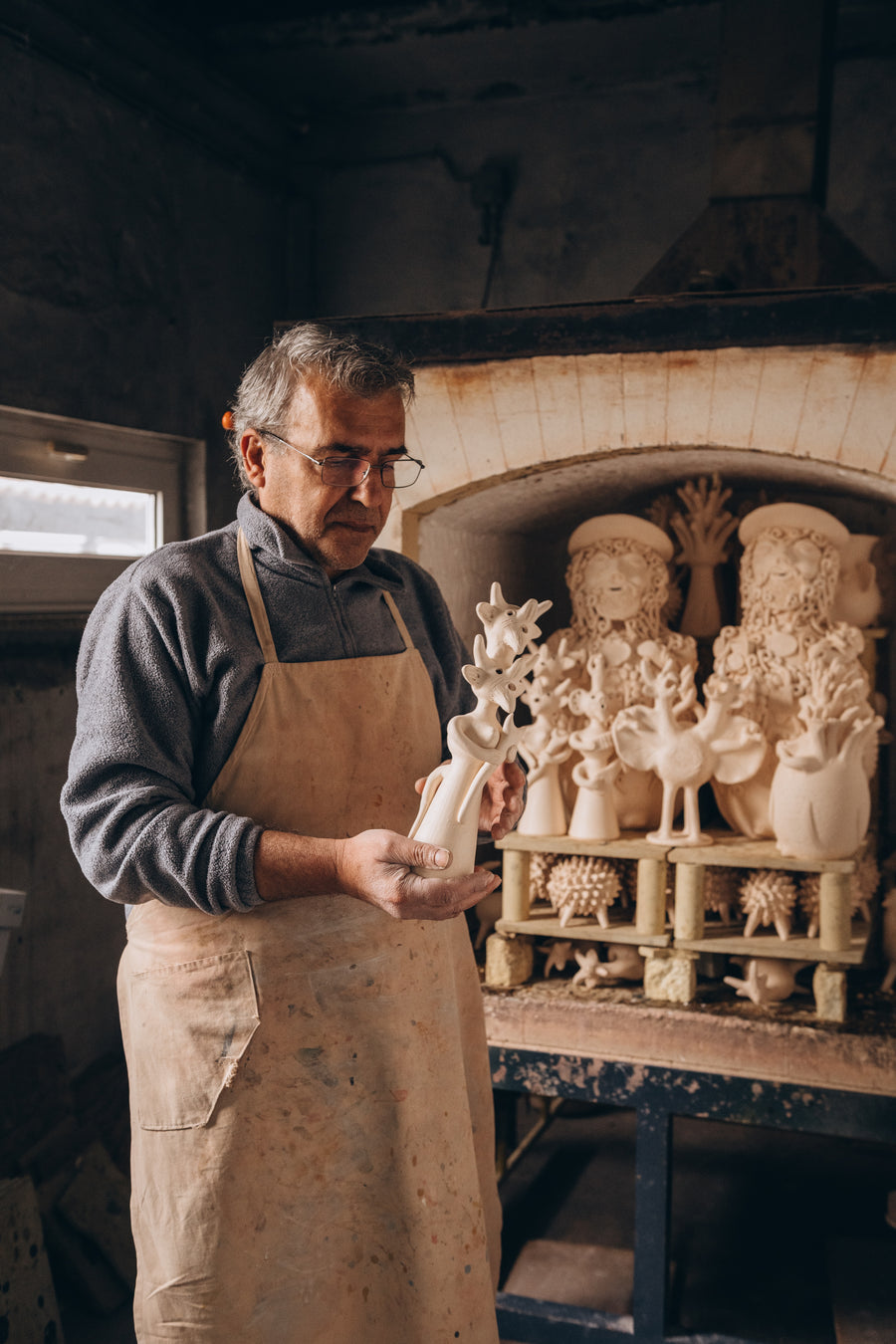
A traditional craft is learned over years, working beside someone who knows it. When only a few masters remain and there are no apprentices, a single retirement or illness can stop a technique. Add cheaper industrial goods and a lack of visibility: many workshops are far from cities and sell only at fairs or from home.
The examples are clear. The black pottery making process of Bisalhães, in Vila Real, was added by UNESCO in 2016 to the list of intangible heritage in need of urgent safeguarding. Guimarães embroidery has only eight certified embroiderers. And among the last people practising the soenga, the open air firing that gives Gondar black clay its colour, are César Teixeira and his son João. We tell more of these stories in Rare trades in Portugal: the last masters and Crafts at risk: rare techniques.
What Ra-Ro does for artisans
Ra-Ro starts from a simple idea: for a craft to survive, it needs a market that sustains it. The three founders, Sérgio Carvalho, Luís Serra and Tiago Reis, spent a year testing pieces with the public and earning the artisans' trust before opening the shop. Today Ra-Ro brings together 40 artisans from 29 workshops and producers, in more than 20 municipalities from Minho to the Azores, and aims to double the number of artisans by the end of 2026.
- A name and a face: every piece is presented with the artisan or workshop that makes it. Ra-Ro photographs the pieces, writes their stories and has made 19 short films about its artisans; one of them, Made of Time, about Gondar black clay, has won four awards.
- Sales, packing and shipping: Ra-Ro handles orders, packing and shipping within Portugal and abroad, so artisans can focus on their craft.
- International market: the site is available in seven languages and has received orders from Germany, the UK, Ireland, France and the Czech Republic.
- Ra-Ro Index: an in-house scale with five levels (Invulgar, Escasso, Raro, Raríssimo and Único) that measures how hard a piece is to find and how many artisans still make it. It is not an official heritage certification. See how it works on the Ra-Ro Index page.
- Packs from one maker: sets of pieces from the same workshop, 10% cheaper than buying them separately, such as the Guimarães Embroidery Pack (€53.27), two embroidered linen pouches from A Oficina, where two of the eight certified embroiderers work.
Learn more about the project on About Ra-Ro.
What happens when you buy a piece
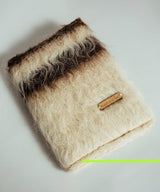
Two in three Ra-Ro pieces are only made after they are bought. The order goes to the workshop, the artisan makes the piece by hand, and the time it takes depends on the technique: anywhere from 48 hours to eight weeks. A Cobertor de Papa (Shepherd's Blanket) (€198.10) is woven by Céu Reis in Maçainhas, Guarda, on a loom more than 300 years old, and takes about four weeks. A Viola Braguesa (€1920.00) by Diogo Valente can take close to eight weeks.
Pieces that keep rare trades alive
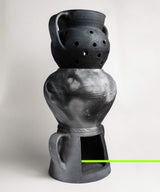
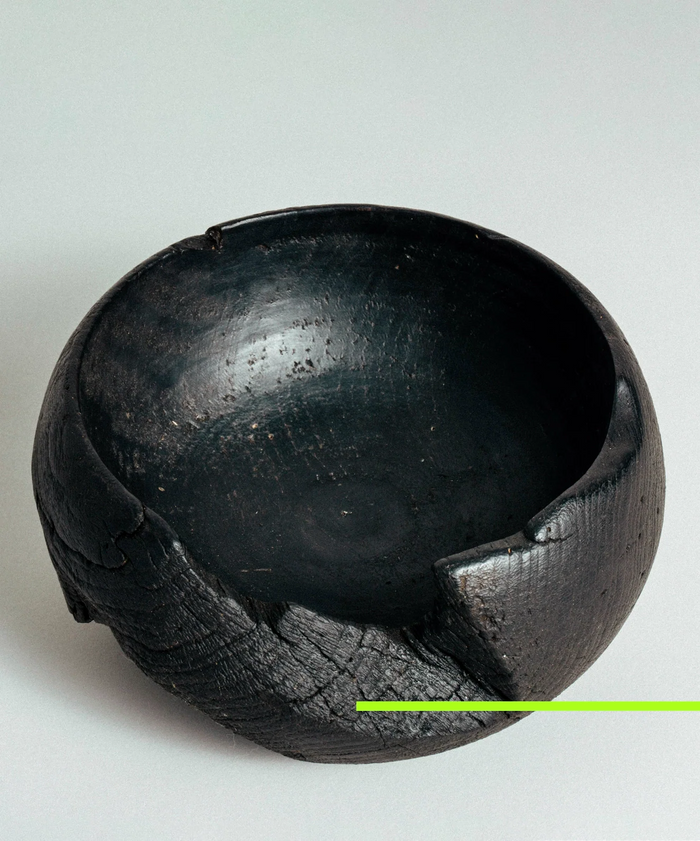
- Black Clay Casserole (€56.20), by César Teixeira in Gondar: fired in the soenga, a technique created by local potters in the early 17th century, with flames reaching 1000 ºC.
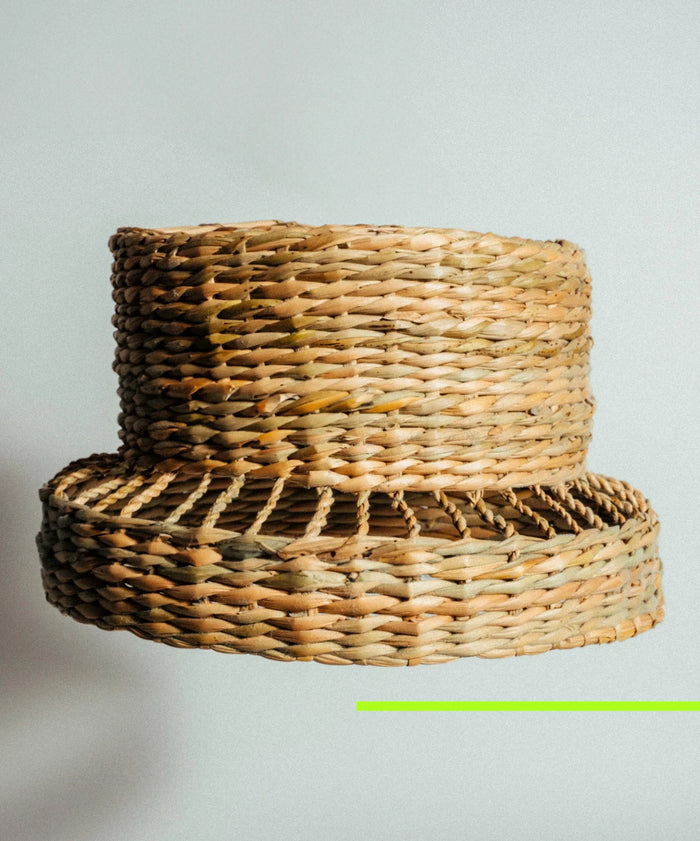
- Bulrush Lamp (€94.70), by Helena Novelletto, one of the last bulrush weavers in the country.
- Donkey Head (€26.50), by Isidoro Ramos, one of the few people who still harvest esparto grass in the Algarve hills.
- Vinho dos Mortos (€24.40), from Boticas, where the wine is buried to age, a custom dating back to the French invasions; the wine is made by Nuno Pereira.
To discover other makers, explore the Ra-Ro Map.
How to choose authentic Portuguese crafts
- A named maker: a handmade piece has someone behind it.
- An explained technique: you should be able to find out how it was made: loom, wheel, soenga, plaiting.
- A clear origin: village, municipality, region.
- A price that matches the time: a blanket that spends weeks on the loom cannot cost the same as a factory one.
We explain the criteria of rarity in What makes a piece rare.
Is buying crafts fair trade?
Fair trade is also the name of a movement with its own certification and rules, and this article is not about labels. In the simplest sense, a purchase is fairer when you know who made the piece, where and how, and when the price reflects the hours of work.
Other ways to support artisans
- Share: showing a piece or sending an artisan's story to a friend gives visibility to people who work far from cities.
- Give: a handmade gift takes a craft into new homes. Find ideas in A different gift: six ideas with soul.
- Visit: go to the villages and fairs where the trades are still practised. Start with Beira Alta: from the Serra da Estrela to the cobertor de papa.
Frequently asked questions
How can I support Portuguese artisans?
Buy pieces whose maker is named, give crafts as gifts and share the workshops' work. At Ra-Ro, every piece says who made it and where.
Where can I buy Portuguese crafts online?
At Ra-Ro, which brings together 40 artisans from 29 workshops and producers, from Minho to the Azores, and ships within Portugal and abroad.
Which traditional trades are at risk in Portugal?
Among others, Bisalhães black pottery, added by UNESCO in 2016 to its urgent safeguarding list, Guimarães embroidery, with eight certified embroiderers, and the soenga firing of Gondar black clay.
Why buy handmade?
Because each piece carries the time and skill of a real person, and because demand is what gives a master a reason to teach the craft.
What is the Ra-Ro Index?
It is Ra-Ro's own five level scale, from Invulgar to Único, measuring how hard a piece is to find and how many artisans still make it. It is not an official certification.
 -10%Rare Combinations
 November Selection