Cart
0
Madeira embroidery: what it is, its history, stitches and how to spot the real thing
Madeira embroidery is handmade on the island on linen, cotton, silk or organdie. Its history, its stitches, how to recognise the real thing and how to look after it.

In this article
 By Luís Serra, co-founder of Ra-Ro · View profile
About a 5 minute read

I started out thinking the problem with Madeira embroidery was that it was too beautiful. The tablecloth that lives folded in a drawer, waiting for a visit that never comes. Then I realised the problem was a different one, and more practical: a lot of people buy "Madeira embroidery" without knowing what they are buying.
Madeira embroidery is hand embroidery made on the island of Madeira, on linen, cotton, natural silk or organdie, with stitches such as richelieu, buttonhole, rope, garanito and French knots, and designs taken from nature. To know whether a piece is genuine, the surest sign is the guarantee seal of IVBAM, the Madeira Wine, Embroidery and Handicraft Institute, which checks the quality and authenticity of the pieces. At Ra-Ro, Madeira embroidery comes through Bailha, a project by David Oliveira from Estreito de Câmara de Lobos, with shirts and napkins hand embroidered by women artisans from the island.
Where does Madeira embroidery come from?
Embroidery has been part of the island since settlement in the 15th century. At first, it is believed, noblewomen did the embroidering, for the home, for clothing and for the church, with motifs taken from nature. So far, not very different from other European embroidery.
The part I find more interesting comes later. In the second half of the 19th century, English merchants based in Funchal began exporting the embroidery to the United Kingdom, and one name is tied to that turning point: Elizabeth Phelps, from an English wine trading family and born in Funchal, who helped turn embroidery into paid work for the island's women. Germany and the United States followed. In other words, Madeira embroidery stopped being a domestic pastime and became a business, with markets, orders and deadlines. That explains a lot of the rigour it still has today.
Today around ten companies produce Madeira embroidery and close to a thousand embroiderers work in the craft, many of them from home. A thousand people sounds like a lot. For a tradition five hundred years old, it is not.
Which stitches does Madeira embroidery use?
The design is transferred onto the fabric and then embroidered by hand, stitch by stitch. A large piece can take several months. The motifs are almost always naturalistic: flowers, leaves, branches. What sets Madeira embroidery apart is not so much the subject as the technique.
Richelieu is a stitch in which areas of fabric are cut away and joined by small bridges of thread, letting the background show through. Ilhó makes small eyelets finished all round, which lighten the design. Buttonhole stitch and arrendado finish the edges and create a lace effect. Then there are the drawing stitches: rope, pau, garanito, bastido, matiz and French knots, for stems, outlines, small raised dots and fillings.
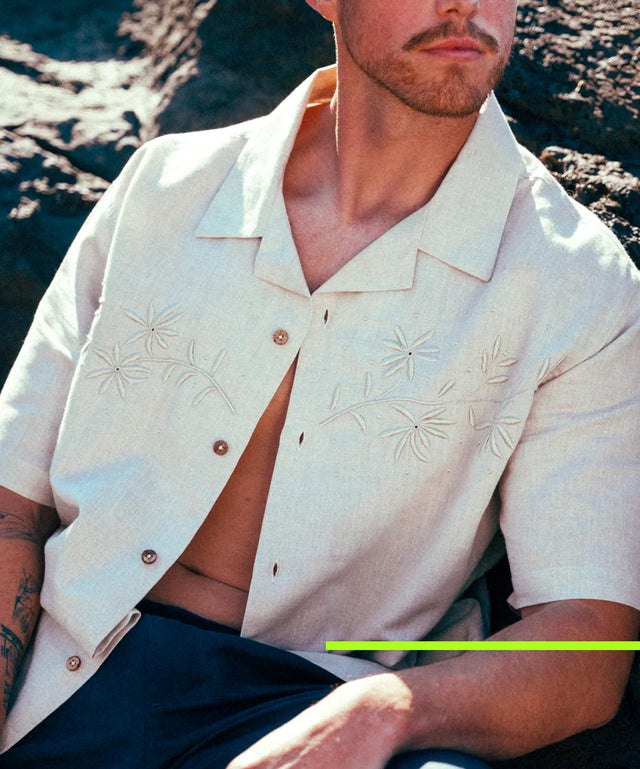
Those last ones are what you find on the Bailha pieces. The Flora Shirt, cream with wooden buttons, carries the island's flora in bastido, pau, garanito and rope stitch. The Til Shirt embroiders the til, one of Madeira's most characteristic trees, in French knots, pau, garanito and rope stitch. The shirts are light linen and cotton in an undyed tone, 150 grams, with a relaxed cut. I like the idea for a simple reason: it puts the embroidery on something you wear on a Tuesday, not only on feast days. And each description says which stitches were used and who embroidered it, which, in a subject where origin is everything, is not a small detail.
How do you spot genuine Madeira embroidery?
First, the IVBAM guarantee seal. The institute examines the pieces and applies the seal; it is the clearest proof. Second, the law: in 1985 Madeira embroidery became the first Portuguese non agricultural product protected as a Geographical Indication, and the European Union has since created a common protection system for craft and industrial geographical indications, which this name can benefit from.
Third, look. Hand embroidery shows small differences from stitch to stitch. A machine repeats everything perfectly and the reverse side usually gives it away. Fourth, ask: who embroidered it, and where? If there is no seal, the seller has to be able to answer. Fifth, the price. Hours and months of handwork do not fit into a very low price. That is not a sales pitch, it is arithmetic.
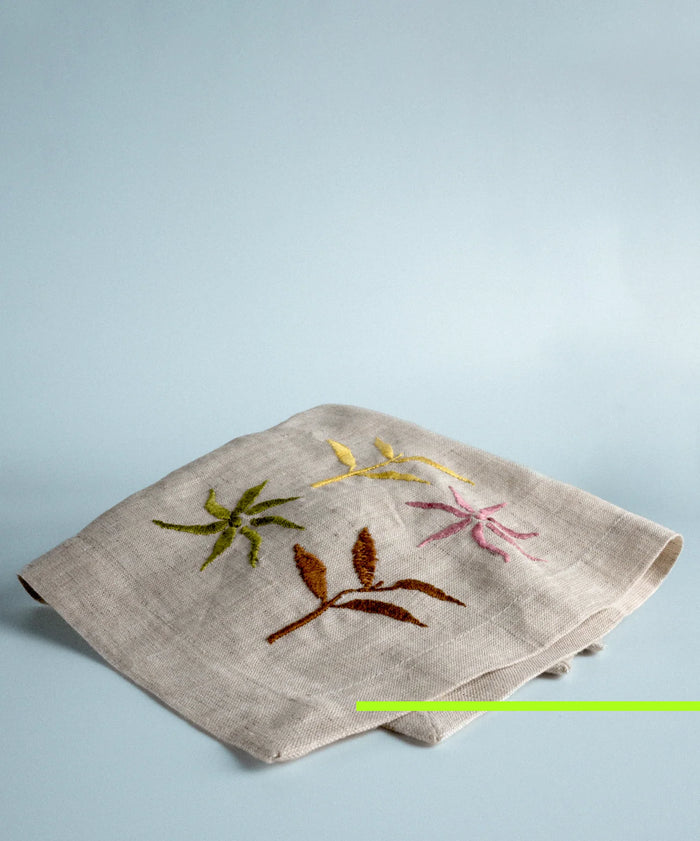
Once it is home, care is simple: hand wash in cold or lukewarm water, with mild soap and no bleach, which yellows linen and weakens the thread. Do not wring, dry in the shade, iron on the reverse over a thick towel so the relief is not flattened, and store folded in tissue paper, away from plastic. The Bailha Napkins, beige linen embroidered in bastido, matiz, rope, garanito and pau, cope well with that routine. And they were made to go on the table.
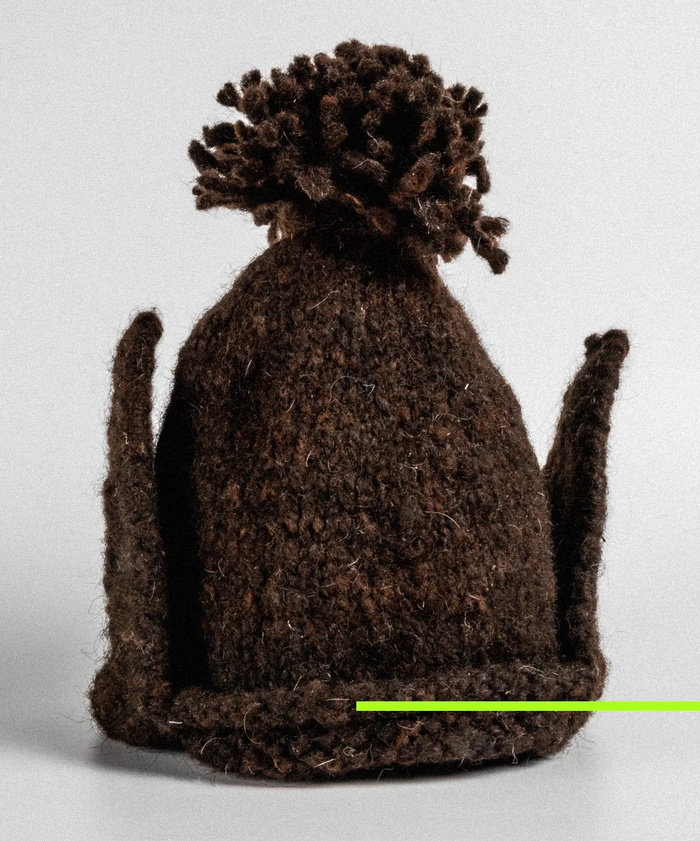
Which is, in the end, my conclusion. Madeira embroidery does not need more protection in a drawer. It needs people who recognise it and use it. If you are going to the island, our Madeira guide helps you choose what to see and what to bring back, and the Madeira region page brings together Ra-Ro's Madeiran artisans. To compare with another Portuguese embroidery, there is Guimarães embroidery and the lovers' handkerchief. And from the same island but another craft, the Regional Ear Flap Cap, whose story we tell in Enfiar o barrete.
Frequently asked questions
What is Madeira embroidery?
Hand embroidery from the island of Madeira, worked on linen, cotton, natural silk or organdie, with flower, leaf and branch motifs and its own stitches such as richelieu, ilhó and garanito.
How can I tell if Madeira embroidery is genuine?
Check whether the piece carries the IVBAM guarantee seal, which certifies authenticity. Without a seal, ask the seller where the piece comes from and who embroidered it.
Is Madeira embroidery a Geographical Indication?
Yes. The name has been protected since 1985, when it became the first Portuguese non agricultural product with a Geographical Indication.
Who brought Madeira embroidery to England?
English merchants in Funchal, from the second half of the 19th century. Elizabeth Phelps played a central role in making embroidery paid work for the island's women and in making it known in England.
How do you wash Madeira embroidery?
By hand, in cold or lukewarm water, with mild soap. Avoid bleach, do not wring the piece and iron it on the reverse.
Where can I buy Madeira embroidery?
At Ra-Ro, through Bailha, by David Oliveira, with shirts and napkins hand embroidered by artisans from Madeira.
 -10%Rare Combinations
 November Selection