Cart
0
How to recognise authentic Portuguese handicrafts: 8 signs of a handmade piece
The maker's name and place, small irregularities, natural materials, marks of the technique and certification where it exists: the eight signs of a handmade Portuguese piece.

In this article
 By Luís Serra, co-founder of Ra-Ro · View profile
About a 5 minute read

I have an instinctive distrust of "X signs that" lists. But in this case the list exists for a practical reason: no single sign proves anything on its own. It is the whole set that counts, and it helps to have all of it in front of you before you buy.
An authentic piece of Portuguese craft can be recognised by eight signs: it has the name and place of whoever made it, it shows small irregularities, it uses natural materials tied to the craft, it shows the marks of the technique, it may carry the maker's signature or mark, it has certification where the craft provides for it, its price is consistent with the hours of work, and it comes with a story the seller can tell. A black clay púcaro by Cesar Teixeira in Gondar, or a Parideira by António Ramalho, a figure maker from Barcelos, are examples of pieces that carry the name, the place and the technique of the person who made them.
The signs you can see in the piece
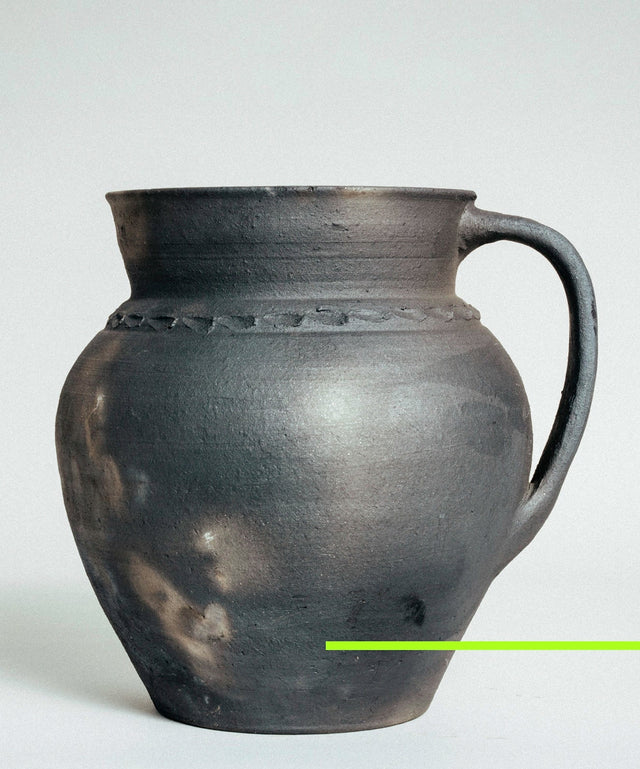
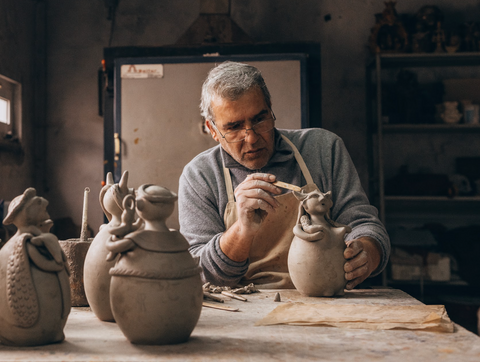
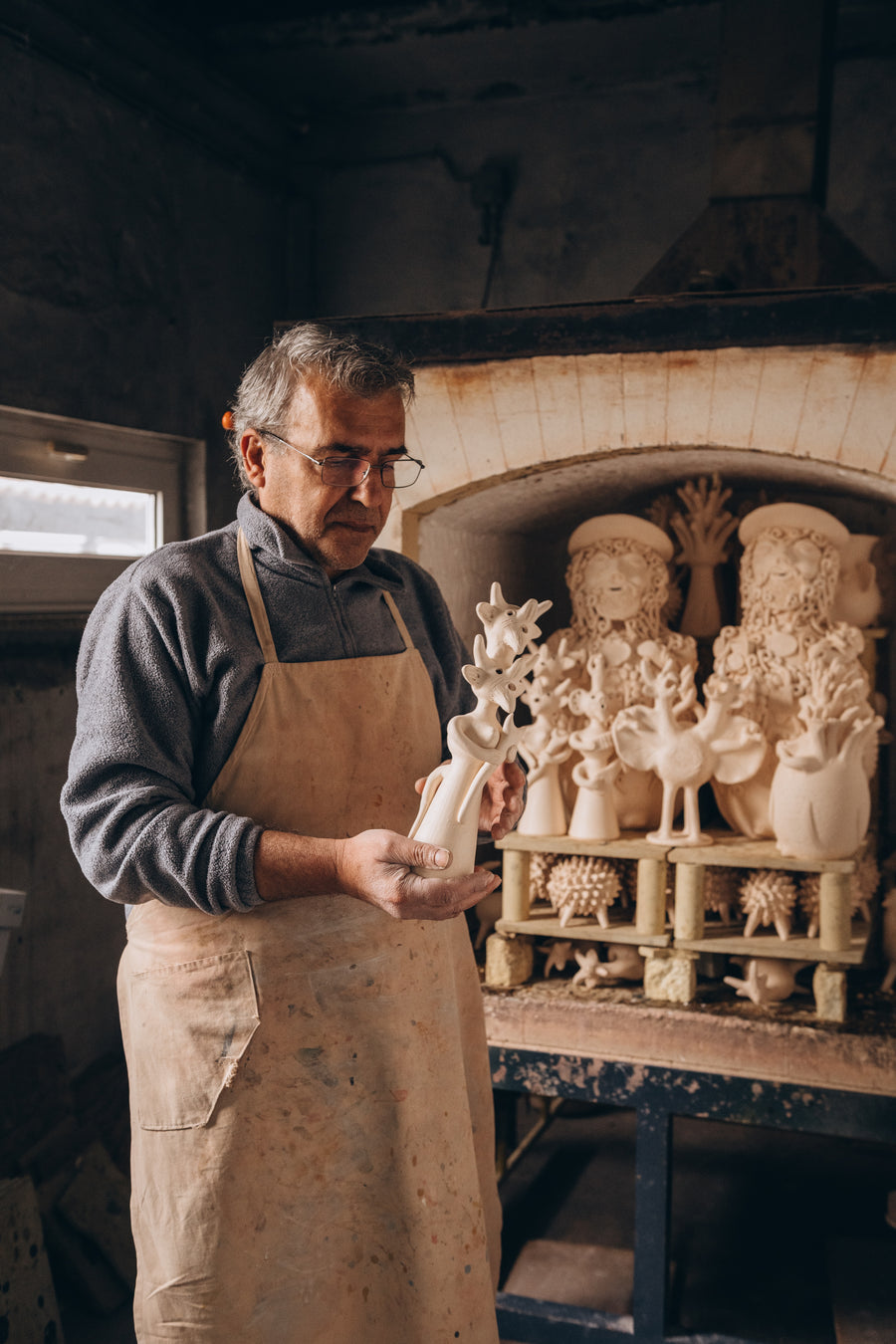
The first is the simplest and the most ignored: knowing who made it and where. At Ra-Ro, every product names the artisan or workshop. The Black Clay Púcaro is by Cesar Teixeira, in Gondar; A Parideira is by António Ramalho, a figure maker from Barcelos. "Portuguese craft" with no name and no origin is the first warning sign. It is not proof of fraud. It is an absence of proof, which is already a lot.
Then, irregularities. By hand, no piece comes out the same as the last: the thickness of the clay varies, an embroidery stitch is slightly different, the wood shows its grain. Irregular does not mean badly made. An authentic piece is carefully made; it is just not identical to the one next to it.
Third, materials: clay, wool, linen, wood, plant fibres, consistent with the craft and the region. Ana Sincu's coffee spoons are carved in wood with hand tools only; the sewn basket by Musaz is banana fibre stitched by hand. Plastic that looks like wood, or synthetic fibre in a "shepherd's" blanket, does not fool anyone who touches it.
Fourth and fifth, the marks of the technique and the signature. Each craft leaves its own signs. Gondar black clay takes the colour of the smoke in the soenga, an open air bonfire firing, which is why the tone is never perfectly even. Hand embroidery has a neat reverse side; carved wood keeps the trace of the gouges. As for the signature, it is less conclusive than it looks: in Barcelos figure making it only became common in the 1950s and 60s, and moulded pieces were often unsigned. A missing signature does not prove a piece is fake, and a signature printed in series does not prove anything either.
The signs that lie outside the piece
The sixth sign is certification, where it exists. Portugal has a system for qualifying and certifying traditional craft productions, created by Decree-Law 121/2015 and run by the IEFP. Each certified production has a specification, covering origin, raw materials and method, and pieces that comply can use the "certified traditional craft" mark. In Barcelos figure making, the specification promoted by the municipality requires the label to state whether the piece is an original, mixed technique or moulded figure.
Guimarães embroidery also has certified artisans, and the Lavender Pouch by A Oficina comes from their hands. Artisans themselves can hold the Carta de Artesão, registered in the National Craft Register. But watch the reverse reasoning: most crafts have no certification, so its absence does not mean a piece is not genuine.
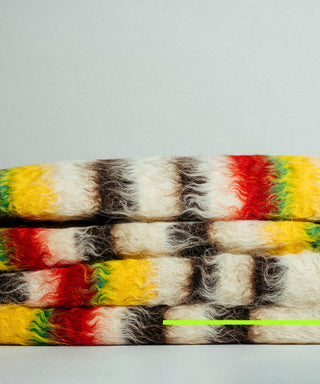
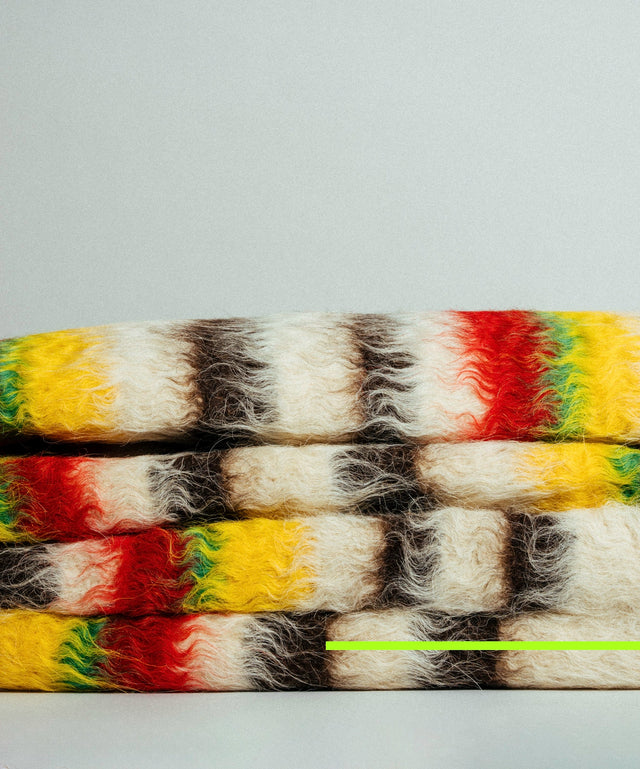
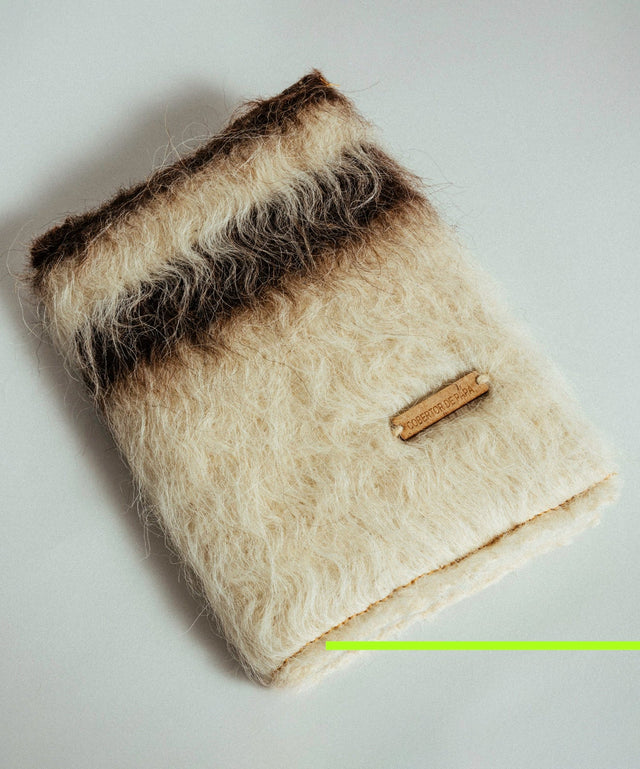
The last two signs are the most human. The price has to make sense for the work: a thickly woven wool blanket takes time and raw material, and cannot cost the same as an industrial one; the papa blanket is a good example, explained in Cobertor de Papa: price and where to buy. And the story has to be verifiable. Anyone selling real craft can say how the piece was made, by whom and where. Ask. If the answer is vague, or changes from one conversation to the next, be suspicious.
Which mistakes to avoid, and is authentic the same as rare?
The most common mistakes are about interpretation. Confusing "inspired by" with made by an artisan. Assuming "made in Portugal" means handmade, when there is also Portuguese industrial production. Accepting perfectly identical series pieces as handwork or, at the other extreme, seeing a flaw in every irregularity. Demanding certification from crafts that do not have it. And buying heavily reproduced symbols without asking who made them; the rooster is the classic case, and we explain how to tell in The Barcelos Rooster: legend, meaning and how to recognise it.
Finally, a distinction I find useful: authentic is not the same as rare. A piece can be authentic and easy to find. Rarity depends on how many artisans still practise the craft, how many pieces come out each year and how different each one is. At Ra-Ro we measure that with the Ra-Ro Index, from Unusual to Unique, and the criteria are in What makes a piece rare.
We work with around 40 artisans from 8 regions, the Azores and Madeira included, and every piece has a name, a place and a craft. To see what is made in each corner of the country, there is our guide to Portuguese crafts by region. And if you want to see everything above in a single piece, the Cantarinha dos Namorados from Guimarães has a name, a place, a technique and a story centuries old.
Frequently asked questions
How can I tell if a craft piece is handmade?
Check whether it has an identified maker and origin, small differences between pieces, natural materials and traces of the technique, such as smoke on black clay or grain in wood.
Are Portuguese handicrafts certified?
Some productions are. Decree-Law 121/2015 created a system run by the IEFP, with specifications and the certified traditional craft mark, applied for example to Barcelos figure making.
What is the Carta de Artesão?
It is the title that officially recognises an artisan in Portugal, linked to registration in the National Craft Register, run by the IEFP.
Can an unsigned piece be authentic?
It can. Many artisans do not sign, and in Barcelos figure making signing only became usual in the 1950s and 60s.
Does made in Portugal mean handmade?
Not necessarily: there is Portuguese industrial production. Handcraft has an identified maker and shows signs of manual work.
Where can I buy authentic Portuguese handicrafts?
At Ra-Ro, which brings together pieces from around 40 artisans in 8 regions, each with a name, place and craft, and ships to Portugal, Europe, the USA, Canada and Brazil.


 -10%Rare Combinations
 November Selection