Cart
0
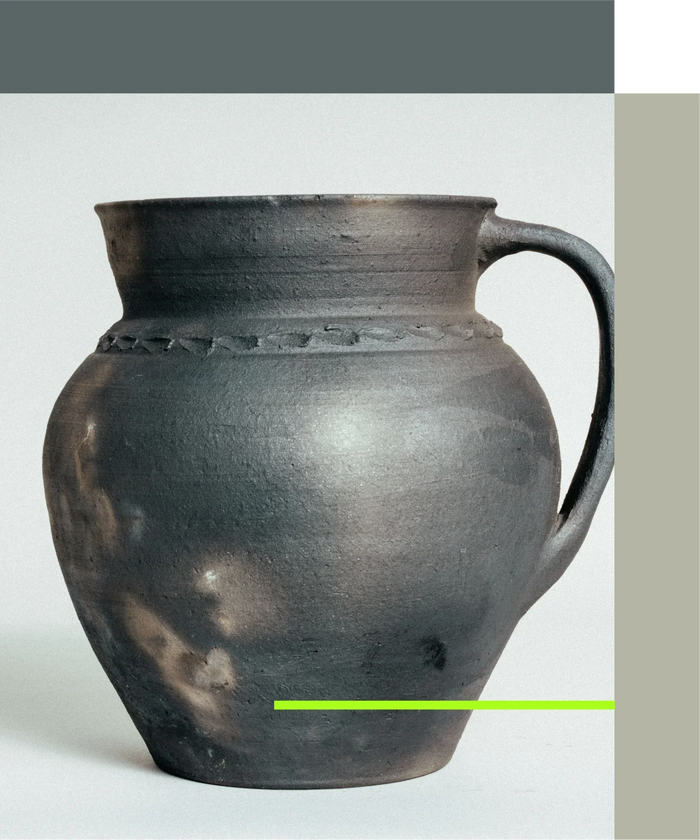
Soenga is the ancestral pit firing technique used in Gondar, in the municipality of Amarante, to make black pottery. The pieces are fired in an open fire dug into the ground and, at the peak of the fire, smothered with pine needles and earth. Without oxygen, smoke penetrates the clay and turns it black.
Origin and history
Black pottery has been documented in Gondar since at least the 17th century, according to Amarante tourism. The tradition is thought to have reached the parish with potters from São Martinho de Mouros. For centuries, soenga supplied the kitchens of the region with pots, casseroles and alguidares.
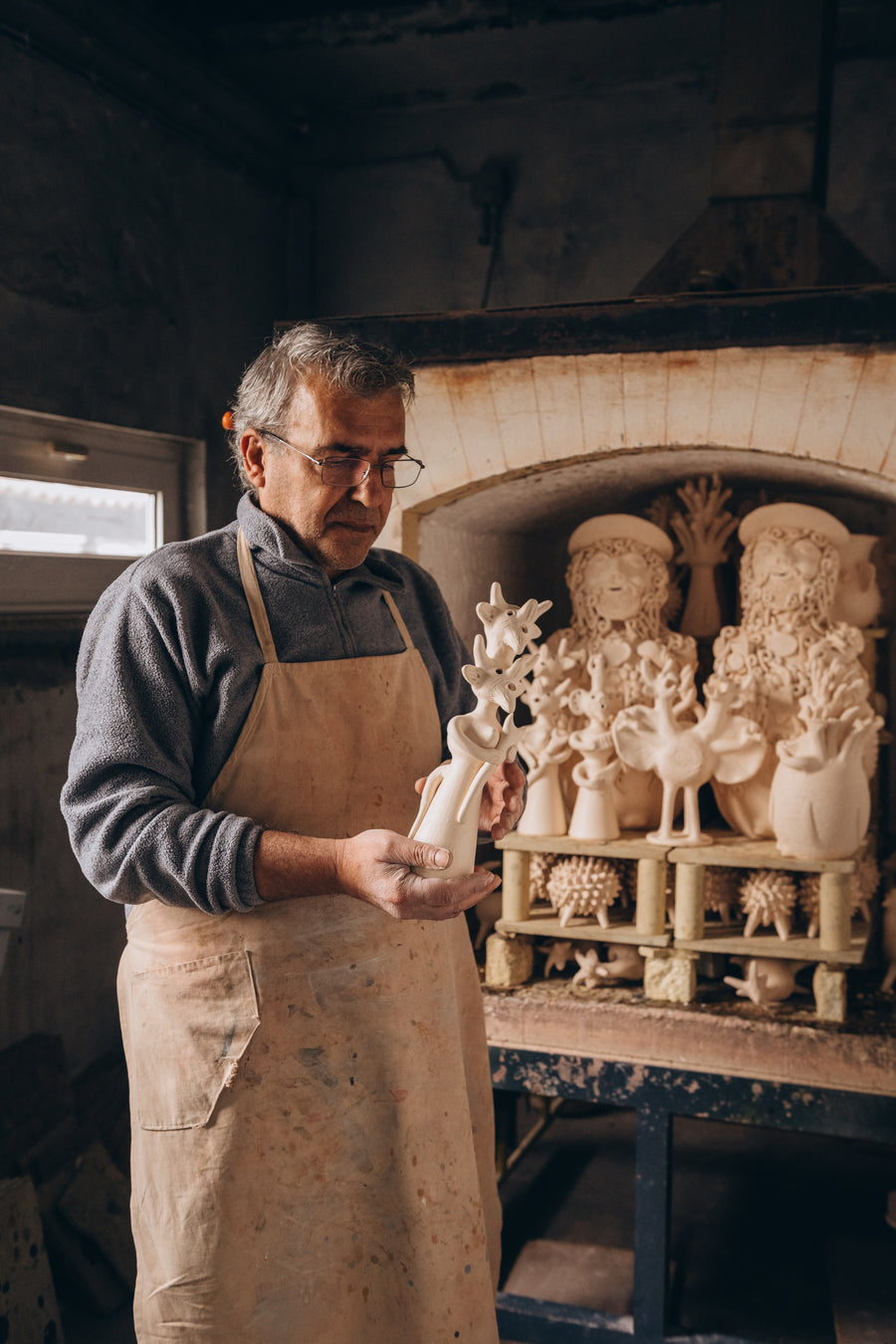
Production peaked in the mid 20th century and had almost disappeared by the 1980s. Today the technique is kept alive by César Teixeira, born in Gondar in 1969, who learned the craft in 1987 from master Manuel Teixeira, and by his son João, who studied ceramics in Caldas da Rainha.
How it is made
First, the pieces are shaped on the roda baixa, a horizontal wheel turned by hand, and left to dry in the air. Then a deep, wide circular pit is dug in the ground. A fire of wood and pine needles is lit in the centre, with the pieces arranged around it so they heat up slowly.
After about two hours, the embers are pulled to the centre and the pieces are stacked on top, covered with more wood. When the fire reaches temperatures of around 1000 °C, the pit is quickly covered with pine needles, turf and earth. The fire is smothered, no more oxygen gets in and the carbon-laden smoke penetrates the still hot clay. This reduction firing turns the reddish clay into a black piece.
A soenga is also an event. César Teixeira has held public soengas since 2017, open to anyone who wants to watch the pit being opened and closed.
Where it comes from
Soenga belongs to Gondar, a small village in the municipality of Amarante, in the district of Porto, near the Tâmega river. César Teixeira works in a former primary school in the village, the same one where he learned to read. The clay comes from the region and also from clay pits near Chaves.
How to recognise soenga pottery
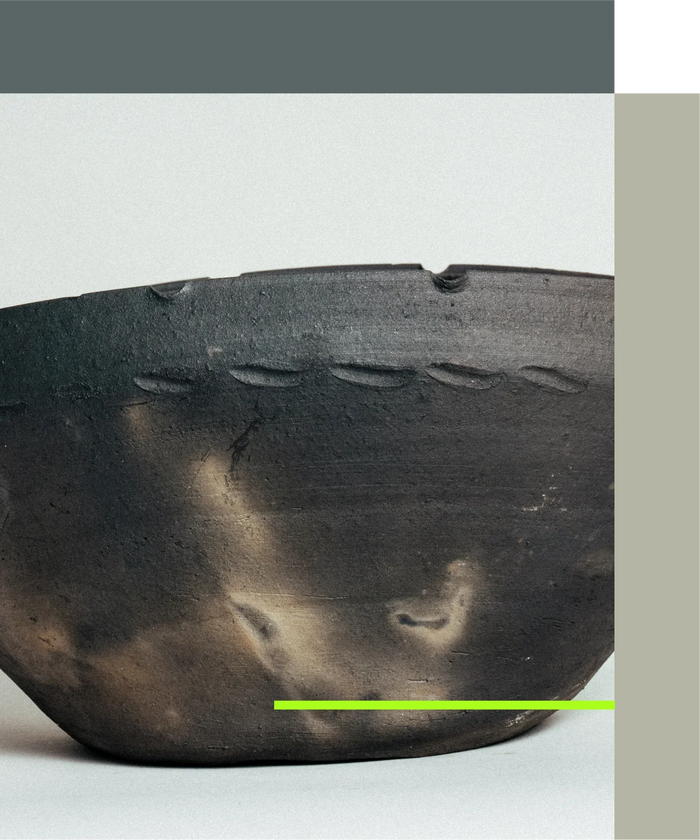
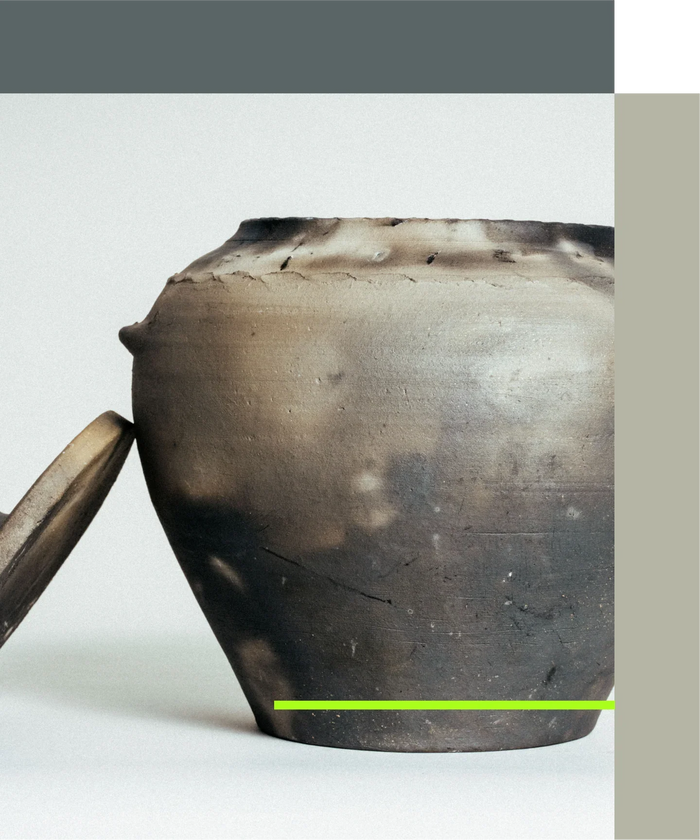
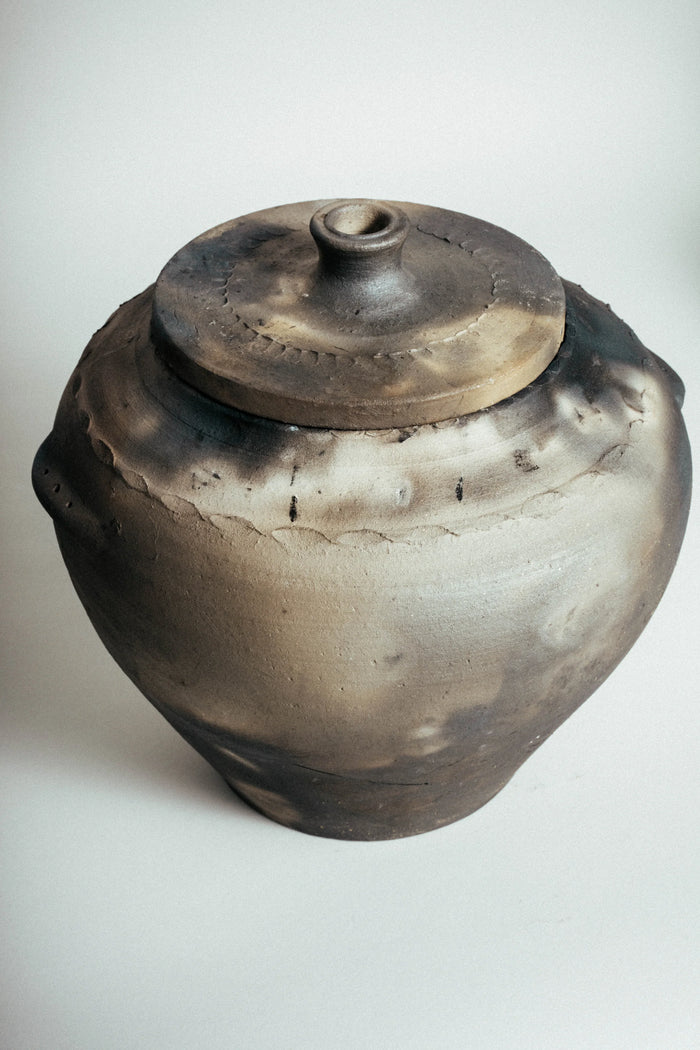
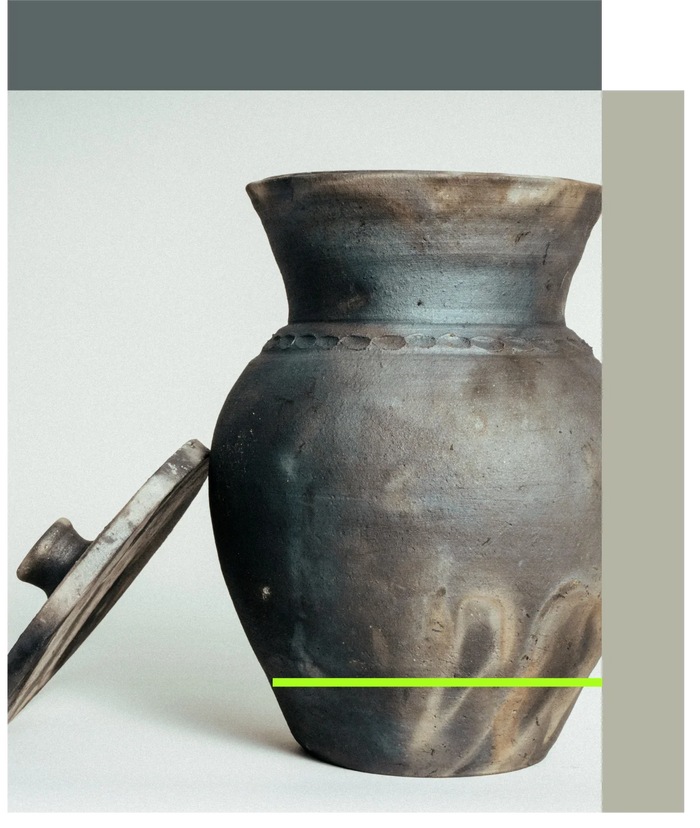
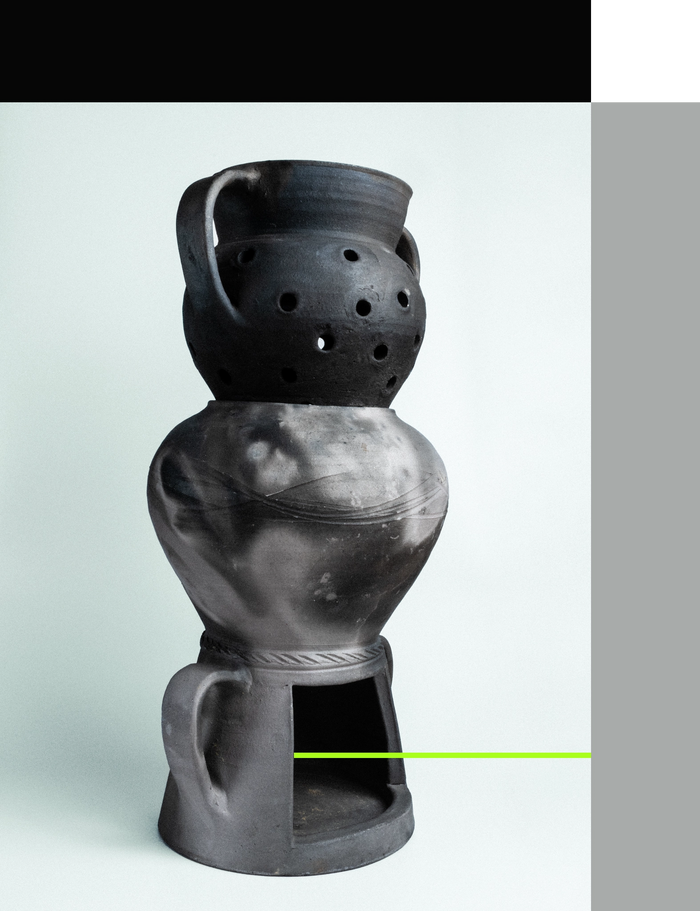
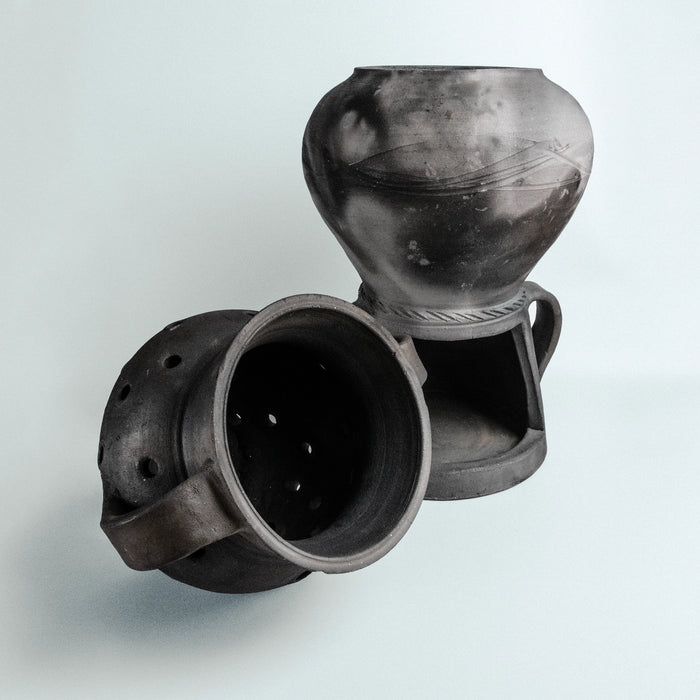
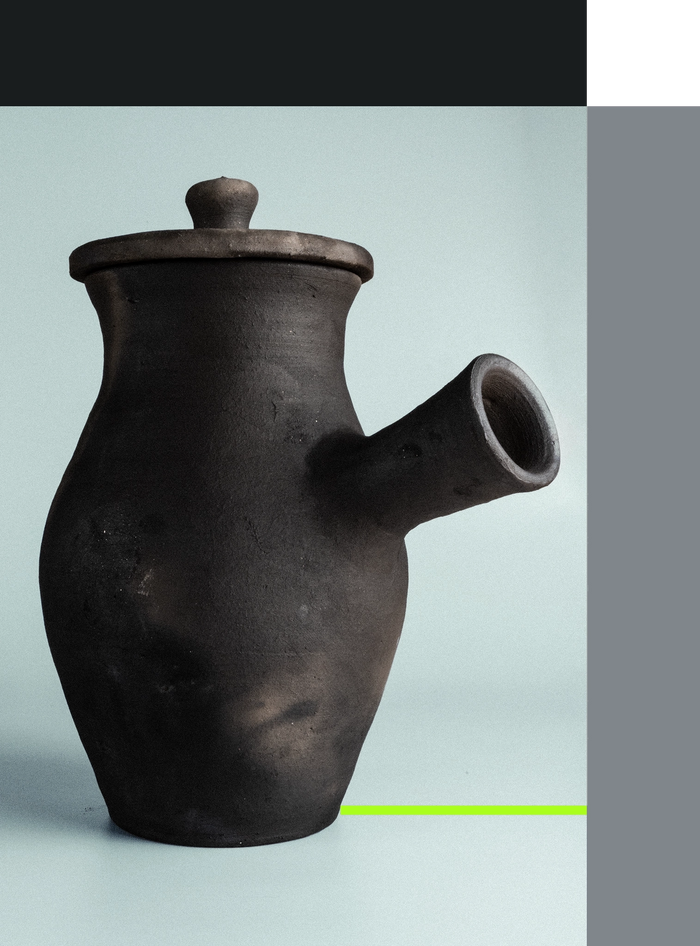
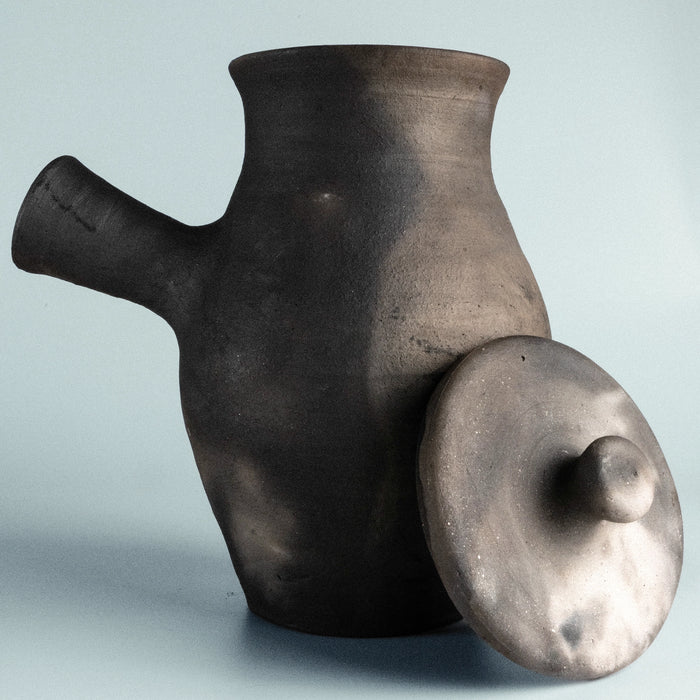
A soenga piece is black all the way through, because the colour comes from smoke, not from paint or glaze. The surface is matt or slightly satiny, with small variations of tone left by the fire. Every piece is different and has the weight and sound of wood-fired clay. The traditional shapes are utilitarian: alguidares, casseroles, cups, pots and chocolate pots.
Where to buy
At Ra-Ro you will find pieces made by César Teixeira and fired in soenga, such as the Black Clay Alguidar, the Black Clay Casserole, the Chocolateira or the Chestnut Roaster. You can learn more about the potter on the César Teixeira maker page. On the Ra-Ro Index, these pieces are among the hardest to find.
Frequently asked questions
What is soenga?
It is pit firing, smothered with pine needles and earth, that gives the clay of Gondar its black colour. Smoke penetrates the clay without oxygen and darkens it completely.
Why is black pottery black?
Because at the end of the firing the pit is covered and the fire is starved of oxygen. Smoke enters the hot clay and fixes the black colour. There is no paint or glaze.
Where can I buy soenga pottery?
Directly from the potter César Teixeira, in Gondar, or online at Ra-Ro, which sells alguidares, casseroles, pots, cups and chocolate pots made by him and fired in soenga.