Cart
0
Helena Novelletto Handmade byHelena Novelletto
Woven Bench (Tanho)
124,20 €
Currently sold out
Ra-Ro IndexVery RareWhat is the Ra-Ro Index?Bulrush (bunho) loves water. It grows in humid places, including ponds, swamps, and lakes. Frogs and dragonflies are among its closest neighbours. So, how does it transform into this beautiful, versatile, and stripped-back Woven Bench (tanho), which you can take...
Read the story of the piece- Worldwide shipping
- Free returns within 14 days
- Secure, encrypted payment
 Handmade byHelena Novelletto
Dimensions
Care
Shipping and returns
We ship worldwide. You have 14 days to return the piece free of charge. Payment is secure and encrypted.
Bulrush tanho stool
Woven Bench (Tanho)
A braided bulrush stool, beautiful, versatile and bare.
The story
Bulrush loves water and grows in ponds, marshes and lakes. Harvested in summer, it is braided by Helena Novelletto in her workshop in Caldas da Rainha, *with all the strength of her arms*. She learned the craft from *master Manuel Ferreira, of Santarém*, and is *one of the last active bulrush artisans*.
Story of the piece
Woven Bench (Tanho)
Bulrush woven bench, bare and beautiful.
Bulrush (bunho) loves water. It grows in humid places, including ponds, swamps, and lakes. Frogs and dragonflies are among its closest neighbours. So, how does it transform into this beautiful, versatile, and stripped-back Woven Bench (tanho), which you can take to live in the desert? Or use it to slow down the pace, for example.
For Helena Novelletto, the young artisan behind this work, it has been a journey towards freedom. She started by learning the craft with Manuel Ferreira, a generous master from Santarém, who wove while recalling the 1974 revolution that ended 48 years of dictatorship in Portugal, telling stories she, born in Brazil, had never heard of.
Freed from industry, the bunho craft demands only raw nature and her disciplined hands - self-sufficiency. We are sure she is one of the last active bunho artisans, but we hope that her dedication can motivate other artists with sustainable convictions.
In the summer, the bulrush is harvested, in its natural habitat, and woven in her workshop in Caldas da Rainha (Estremadura, Portugal), a task that requires all the strength of her arms. Yes, freedom demands hard work.
In numbers
The piece in facts.
Height35cm
A low seat, made for slowing down.
Length30cm
At 20 cm wide, it fits any corner.
Revolution1974
Manuel Ferreira, Helena's master, wove while recalling the 1974 revolution.
Freedom takes a lot of work.
See the piece
See every detail.
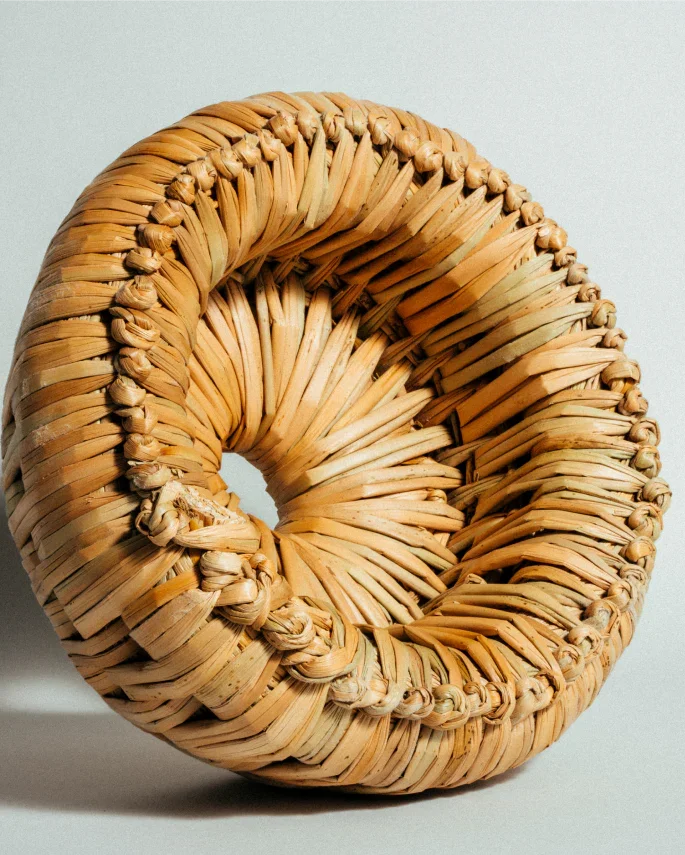
Overview
Bulrush stool
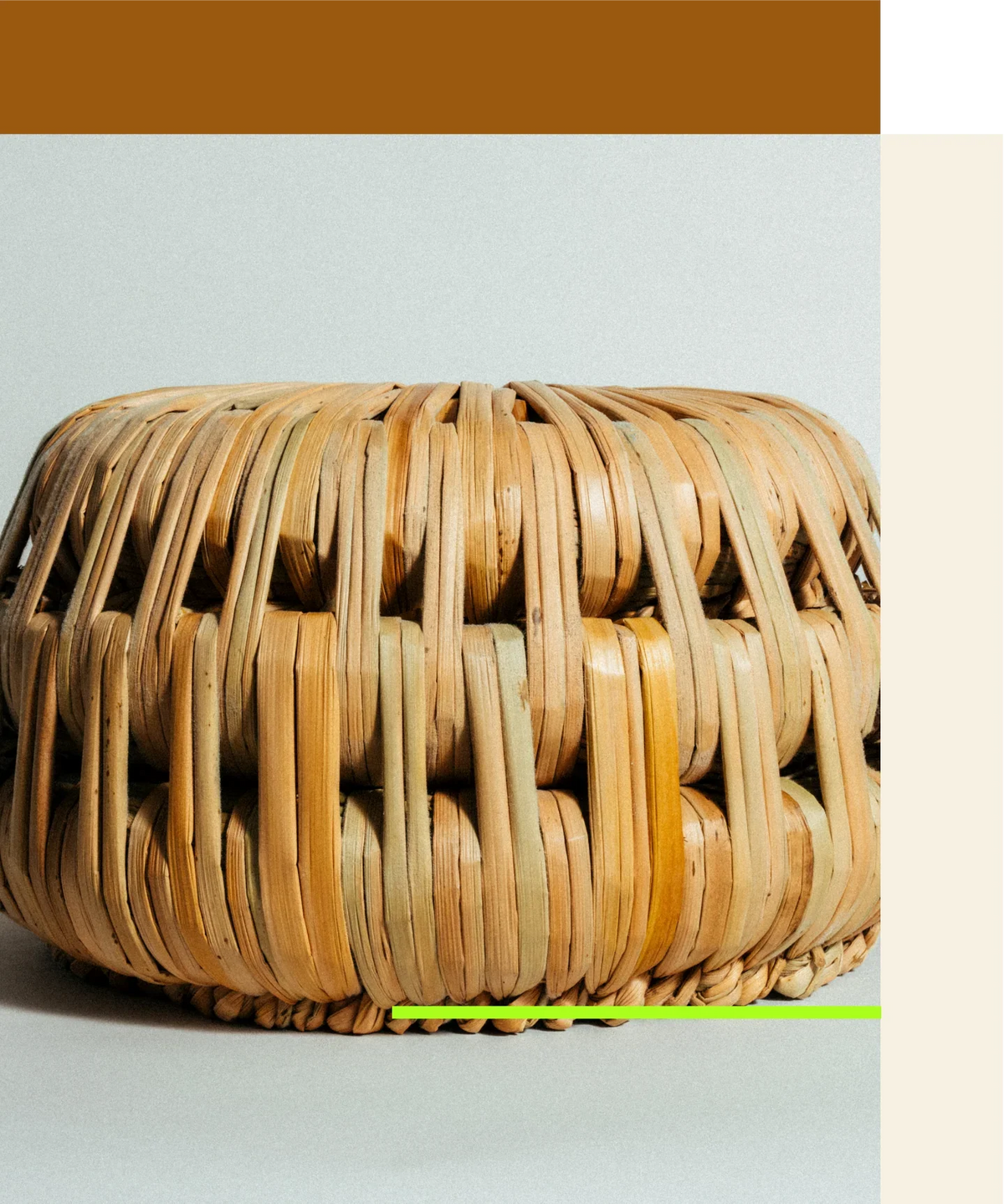
The Tanho from the side, its braiding in view.
- 1Rounded topWhere the braiding closes on itself.
- 2Bulrush stripsHand-harvested and sun-dried.
- 3Braided baseA firm edge that rests on the floor.
Detail
From above
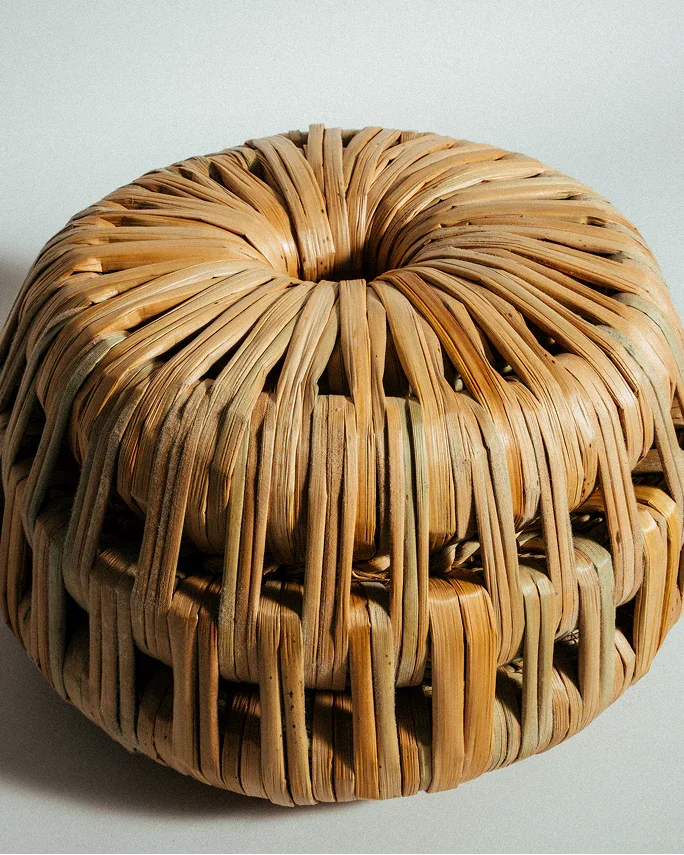
The circular form seen from above.
- 1CentreThe braiding converges to the middle.
- 2SidesLayers of bulrush stacked together.
- 3Natural fibreOnly nature and disciplined hands.
Detail
Spiral braiding
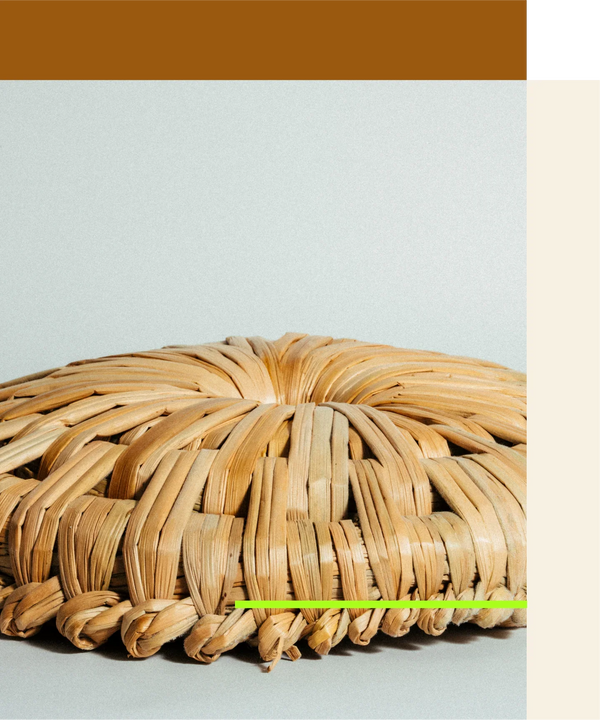
The piece seen head-on, like a crown.
- 1Central openingWhere the braiding begins.
- 2Knotted edgeBulrush knots all the way round.
- 3Radial stripsLaid one by one, by hand.
Detail
Close‑up
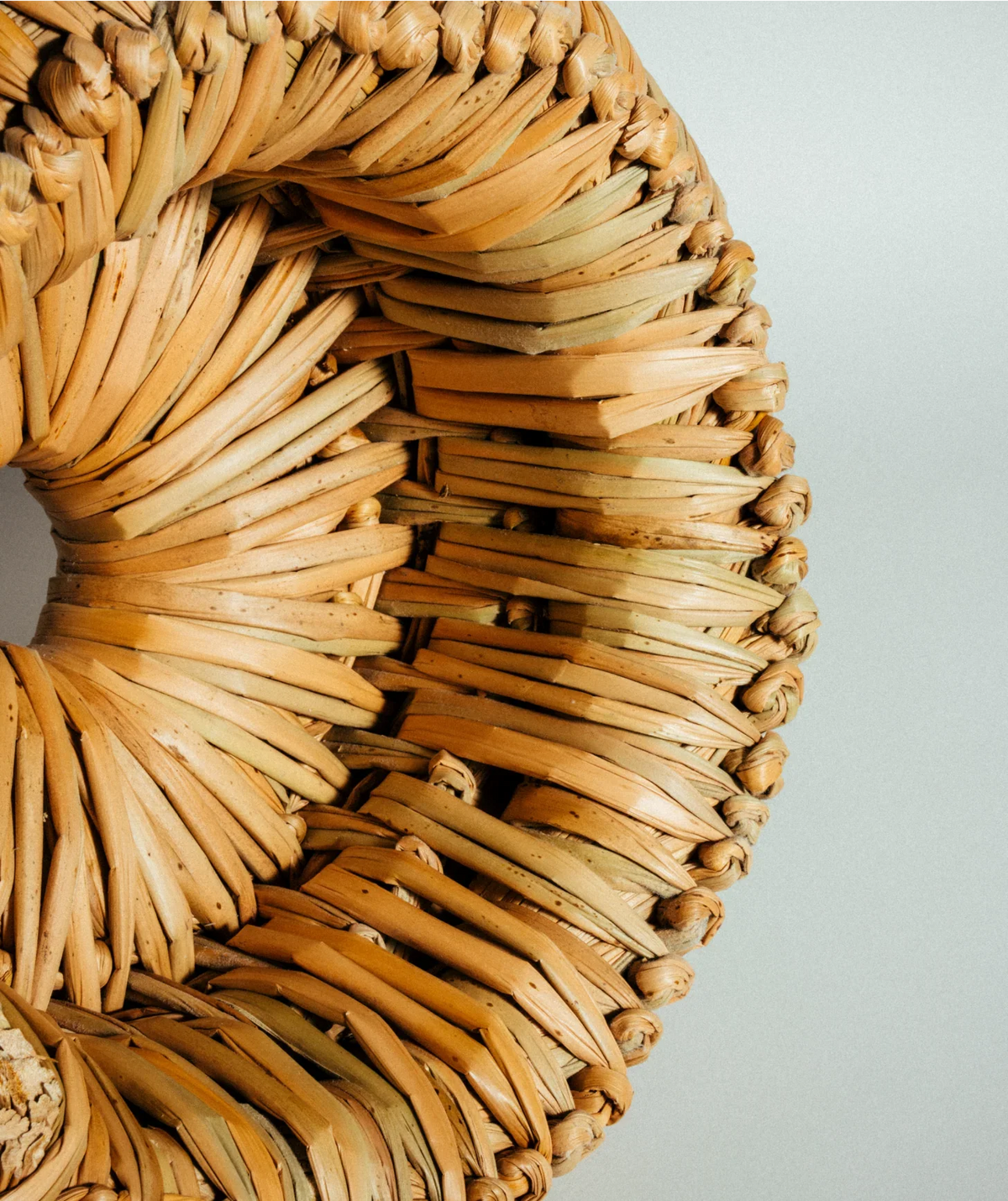
The bulrush texture up close.
- 1InteriorThe void that makes the piece light.
- 2KnotsEach knot tightened by the strength of her arms.
- 3Bulrush colourGolden tones of a sun-dried plant.
About the piece
Dimensions and care.
Dimensions
Care
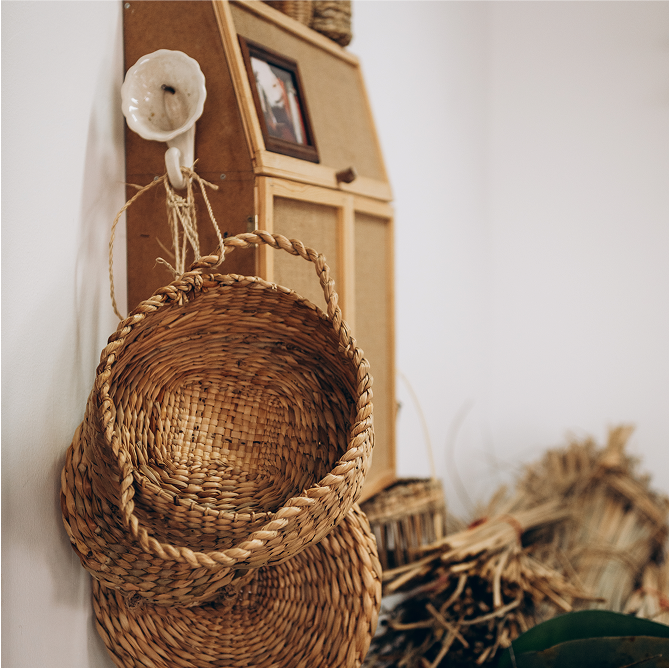
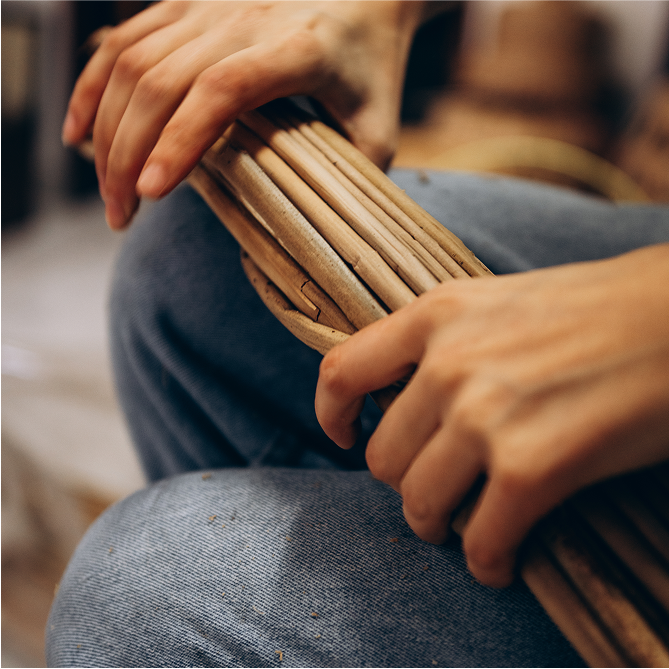

Meet the Producer
A JOURNEY TOWARD CREATIVE FREEDOM
Helena Novelletto learned the craft from master Manuel Ferreira, transforming bunho into unique pieces with stories of freedom.
discover the story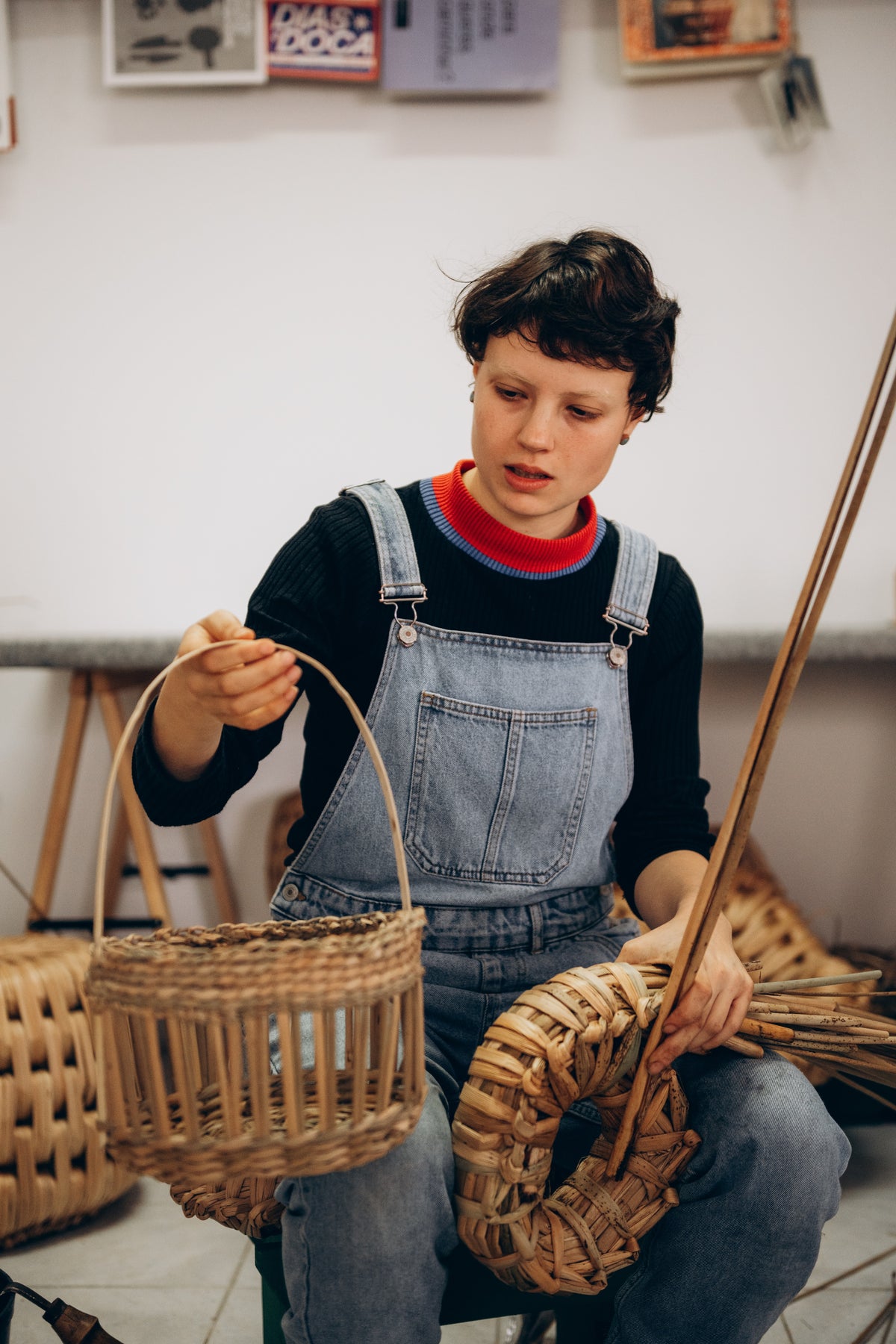
The journey
Helena Novelletto
Apprenticeship and Artistic Roots
Craft and Process
Background and Present Context
Future Outlook and Inspiration
For Helena Novelletto, the young artisan behind this work, it has been a journey towards freedom. She began by learning the craft from Manuel Ferreira, a generous master from Santarém, who wove while recalling the 1974 revolution that ended 48 years of dictatorship in Portugal, telling stories that she, born in Brazil, had never heard. Free from industry, bulrush craft asks of Helena only pure nature and her disciplined hands. Self-sufficiency. We are certain she is one of the last active bulrush artisans, but we hope her dedication can motivate other artists with sustainable convictions.
Questions
Everything you need to know.
What is this piece?
Woven bulrush tanho stool by Helena Novelletto in Estremadura. Empreita weaving with hand-harvested fibre. Extremely rare Portuguese craft.
Which region is it from?
It comes from Estremadura, in Portugal. At Ra-Ro, every piece is tied to its origin and to the territory where it is made.
Who makes this piece?
It is made by Helena Novelletto, the producer Ra-Ro works with directly for this piece.
What technique is used?
This piece is made using the Empreita technique.
Are all pieces identical?
As a handmade piece, it may vary slightly from one example to another. That variation is part of its authenticity.
Do you ship worldwide?
Yes, Ra-Ro ships worldwide.
How do returns work?
You have 14 days for a free return.
Is payment secure?
Yes, all payments are processed securely and encrypted.
Take the Tanho home and sit down for a moment to slow the pace.
124,20 € · currently sold out
Buy nowWorldwide shipping14 days for free returnsSecure payment
More pieces
You may also like
Your journey