Cart
0
Alentejo talego: the cloth bread bag and why it still makes sense
A cloth bag sewn by hand with patches, hung behind the kitchen door: what the Alentejo talego is, its uses today and why it's both a gift and wrapping.

In this article
 By Sérgio Carvalho, co-founder of Ra-Ro · View profile
About a 4 minute read

Ask anyone who grew up in the Alentejo where bread was kept, and the answer comes without hesitation: in the talego. A cloth bag, hung behind the kitchen door or placed on the chest, with the week's bread inside. For a long time, I thought it was just a bag. It isn't.
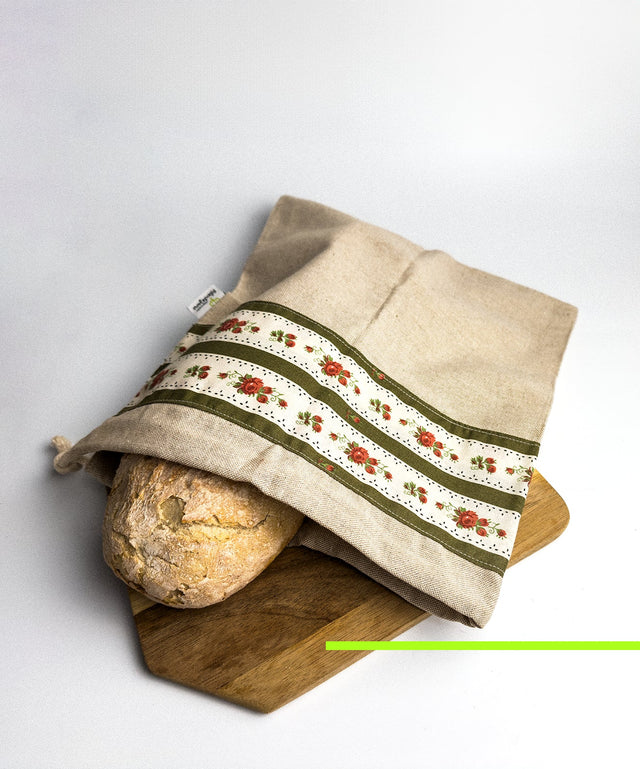
The Alentejo talego is a hand-sewn cloth bag, traditionally made with cotton or linen scraps, used to store and preserve bread. Each one is different because each scrap has its own pattern and texture, and in many families, it is passed down from generation to generation. Today, it is also used to store clothes, carry shopping or wrap gifts. At Ra-Ro, we have the Traditional Alentejo Talego, made by local artisans and selected by the Mercado Alentejano, in two sizes, medium and large.
What is a talego?
It is, first and foremost, an old word for bag or taleiga, a small cloth bag. In the Alentejo, it became associated with bread. Alentejo bread, with its dense dough and thick crust, is made to last several days, and the talego was the way to keep it: the cloth allows the bread to breathe, which helps the crust not to soften as it would in a closed bag.
No two talegos were alike. They were made at home with what was available: fabric scraps, a piece of sheet, a chintz remnant. It is this mix of patterns that gives them the cheerful look we still recognise today. The talegos we sell follow the same logic: each one is hand-sewn with different scraps, so yours won't be identical to the photo.
What is a talego used for today?
For bread, first. Store whole or sliced bread inside the talego, in a dry and airy place. But the list doesn't end there, and that's why we like it so much.
| Use | Why it works |
|---|---|
| Store bread | The cloth allows the bread to breathe and avoids plastic |
| Store clothes or small items | It hangs up and keeps the drawer tidy |
| Carry shopping | It's light, folds up and is washable |
| Wrap gifts | Replaces wrapping paper and stays with the recipient |
For washing, follow the product sheet instructions: by hand, in cold water with mild soap, and air dry in the shade.
Why is it a good Christmas gift?
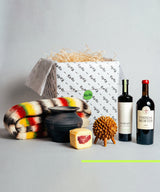
Because it's a gift and wrapping at the same time. A talego with Alentejo bread, a PDO Sheep's Cheese and a jar of Ameixas d'Elvas inside is a complete present, with no paper or ribbon to throw away. And after Christmas, the talego stays in the recipient's kitchen.
We explained how to put together such a hamper in Alentejo Christmas Hamper. The medium talego costs €17.10 and the large €19.70, and it is also part of our selection of gifts under €50, which you can see on the Natal Raro page.
The talego and the rest of the Alentejo at the table
The talego belongs to the same kitchen as the painted pottery from Redondo, the hand-painted trays or the tinware bicado. These are everyday objects that someone made by hand and that remain useful. If you like this idea, it's worth reading Pottery from Redondo and Alentejo Bicado and Hand-Painted Tea Tray, and to get to know the region, our Alentejo guide.
Frequently Asked Questions
What is an Alentejo talego?
It is a hand-sewn cloth bag, traditionally made with cotton or linen scraps, used in the Alentejo to store and preserve bread.
Does the talego preserve bread?
Yes. Being made of cloth, it allows the bread to breathe, which helps maintain the crust, unlike a closed plastic bag.
How do you wash a talego?
By hand, in cold water with mild soap, and air dry in the shade.
Are all talegos the same?
No. Each talego is hand-sewn with different scraps, so the pattern varies from piece to piece.
Where to buy an Alentejo talego?
At Ra-Ro, in medium size (€17.10) or large (€19.70), made by local artisans and selected by the Mercado Alentejano.


 Rare Combinations
 November Selection