Cart
0
Mouth-blown glass is glass shaped by hand with human breath. The glassblower gathers molten glass on the end of a hollow blowpipe and inflates it until it takes shape, either freely or inside a mould. Each piece comes out slightly different from the last, and that small difference is what makes it unique.
Origin and history
Glassblowing appeared in the middle of the 1st century BC, when Syrian and Phoenician craftsmen found that molten glass could be inflated like a bubble. Soon after, in the 1st century AD, mould blowing was born, using carved wooden or metal moulds that gave the piece its shape and texture.
In Portugal, the great centre of glass is Marinha Grande, in the district of Leiria. In 1747, John Beare moved a glass factory there from Coina, drawn by the wood of the pine forest, sand rich in silica and good clay. In 1769, under the Englishman William Stephens, the factory received the most advanced machinery of its day and became the Royal Glass Factory. The industry grew so much that Marinha Grande became known as the capital of glass. Today the Glass Museum, opened in 1998 in the former Stephens Palace, keeps that memory alive.
How it is made
Glass is made from silica, recycled cullet and a flux such as sodium carbonate. The mix melts in the furnace at around 1200 ºC until it becomes a glowing liquid. The glassblower dips the blowpipe, gathers a portion of glass, rolls it on a smooth surface to cool the outer skin and starts blowing in short puffs.
The piece can be blown freely or inside a mould. Traditional moulds are made of cast iron, graphite or clay. At the end, the piece is cooled slowly, a step called annealing, which can take from a few hours to a few days and stops the glass from cracking.
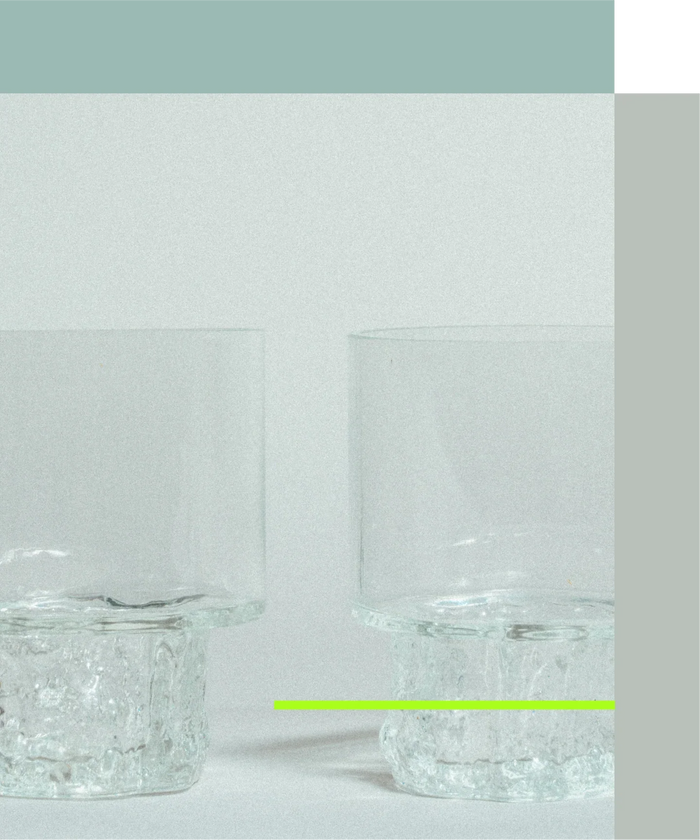
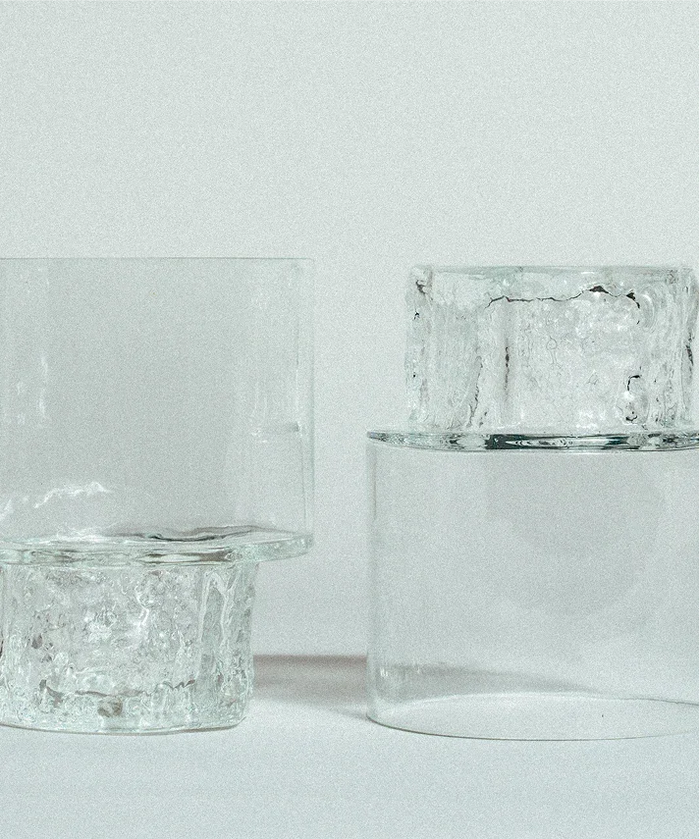
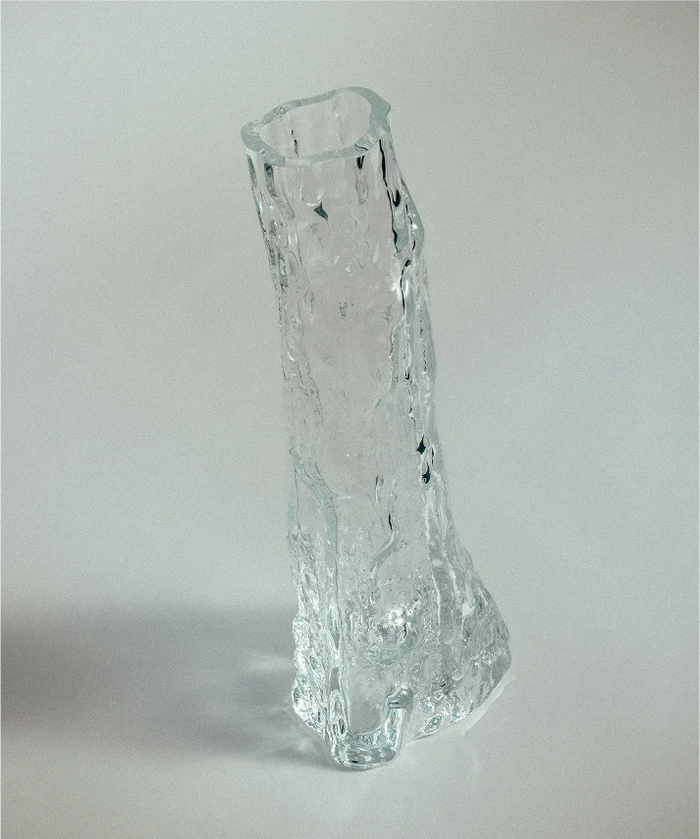
Designer Samuel Reis took the mould somewhere new. Working with a team of master glassblowers, he uses tree trunks that are already hollow, without their heartwood, cut and turned into natural moulds. The glass is blown inside and the wood leaves its mark. He called it the Cerne project, from the Portuguese word for heartwood.
Where it comes from
Marinha Grande remains the national reference for glass. Samuel Reis lives and works in Caldas da Rainha, where he studied Industrial Design at ESAD, in a town with a strong ceramic tradition. His work has been shown at the Homo Faber exhibition in Venice.
How to recognise mouth-blown glass
Tiny air bubbles, slight changes in thickness and shapes that are not exactly the same from one piece to the next are signs of handwork. The base may show a pontil mark, left by the rod that holds the piece during finishing. In the Cerne project, the wood leaves organic textures.
Where to buy
At Ra‑Ro you will find mouth-blown glass by Samuel Reis: the Cerne Wood Glasses, and the Cerne Wood Glass Jug, for water, wine or flowers. Read the designer's story on the Samuel Reis producer page. See also soenga and the Ra‑Ro index.
Frequently asked questions
What is mouth-blown glass?
It is glass shaped by the glassblower's breath through a hollow blowpipe, either freely or inside a mould. Every piece is unique, with small variations in shape and thickness.
Why is Marinha Grande called the capital of glass?
A glass factory settled there in 1747 and in 1769 became the Royal Glass Factory under William Stephens. The industry grew and shaped the identity of the town.
Are Samuel Reis's Cerne glasses all identical?
No. They are blown into hollow tree trunks that act as natural moulds, so each piece has slightly different shapes and textures.