Cart
0
The Caretos of Podence and traditional Portuguese masks: what they are and what they mean
Caretos are masked figures from Trás-os-Montes who take to the streets in winter and at Carnival, wearing tin, leather or wooden masks and fringed wool suits. Here is where they come from and how contemporary clay masks answer them.

In this article
 By Tiago Reis, co-founder of Ra-Ro · View profile
About a 5 minute read

Caretos are masked figures from Trás-os-Montes, in north-east Portugal, who take to the streets during the winter festivities and at Carnival (Entrudo). The best known are those of Podence, in the municipality of Macedo de Cavaleiros: they wear tin, leather or wooden masks painted in strong colours, suits covered in fringes of coloured wool and cowbells at the waist. In December 2019, the Winter Festivities, Carnival of Podence, were inscribed by UNESCO on the list of the Intangible Cultural Heritage of Humanity.
Caretos and traditional masks at a glance
- What they are: masked figures who run and leap through the village, rattling cowbells.
- Where: mainly in the district of Bragança (Podence, Varge, Ousilhão) and in Lazarim, in the municipality of Lamego.
- When: during the twelve days from Christmas to Epiphany and over Carnival.
- Masks: tin, brass, leather or wood, with a prominent nose and colours such as red, yellow and black.
- Recognition: the Carnival of Podence has been Intangible Heritage of Humanity since 2019.
- At Ra-Ro: we do not sell careto masks; we have the wild clay masks by Andreia Pinho, which come from another place and another idea.
Who are the Caretos of Podence
In Podence the caretos come out during the Entrudo Chocalheiro, the Carnival days that end on Shrove Tuesday with the burning of the Entrudo. They run through the streets in groups, climb walls, jump and shake the cowbells tied at their waist, especially around the young women: these are the chocalhadas. Traditionally they were unmarried young men. Today women and children, called facanitos, take part too.
The Casa do Careto in Podence is the home of the Associação dos Caretos de Podence, which organises the festival and looks after the tradition all year. UNESCO's decision was taken in Bogotá, Colombia, in December 2019.
What careto masks are made of
- Tin and brass: sheet metal cut, hammered and painted. This is the typical Podence mask.
- Leather: lighter, used in several villages of the north-east.
- Wood: in Lazarim, masks are carved from alder wood and many have horns.
- Paint: red, yellow and black, with a big nose and a devilish look.
- Suit: once made from red wool quilts, with a hood and thick fringes; today suits with red, yellow and green fringes are common.
Carnival masks and winter masks
Trás-os-Montes has two mask seasons. The first is the cycle of twelve days, from Christmas to Epiphany. In villages in the municipalities of Bragança and Vinhais, such as Varge and Ousilhão, the Festa dos Rapazes (Feast of the Boys), also called the Feast of Santo Estêvão, brings out masked young men who walk the village early in the morning. The second season is Entrudo, before Lent, with Podence as the best known example.
Further south, in Lazarim, Carnival has wooden masks and ends with the reading of the wills of the compadre and comadre, satirical verses about the village's young men and women, and the burning of the figures that represent them.
What the caretos mean
The most common readings link the caretos to ancient winter rites: young men coming of age, the farewell to the cold and the arrival of spring, the fertility of the land and of people. The mask allows what is not allowed the rest of the year: mocking, scaring, chasing, telling truths. The exact origin is not agreed upon, but the idea that behind a mask anyone can become someone else runs through all these festivals. To see masks and costumes up close, visit the Museu Ibérico da Máscara e do Traje in Bragança, with pieces from Trás-os-Montes and from Zamora, across the Spanish border.
Andreia Pinho's clay masks
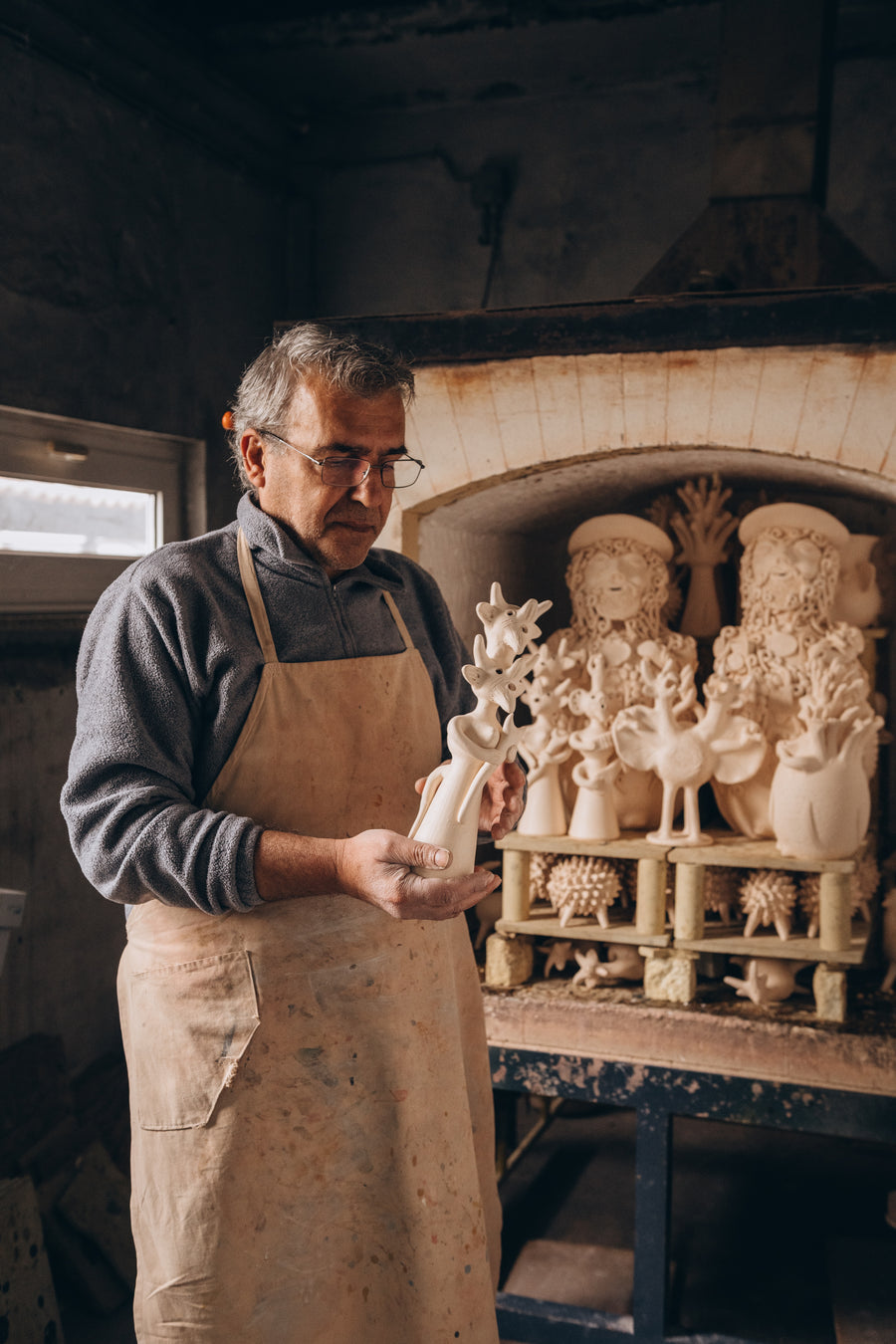
Andreia Pinho does not make caretos and her pieces are not meant to be worn. In her workshop in Leiria she works with wild clay: clay she gathers by hand in different corners of Portugal rather than simply buying it. She explores the bizarre and grotesque side of figures, and her masks are strange on purpose, faces hiding in plain sight that ask who does not hide behind something.
This is where they meet the caretos: the same urge to give a face to what scares us and what makes us laugh. The Mask and the Wild Clay Mask cost €102.20 each; together, in the Wild Clay Masks Pack, they come to €183.96, for a wall that likes conversation. From the same clay come the Cabeçudo (€366.20), a vase with attitude named after the big-headed figures of Portuguese festivals (see the glossary), and the Mafarrico devil (€54.20).
Devils, sarroncos and other faces of fear
Careto masks have relatives in Portuguese clay figures. In Barcelos, António Ramalho models the Barcelos Devil (€79.50) and the Sarronco (€157.90), the bogeyman adults used to frighten children. We tell that darker story in Devils, Sarroncos and Mafarricos. To place the regions, see our Northern Mountains page.
Frequently asked questions
What are the Caretos of Podence?
They are masked figures from the village of Podence, in Macedo de Cavaleiros, who come out at Carnival in tin or leather masks, suits of coloured wool fringes and cowbells at the waist.
When did UNESCO recognise the Caretos of Podence?
In December 2019, when the Winter Festivities, Carnival of Podence, were added to the list of the Intangible Cultural Heritage of Humanity.
When do the caretos come out?
During the winter festivities between Christmas and Epiphany, especially the Feast of the Boys, and over Carnival, as in the Entrudo Chocalheiro of Podence.
What are careto masks made of?
Tin, brass, leather or wood, painted red, yellow and black. In Lazarim the masks are carved from alder wood.
Where can I see traditional Portuguese masks?
At the Museu Ibérico da Máscara e do Traje in Bragança, at the Casa do Careto in Podence and, live, in the villages during winter and Carnival.
Does Ra-Ro sell careto masks?
No. We have contemporary wild clay masks by Andreia Pinho, made to hang on a wall, which speak to the tradition without copying it.

 Autumn
 -10%Packs
 Regions