Cart
0
Burel: what it is, how it is made and how to care for Portugal's mountain wool cloth
Burel is wool that is woven and then beaten in water until it becomes dense, warm and resistant to wind and rain. How it is made, where it comes from and how to look after it.

In this article
 By Tiago Reis, co-founder of Ra-Ro · View profile
About a 5 minute read

Burel is a pure wool cloth that, after weaving, is beaten in water in a fulling mill until it shrinks and becomes dense. The result is a thick, warm fabric that resists wind and rain, and for centuries it clothed the shepherds of the mountains of central and northern Portugal. The wool traditionally comes from the Serra da Estrela, and the capucha, the shepherd's cape, is the best known burel garment.
Burel in short
- What it is: wool cloth woven on a loom and then fulled in water.
- What it is like: dense, warm, resistant to wind and rain, with no loose threads when cut.
- Where it comes from: the Serra da Estrela, with Manteigas as its historic centre, and nearby ranges such as Montemuro.
- Typical piece: the capucha, the shepherd's cape; today also coats, bags and accessories.
- At Ra-Ro: the Light Mottled Burel Coat and the White Tile Bag, by As Capuchinhas.
How burel is made
- Wool: fleece from mountain sheep is washed, carded and spun.
- Loom: the yarn is woven into a wide, loose cloth.
- Fulling mill: the cloth is soaked and beaten for hours by water powered wooden hammers. The fibres lock together, the cloth shrinks and becomes compact.
- Drying and finishing: the cloth dries stretched and is brushed. Because it is so dense, it can be cut without fraying.
This beating in water is what makes the difference. Ordinary wool cloth lets the wind through; burel does not.
Burel, felt and cobertor de papa: the difference
- Burel: woven first, then fulled. It has a weave inside and is very hard wearing.
- Felt: loose fibres are pressed together without ever going through a loom.
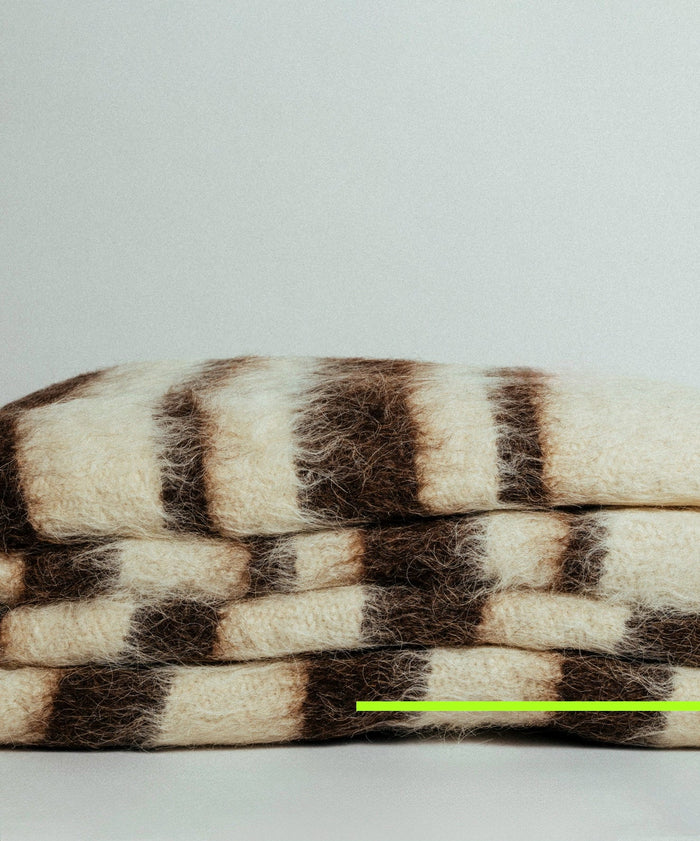
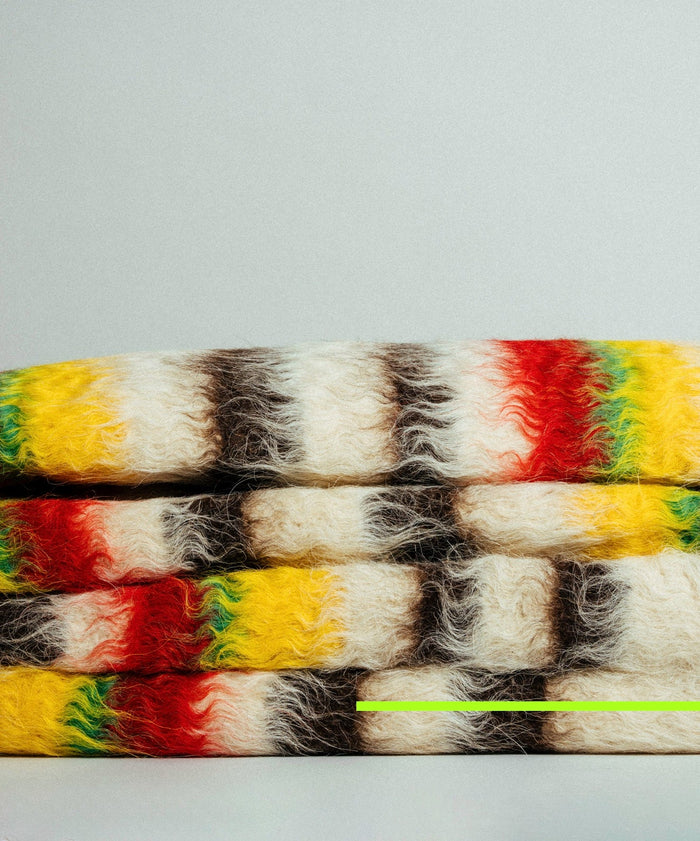
- Cobertor de papa: also woven wool, but carded on the surface until it is fluffy with a long pile. It is for covering up, not for wearing in the rain. Read its story in Cobertor de Papa: the shepherds' blanket still woven in Maçainhas.
Where burel comes from
Burel dates back to the Middle Ages and for centuries was the cloth of people who worked in the cold: shepherds, farmers and also clergy. The Serra da Estrela, centred on Manteigas, had rivers strong enough to drive the fulling mills and flocks to supply the wool. In the Montemuro mountains, north of Viseu, the burel capucha kept shepherds warm and dry. When industrial fabrics arrived, many mills stopped. In recent decades, mountain workshops have started making burel again and using it in contemporary designs.
As Capuchinhas of Campo Benfeito
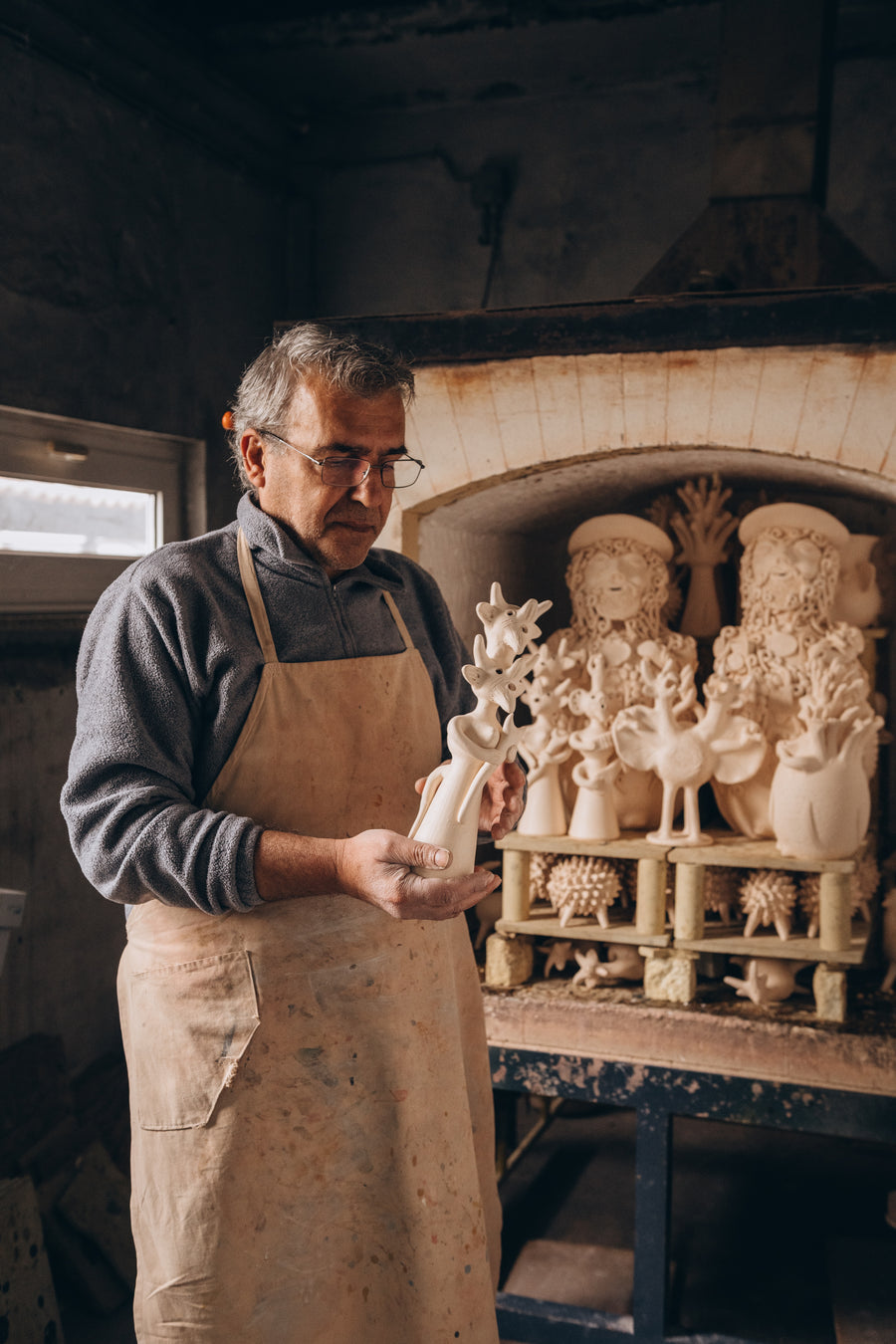
In the Montemuro mountains, four friends founded the cooperative As Capuchinhas in the 1980s, at a time when emigration was the fate of many young women from the area. The name comes from the capucha. In Campo Benfeito they work burel, linen and Serra da Estrela wool on hand looms, with designs by Paula Caria and natural dyes from the village: lichens, walnut leaves, ferns and nettles.
From their workshop come the Light Mottled Burel Coat (306.20 euros), with knitted collar and cuffs, the White Tile Bag (110.60 euros), with burel cut out by hand, and the Melange Scarf, with burel pompoms. The story of the bag is told in The burel bag that wears a tile.
How to care for a burel piece
- Brush: a soft clothes brush removes dust and dried mud.
- Air it: burel cleans itself a lot with fresh air; hang it by a window instead of washing it.
- Wash only when needed: by hand, in cold water, with a gentle wool soap, without wringing.
- Dry flat: on a towel, away from direct sun and radiators.
- No machine, no dryer: heat and agitation shrink wool.
- Store: somewhere dry, with lavender or cedar against moths.
Read also: Portuguese wool blankets: cobertor de papa, manta lobeira and shepherd's blanket, what is the difference.
Frequently asked questions
What is burel?
A pure wool cloth that, after weaving, is beaten in water in a fulling mill until it shrinks and becomes dense, warm and resistant to wind and rain.
Where does burel come from?
From the Serra da Estrela, with Manteigas as its historic centre, and nearby ranges such as Montemuro, where the shepherds' capucha was made.
What is the difference between burel and felt?
Burel is woven on a loom first and then fulled; felt is made of loose fibres pressed together without weaving.
Is burel waterproof?
Not like plastic, but it is so dense that it holds up well against wind and light rain, which is why shepherds wore it.
How do you wash burel?
Rarely. Brush and air it. When it really needs it, wash by hand in cold water with wool soap, do not wring, and dry flat.
Where can I buy Portuguese burel?
At Ra-Ro, with pieces by As Capuchinhas of Campo Benfeito, in the Montemuro mountains, shipping to Portugal, Europe, the USA, Canada and Brazil.
 Autumn
 -10%Packs
 Regions