Cart
0

Sara SapateiroRa-Ro IndexRareWhat is the Ra-Ro Index?
Shepherd with Tarro and Staff
122,00 €
Made to order · Ships in about 1 week
Small‑batch craft production. The time counts from your order.Vê-se ao longe de onde vem este Pastor. Chapéu de feltro preto na cabeça e samarra vestida. Numa mão leva o cajado e na outra o Tarro. É o Alentejo, em barro, de Sara Sapateiro.
Read the story of the piece- Shipping to Europe, the US, Canada and Brazil
- Returns within 14 days
- Secure, encrypted payment
Dimensions
Care
Shipping and returns
Shipping time: About 1 week
We ship to Portugal, the rest of Europe, the US, Canada and Brazil. You have 14 days from delivery to return the piece. Return shipping is paid by the customer. Payment is secure and encrypted.
Story of the piece
Shepherd with Tarro and Staff
What a shepherd carries with him
With a rosy face, thick moustache, and eyebrows, the Alentejo shepherd carries what he needs. The black hat and samarra are for the rain and cold.
The staff helps guide the flock and the cork tarro keeps the lunch warm, as the day is spent in the fields.
The Estremoz Figures have been hand-moulded in clay for over three centuries and, in 2017, were recognised as Intangible Cultural Heritage of Humanity by UNESCO.
Sara Sapateiro was born in 1995 and is the youngest certified artisan producing the traditional Clay Figurines of Estremoz. She learned the craft from Isabel Pires, Jorge da Conceição, and Xico Tarefa. Since 2018, she has been moulding and painting the traditional imagery of Estremoz and creating new figures with different colours. Meet Sara Sapateiro
The Shepherd carries little, but lacks nothing.
Frequently Asked Questions
What was the tarro used for?
It is a cork container that keeps food warm for hours. Alentejo shepherds used to carry their lunch in it for a day in the fields.
Who made this piece?
Sara Sapateiro, born in 1995, the youngest certified artisan of the Clay Figurines of Estremoz. She learned from Isabel Pires, Jorge da Conceição, and Xico Tarefa and has been moulding and painting in Estremoz since 2018.
What are the Estremoz Figures?
They are clay figures moulded and hand-painted in Estremoz for over three centuries. Since 2017, they have been recognised as Intangible Cultural Heritage of Humanity by UNESCO.
Are there two identical pieces?
No. Each figure is moulded and hand-painted, so the colours, expressions, and details always vary slightly.
How should I care for the piece?
It is a decorative piece. Dust it with a soft brush or a dry cloth, without water or products. Avoid direct sunlight, humidity, and knocks.
The process
From clay to figure, always by hand
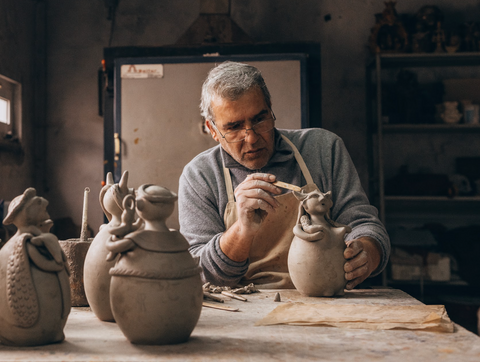
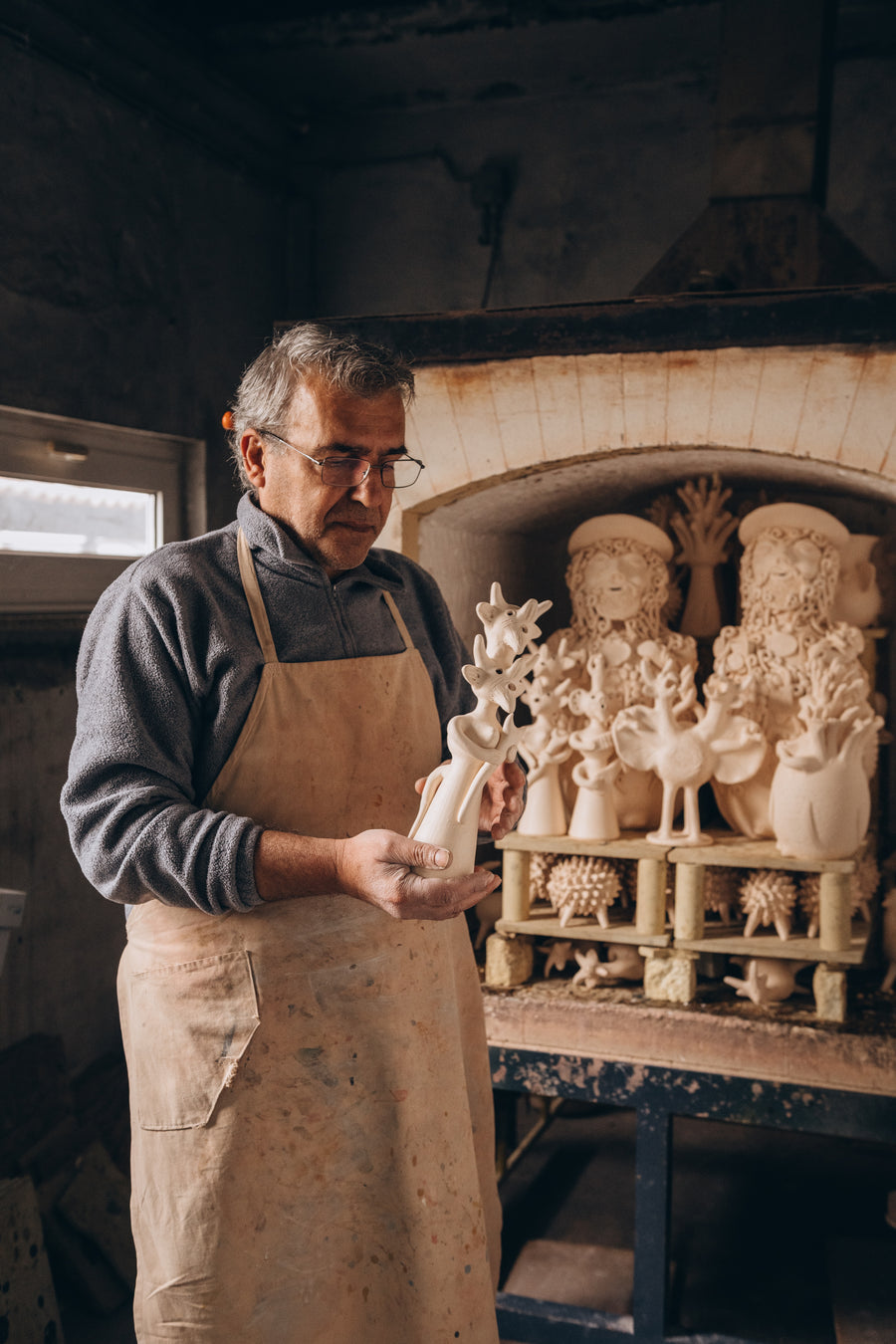
Every Estremoz clay figure by Sara Sapateiro is made piece by piece, without moulds. Every detail is shaped by her fingers.

Shaping
Small balls of clay take shape between her fingers, one petal, one hand, one face at a time.

Smoothing
With a damp sponge the surface becomes smooth and the pieces join without marks.

Detailing
With a wooden stick she marks the veins, folds and small lines that bring the figure to life.
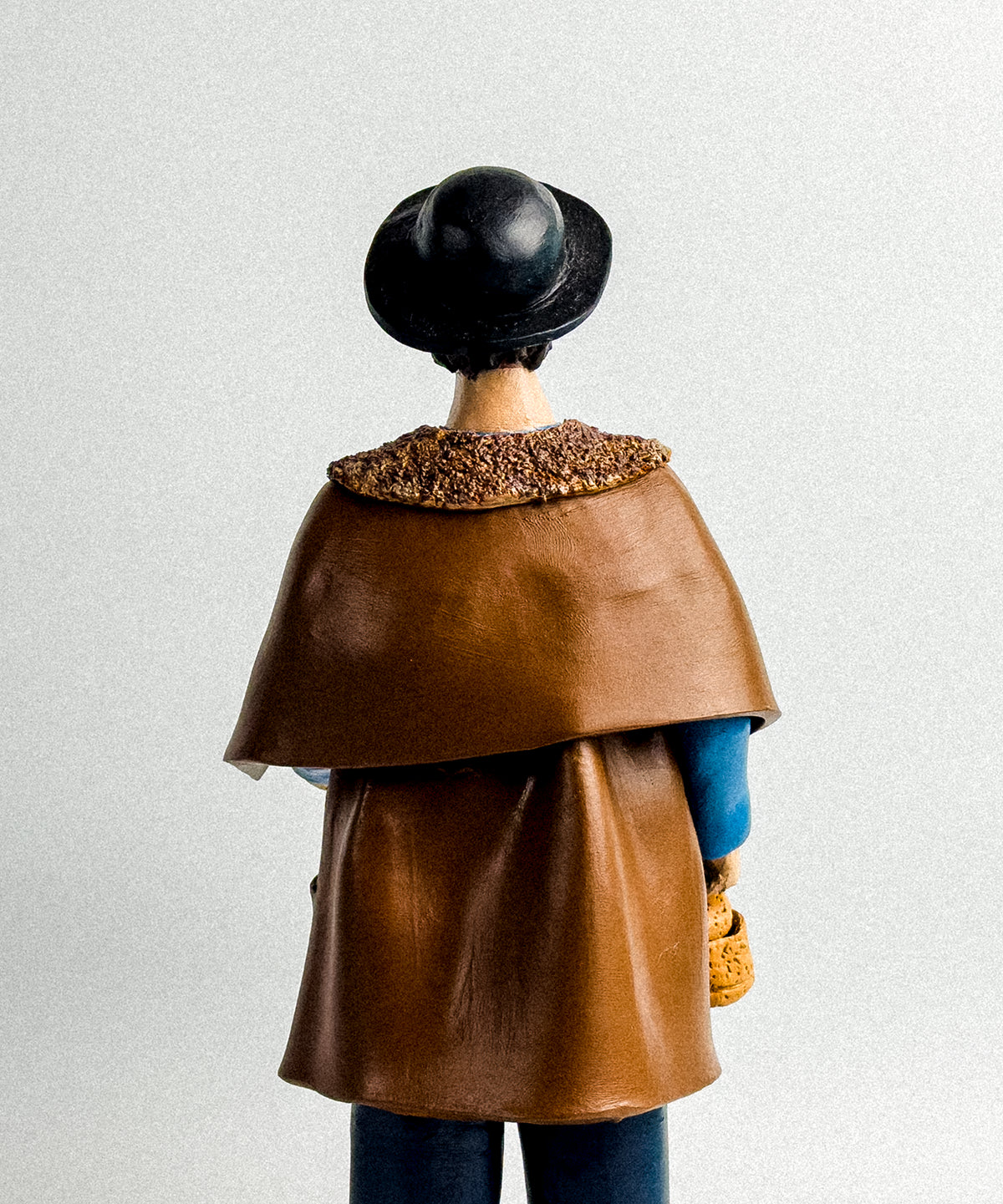
Estremoz Figure
Shepherd with Tarro and Staff
The Alentejo shepherd with samarra, tarro, and staff.
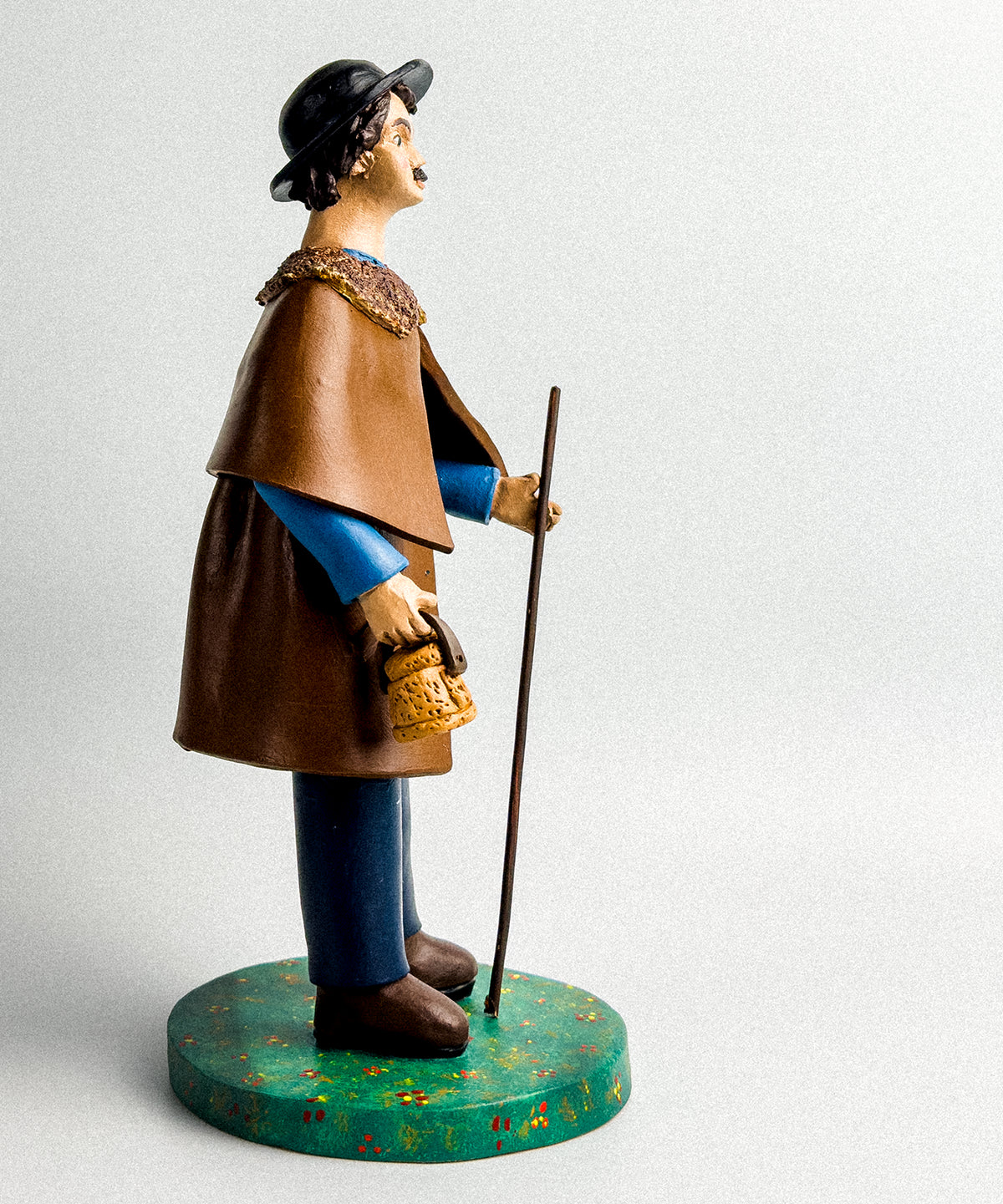
Carries little. But lacks nothing.
See the piece
See every detail.
General view
The whole shepherd
With samarra, on a floral base.
- 1Black hatFor sun and rain.
- 2SamarraThe shepherd's coat, against the cold.
- 3TarroMade of cork, with warm lunch.
- 4StaffTo guide the flock.
- 5BaseGreen, with painted flowers.
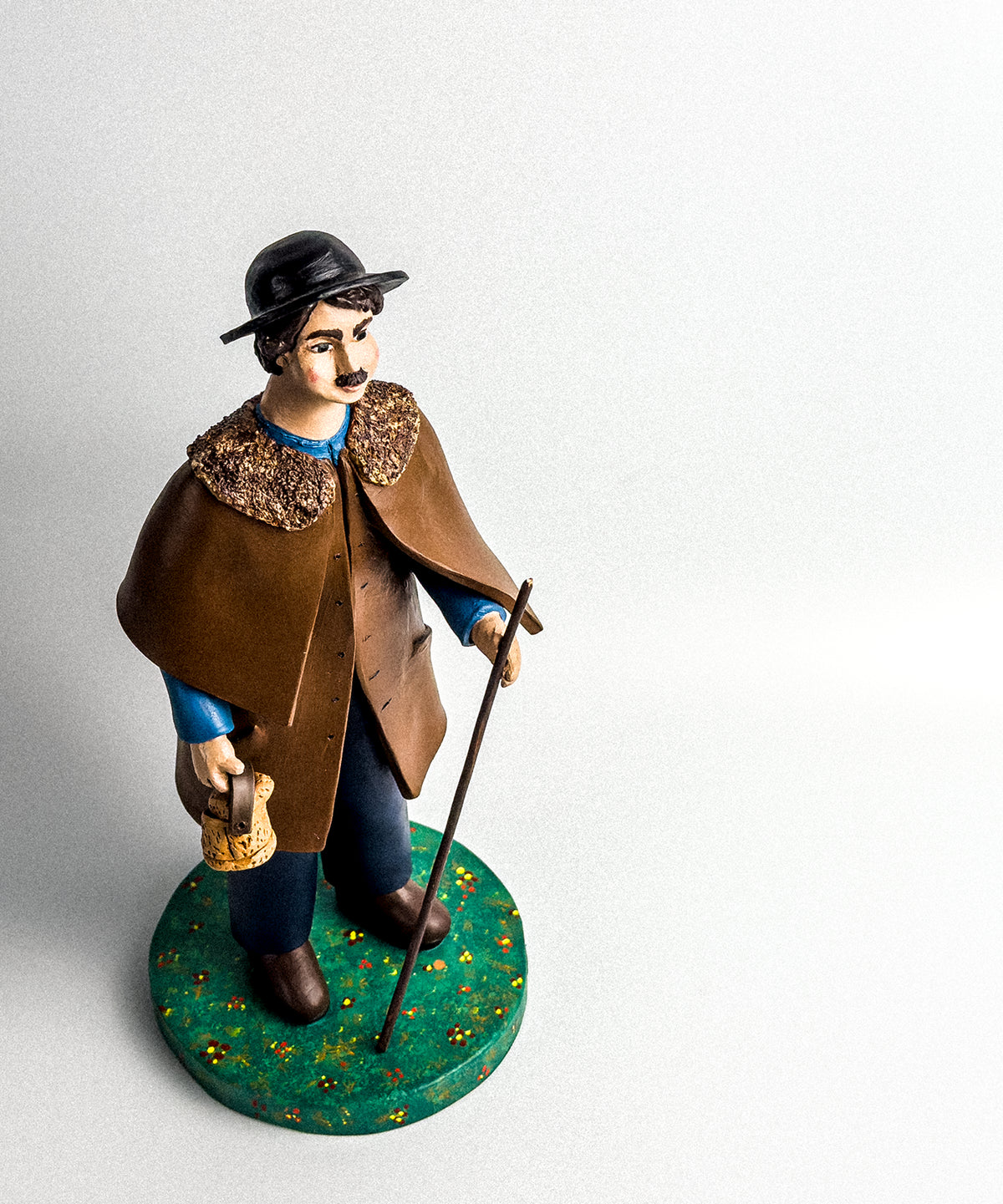
From above
Seen from above
The shepherd and the samarra seen from above.
- 1HatRound crown.
- 2CollarThe collar of the samarra, painted.
- 3TarroHeld in hand.
- 4StaffResting on the ground.

Conheça o produtor
A DELICADEZA DO DETALHE NO BARRO COLORIDO
Os Bonecos de Estremoz moldam-se em barro à mão há mais de três séculos. Sara Sapateiro começou em 2018. Hoje é a mais jovem artesã certificada a produzir o tradicional Figurado em Barro de Estremoz. Faz figuras que a tradição já conhecia. E outras que ainda não.
conhecer a históriaFrom the same maker
More from Sara Sapateiro


Questions
Everything you need to know.
What was the tarro used for?
It is a cork container that keeps food warm for hours. Alentejo shepherds used to carry their lunch in it for a day in the fields.
Who made this piece?
Sara Sapateiro, born in 1995, the youngest certified artisan of the Clay Figurines of Estremoz. She learned from Isabel Pires, Jorge da Conceição, and Xico Tarefa and has been moulding and painting in Estremoz since 2018.
What are the Estremoz Figures?
They are clay figures moulded and hand-painted in Estremoz for over three centuries. Since 2017, they have been recognised as Intangible Cultural Heritage of Humanity by UNESCO.
Are there two identical pieces?
No. Each figure is moulded and hand-painted, so the colours, expressions, and details always vary slightly.
How should I care for the piece?
It is a decorative piece. Dust it with a soft brush or a dry cloth, without water or products. Avoid direct sunlight, humidity, and knocks.
A figure for those who love Alentejo and simple things.
122,00 € · available to ship
Buy nowShipping to Europe, US and Brazil14 days to returnSecure payment
More pieces
You may also like
Your journey
 Rare Combinations
 November Selection