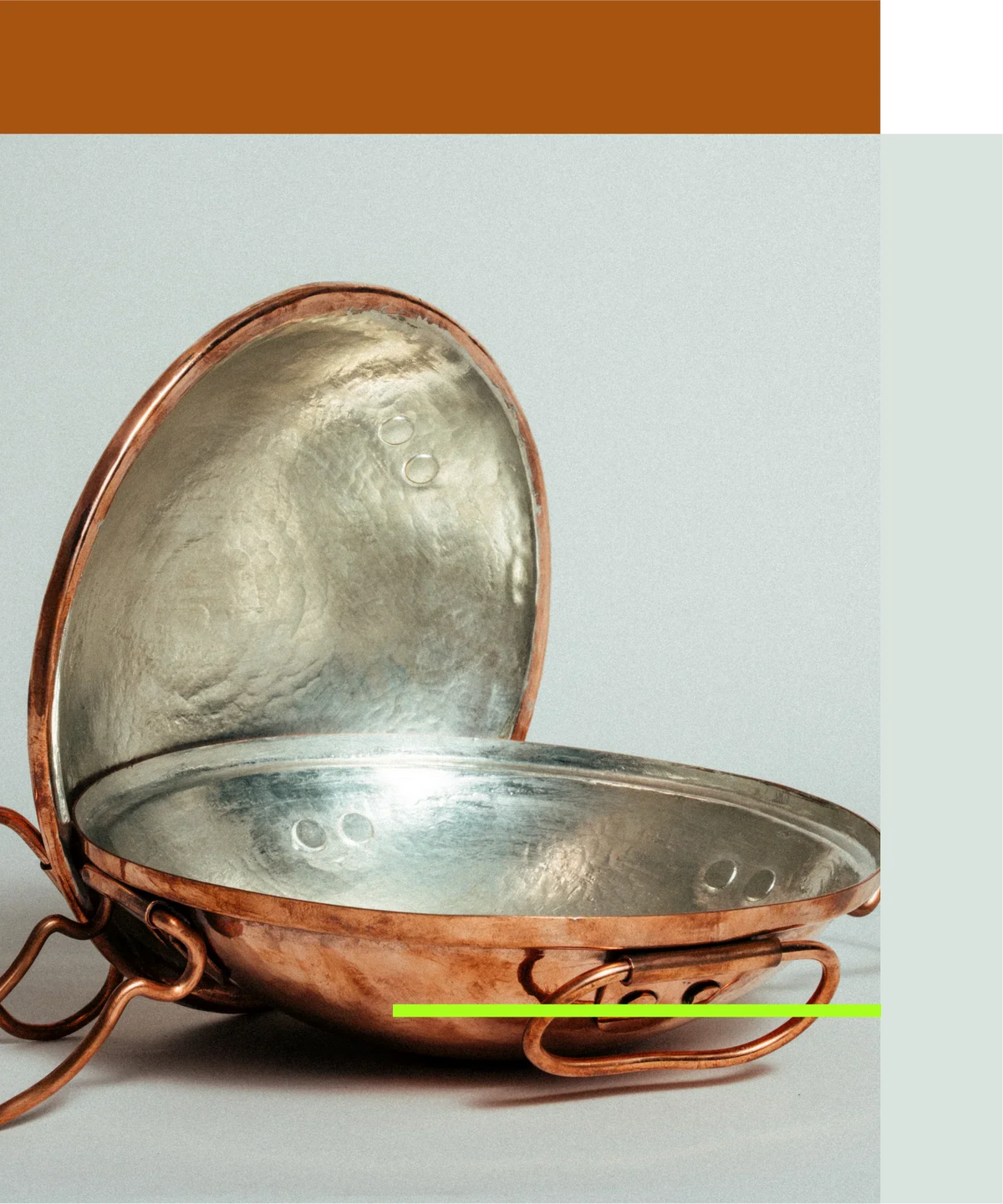
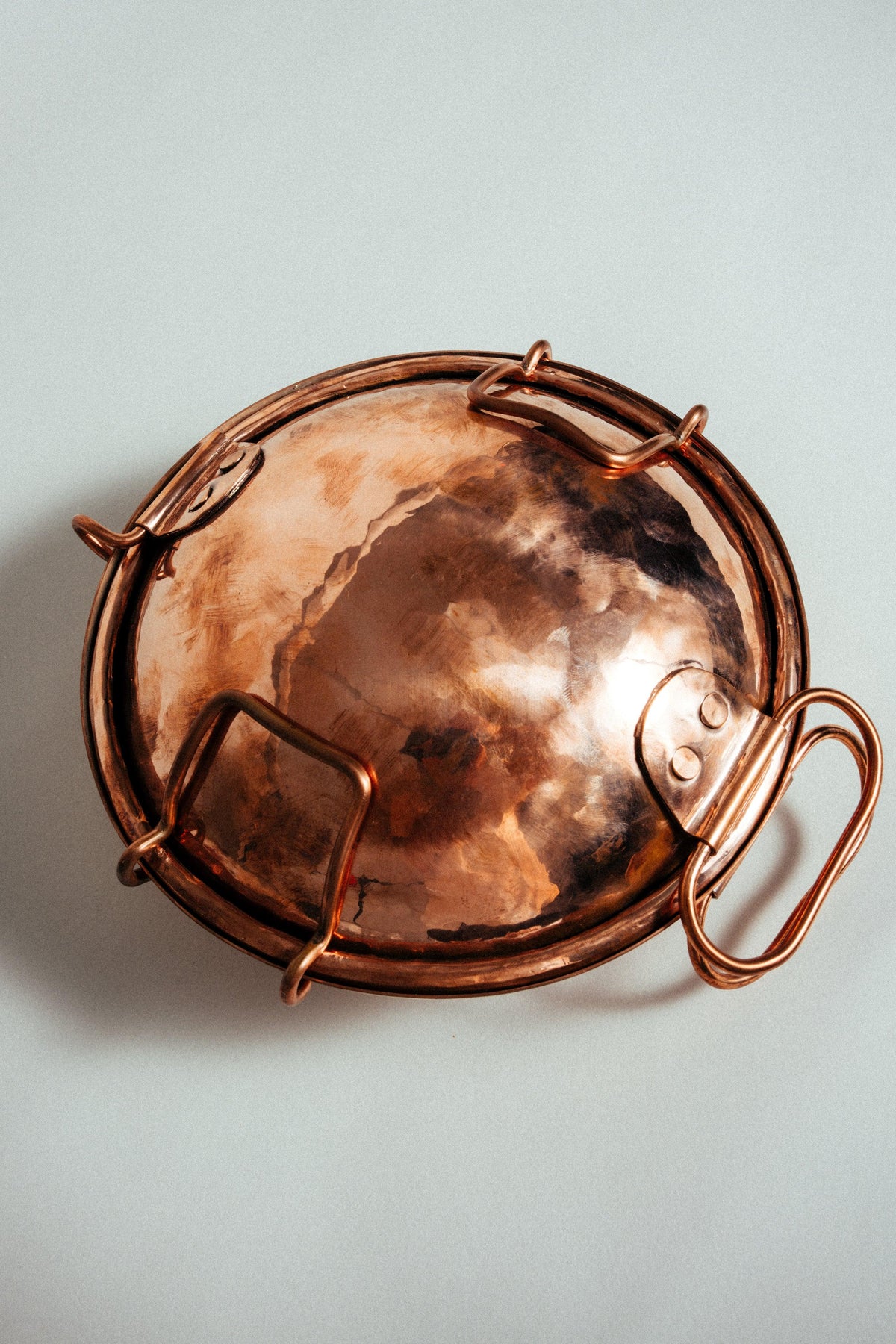
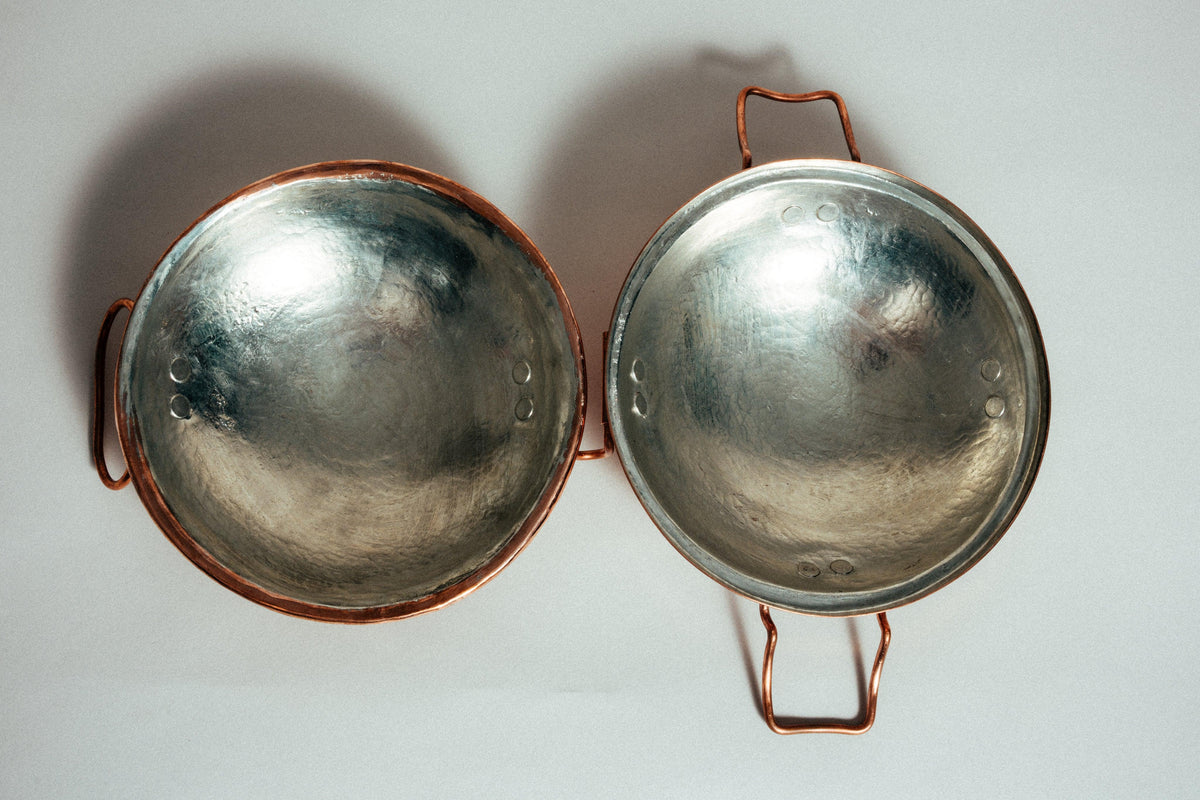
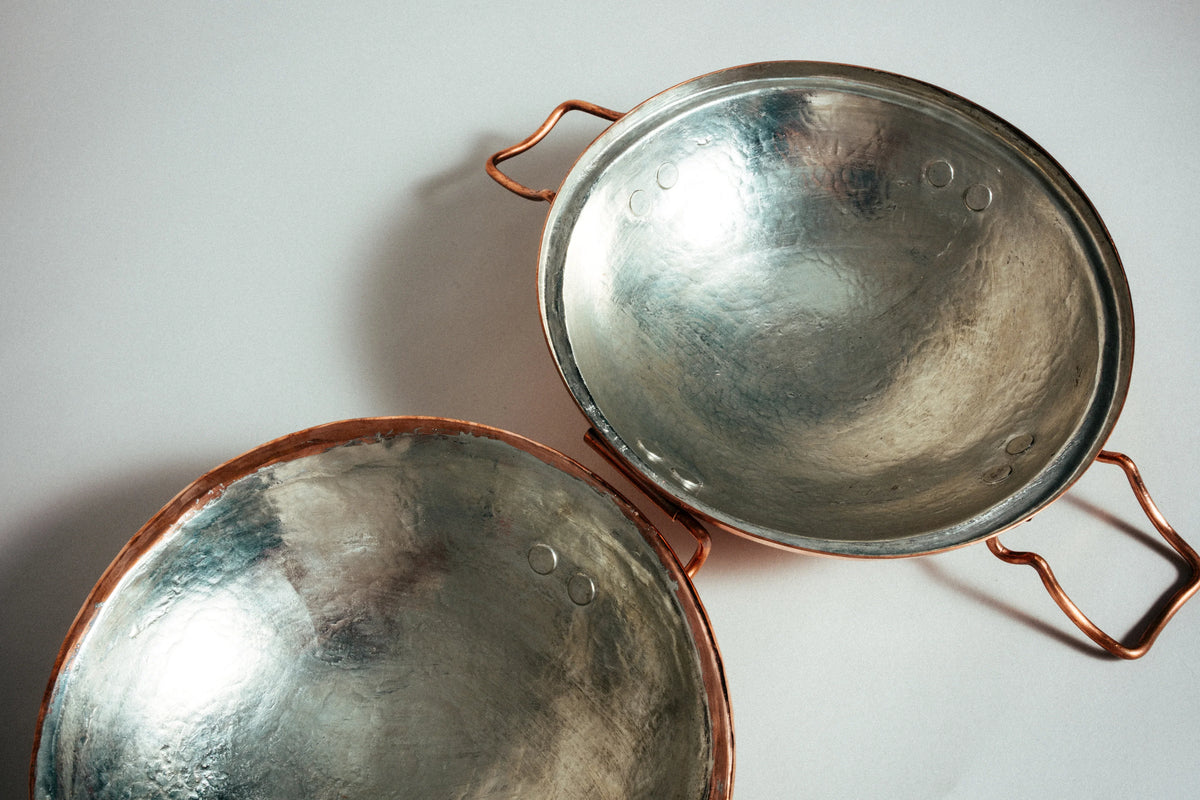
What other gorgeous piece of design also cooks the most delicious mediterranean stews?
Humans didn't invent the sea. Nor the shrimp, nor the garlic. Nor the copper. But someone invented the Cataplana, a typically Portuguese cooking utensil that united all of them.
We speak in the perfect past tense, and we want to tell you why. The copper Cataplana is very hard to find today, facing serious possibilities of extinction. Why? Because it takes much longer to make than its aluminum or stainless steel alternatives, despite allowing for excellent heat conduction and having the look of a stunning design piece.
Nuno Palma is a copper artist from Feiteira, a small village in the parish of Cachopo (Algarve, Portugal), and one of the last people to make cataplanas the old way - a rare case of a young man rescuing traditional artisanal techniques from disappearing.
He cuts the bright pink-orange metal sheets himself and then softens the material over fire. The hammer molds and hardens the sheet, which begins to look like the beautiful Cataplana it is destined to be. Palma rubs it with sand to remove impurities, perfects it with a second round of hammering, and gives it the final polish.
Then, it is up to us to cook traditional Mediterranean food over low heat, for long hours, condensing flavours, aromas, and love.
Small
Diameter > 23 cm
Height > 11 cm
Medium
Diameter > 28 cm
Height > 14 cm
Large
Diameter > 33 cm
Height > 17 cm
Cleaning
Hand wash immediately after use with warm, soapy water.
Do not use a dishwasher or abrasive sponges.
Drying
Towel dry immediately and completely to prevent water marks and tarnish.
Shine
Copper tarnishes naturally. Restore shine periodically using a commercial copper polish or a paste of lemon juice and salt.